Quick Answer: Korean students often swing between two unproductive poles: hiding cultural background to appear “global” or performing Korean identity superficially through clichés. Productive middle path: owning cultural background authentically as specific formation that shaped you, integrating heritage through genuine personal engagement rather than stereotyped content, treating Korean experience as resource rather than obstacle. Authentic cultural ownership produces distinctive compelling portfolios. US admissions consistently values genuine cultural engagement over both suppression and performance. Royal Blue Art helps Korean students develop authentic cultural voice through 19+ years of placement experience.
| Korean Heritage Element | Portfolio Application | US School Reception |
|---|---|---|
| Hangeul Typography | Type design, visual systems, graphic identity | Highly valued |
| Minhwa / Folk Painting | Pattern design, illustration, cultural narrative work | Very positive |
| Pojagi (patchwork) | Textile design, surface pattern, color theory | Distinctive |
| Celadon / Ceramics | 3D work, craft-based portfolio, material exploration | Strong reception |
| Hanok Architecture | Spatial studies, architectural drawing, structural analysis | Positive for arch |
| K-Pop Visual Culture | Graphic design, brand identity, digital art direction | Contemporary/Relevant |
Frequently Asked Questions
Q1. What are the most important factors in choosing a US art school?
The most critical factors in art school selection are: program quality in your specific discipline (overall rankings are less important than departmental strength), faculty whose work you genuinely admire and who are actively practicing in their field, location and industry access relevant to your career goals, cost and scholarship availability, and the creative culture and community of the school. Visit campuses when possible—direct experience of a school’s environment is irreplaceable in making the right choice.
Q2. How does US art school education differ from Korean art education?
US art school education fundamentally differs in its emphasis on conceptual development and personal voice over technical execution and trend awareness. Korean art education typically prioritizes technical precision, recognizable styles, and demonstrable skills. US programs push students to ask ‘why am I making this?’ before ‘how do I make this?’ The critique culture—presenting and defending your work publicly—develops communication skills essential in professional practice that Korean students often need to specifically prepare for.
Q3. What role does the portfolio play in US art school admissions?
The portfolio is the single most important factor in US art school admissions. Admissions reviewers look for: a distinct personal creative voice, evidence of genuine conceptual thinking, technical skill appropriate to your stage of development, and creative risk-taking. A strong portfolio can compensate for modest academic performance. Korean students should be cautious about submitting portfolios that focus exclusively on technical excellence—US programs want to see what makes you uniquely creative, not just competently skilled.
Q4. What is the typical financial burden of US art school, and how can it be managed?
Total annual cost at top US art schools ranges from $65,000-$80,000 (tuition + living). Four-year totals can exceed $280,000. International students are eligible for institutional merit scholarships but not US federal financial aid. Strategies for managing cost include: applying Early Decision when scholarship consideration is higher; applying to a range of schools and negotiating offers; researching Korean government overseas study grants; considering public universities with strong art programs (lower tuition); and applying for departmental and external scholarships.
Q5. How should I approach the personal statement for art school applications?
The personal statement for art school should authentically articulate your creative motivations, current artistic practice, and why the specific program fits your development. Avoid generic statements about ‘always loving art’—be specific about what questions, ideas, or problems drive your current work. Reference specific faculty, facilities, or program aspects that genuinely attract you. Demonstrate that you’ve researched the program beyond surface-level familiarity. Show intellectual curiosity about art, design, and ideas, not just enthusiasm for making things.
Q6. What facilities should I expect at a top US art school?
Top US art programs provide access to: dedicated studio spaces (often 24-hour access for advanced students); professional printmaking facilities; darkrooms and digital photo labs; ceramics kilns and sculpture yards; digital fabrication labs (laser cutters, 3D printers, CNC routers); model shops with woodworking and metal equipment; film and video production facilities; comprehensive art and design libraries; and gallery spaces for student exhibitions. Program-specific facilities are often the differentiating factor between good and exceptional programs.
Q7. What career outcomes can I expect from a top US art school?
Career outcomes vary by discipline. Design graduates (graphic, industrial, UX, fashion) typically enter the workforce in relevant industries within 6-12 months of graduation with entry-level salaries of $45,000-$70,000 in the US. Fine arts graduates pursue more varied paths including gallery representation, artist residencies, teaching, and commercial work. Architecture graduates enter firms with variable starting salaries. Korean graduates often return to Korea or work at companies with Korea operations, where US art school degrees carry significant prestige in design and fashion industries.
Q8. How important is it to visit art school campuses before applying?
Campus visits are highly valuable if feasible. Direct experience of a school’s physical environment, student culture, and active work is irreplaceable. On visits: observe student work in studios and hallways (the best indicator of program quality); talk to current students honestly about their experience; visit the facilities you’ll actually use; and attend a critique if possible. Many schools also offer virtual visits and portfolio reviews. If physical visits aren’t possible, virtual open houses, student video tours, and direct outreach to current students provide important information.
Q9. What is the first year of art school like, and how should I prepare?
Most top art schools require a foundation year focusing on drawing fundamentals, color theory, 2D and 3D design, and art history. This year is typically the most intensive—students often work 10-14 hours daily. Prepare by: taking life drawing classes seriously (figure drawing is central to foundation year at most schools); exploring diverse media to develop flexibility; reading art history broadly; and practicing articulating ideas about your work verbally and in writing. The foundation year establishes relationships with peers and faculty that shape the rest of your education.
Q10. How do I evaluate an art school’s alumni network?
Evaluate alumni networks by: researching where graduates from the specific program actually work (not just what the school claims); looking at whether alumni who graduated 5-10 years ago are in positions you aspire to; checking whether the school maintains active alumni engagement or just claims an ‘alumni network’; contacting alumni directly on LinkedIn to ask about their experience and the value of their degree; and checking if the school has alumni in Korea-based opportunities if that’s your target market. A genuine alumni network opens doors throughout a career—this long-term value is often underweighted in the immediate application decision.
Q11. What should Korean students know about cultural adjustment at US art schools?
Cultural adjustment at US art schools involves both American cultural norms and the specific subculture of art and design education. Prepare for: critique culture (public presentation and defense of your work, sometimes with harsh feedback); a more individualistic studio culture compared to Korean collective approaches; expectation of independent initiative in driving your creative practice; diverse student backgrounds that may challenge assumptions; and different social norms around directness and self-advocacy. Korean students who embrace these differences—rather than resisting them—typically report the most transformative educational experiences.
Supporting Korean students own cultural background helps avoid common pitfalls of suppression or performance. According to successful applicants’ approaches at programs including RISD and Parsons, authentic cultural engagement distinguishes strong Korean portfolios. At Royal Blue Art & Design in Apgujeong, Seoul, we guide students toward authentic cultural voice.
This guide covers authentic integration approaches.
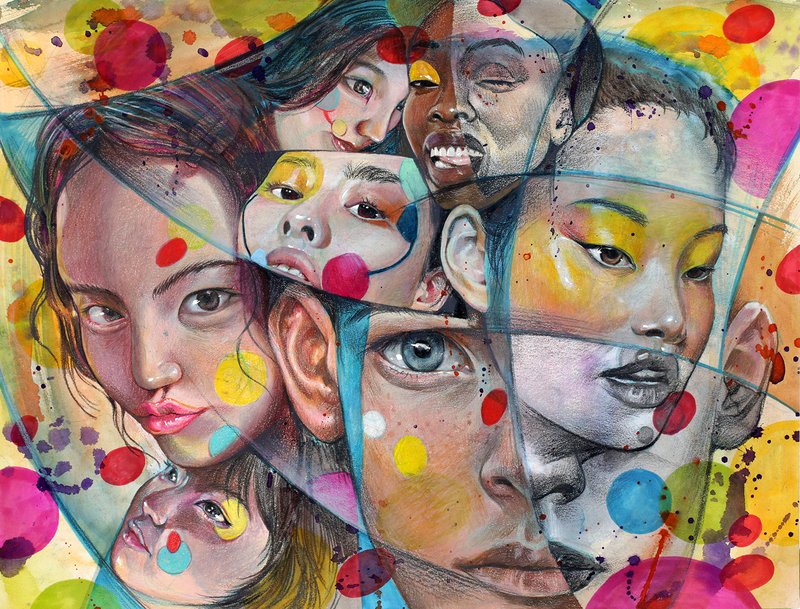
Two Unproductive Extremes
Common mistakes Korean students make with cultural content: suppression extreme — hiding Korean background, avoiding Korean subjects, producing “universal” work disconnected from identity, minimizing Korean experience in statements, trying to appear cosmopolitan without specific cultural foundation. Performance extreme — overusing Korean stereotypes, making obviously Korean work expecting cultural credit, including hanbok and traditional Korean iconography without personal connection, emphasizing Korean exoticism for external effect, treating Korean identity as marketing differentiator. Neither approach produces strong work. Suppression loses authentic material. Performance lacks genuine depth. Middle path of authentic ownership produces strongest portfolios.
What Authentic Ownership Means
Authentic cultural ownership characteristics: treating Korean background as specific formation that shaped you individually, investigating Korean experience through personal lens rather than generic representation, integrating Korean content when it genuinely serves artistic investigation, not when it would just signal Korean identity, engaging with cultural complexity including contradictions and tensions, recognizing Korean experience varies individually rather than monolithic, claiming Korean heritage without defensiveness or over-explanation, treating culture as resource you draw on rather than identity you perform. This approach requires specific engagement rather than formula application. Different Korean students produce different authentic approaches because Korean experience varies individually.
Finding Your Specific Korean Experience
Questions that reveal authentic Korean material: what specific Korean cultural practices matter to you individually, which family traditions shape your identity, what Korean urban or rural experiences are you drawn to, how does your region of Korea differ from others, what aspects of Korean history or contemporary culture engage you, what tensions between Korean and other influences do you navigate, what would be lost if your Korean experience disappeared. These questions produce individual specific material. Generic questions produce generic content. Specific Korean experience uniquely yours. No other applicant has your exact Korean experience. This specificity becomes artistic resource.
Integrating Into Work
Practical approaches to integrate cultural material authentically: explore specific Korean places meaningful to you through drawing or photography, document family traditions important to your specific family, investigate Korean languages’ (standard, regional, generational) shaping your expression, examine contemporary Korean urban experience from your specific vantage point, engage with Korean history through personal family connections, explore tensions between Korean and international influences in your life, reflect on Korean cultural practices through contemporary art media. Integration through personal specificity rather than generic Korean content. Your specific Korean grandmother’s specific recipes matter more than “Korean food.” Your specific neighborhood matters more than “Seoul.”
Avoiding Stereotype
Content choices that read as performance rather than authentic: generic hanbok imagery without personal connection, taekwondo or other stereotyped cultural markers, K-pop references without substantive engagement, tourist-perspective Korean scenes, Korean traditional calligraphy without genuine practice, recycled Korean artistic motifs without individual interpretation. These elements appear frequently in unsuccessful Korean student work. Reviewers recognize patterns quickly. Authentic alternatives engage specific personal experience rather than recycling generic Korean imagery. Ask yourself — could another Korean student make this exact work? If yes, probably too generic. If no, probably authentic.
Cultural Confidence

Psychological dimension of cultural ownership: confidence in Korean heritage as genuine resource, freedom from defensiveness about Korean identity, comfort discussing Korean experience substantively, security about cultural value without external validation, authenticity rather than performance for external audience, wholeness rather than fragmentation between Korean and international identities. Cultural confidence develops through engagement rather than announcement. Students who work through Korean heritage substantively develop confidence naturally. Students who avoid engagement or treat culture superficially don’t develop this confidence. Authentic cultural work produces authentic cultural confidence.
How US Admissions Responds
How US admissions typically reads cultural content: authentic engagement rewarded substantially, performance dismissed as inauthentic, suppression reads as missing opportunity, specific personal cultural content appreciated, generic cultural content ignored, cultural complexity valued over simplification, genuine cultural questions more compelling than cultural answers, confidence about cultural background respected. This reading matters for portfolio construction. Korean students sometimes worry culture won’t appeal to US audiences. Opposite pattern typically true. Genuine Korean engagement distinguishes applicants positively. Generic international identity less distinctive than specific Korean identity. Cultural specificity assets rather than liability for distinctive applications.
Frequently Asked Questions
Should all Korean students include Korean content in portfolios?
Not required but usually valuable. If Korean experience genuinely informs your direction, integrate it. If your direction genuinely doesn’t involve Korean content, don’t force inclusion. Authenticity matters more than cultural inclusion.
How do I know if my Korean content is authentic vs performed?
Test — does this content emerge from your specific experience or from generic Korean imagery? Would you make this work if no one was watching? Does it feel true to you? Self-honesty reveals difference.
What if I don’t feel strong Korean identity?
That’s also authentic Korean experience. Many Korean students navigate multiple identities. Complexity itself material. Don’t manufacture strong Korean identity you don’t feel. Work with actual experience.
Can Korean content include difficult aspects?
Yes. Authentic engagement includes tensions, contradictions, challenges. Sanitized only-positive Korean content less authentic than honest complex engagement.
Next Steps

Owning cultural background authentically produces distinctive compelling portfolios. Move beyond suppression and performance toward genuine personal engagement.
Ready for authentic voice development? Contact Royal Blue Art & Design for personalized guidance.
Related Reading
Korean Art Education Topics
- Korean Cultural Shame and How It Affects Art Practice
- Why Korean Students Should Not Fear Early Rejection
- Why Copying Sample Portfolios Is Dangerous for Korean Students
- How Korean Drawing Skills Help (and Hurt) in US Admissions
- Why Korean Art Majors Struggle With US Critique
Essential Admission Topics
- How to Build a Portfolio for RISD
- Is Art School Worth It in 2026?