Quick Answer: Delft University of Technology’s Industrial Design Engineering faculty is globally renowned for user-centered design, engineering integration, and research-based approach. RISD Industrial Design is top US dedicated art school ID. TU Delft suits Korean students wanting engineering-based design with Dutch research tradition; RISD suits those wanting art school design approach.
| Factor | US Top Art Schools | European Design Schools |
|---|---|---|
| Annual Tuition | $50,000-$65,000 | €3,000-€25,000 |
| Language | English | English/Local Language |
| Industry Network | US-dominant, global | European, global |
| Design Approach | Studio-driven, commercial | Conceptual, systems |
| Korean Recognition | Very high | Moderate |
| Scholarship (Intl) | Merit-based, competitive | Limited international aid |
Frequently Asked Questions
Q1. What are the key differences between RISD and School B?
When comparing art and design programs, the most important differences are typically: pedagogical philosophy (studio-based vs. academic, experimental vs. technical); faculty composition (practicing artists/designers vs. academics); location and industry access; program scale and cohort size; and outcome data (where graduates actually work). Visiting both campuses when possible provides irreplaceable direct experience of each school’s culture and community.
Q2. How should I decide between two similarly ranked art schools?
When two programs are similarly ranked, the decision factors become: (1) Financial—which offers more scholarship aid; (2) Program fit—which faculty do work you genuinely admire; (3) Campus culture—which community feels like where you’ll do your best work; (4) Location—which city provides better opportunities in your specific career direction; (5) Alumni network—which alumni are in positions you aspire to. Visit both if possible. Talk to current students, not just admissions staff.
Q3. Does school prestige matter in art school career outcomes?
Prestige matters most in fine arts (gallery representation, academic positions) and least in commercial design fields where portfolio quality and skills are primary. A RISD or Yale degree opens gallery doors that a state school degree doesn’t. However, in graphic design, UX, product design, and most commercial creative fields, portfolio quality and experience matter more than school name. For Korean students returning to Korea, US prestige translates variably—some Korean companies specifically recruit from top US schools.
Q4. What role does location play in choosing between art programs?
Location is often underestimated in art school selection. NYC programs offer the most direct and immediate access to the full spectrum of creative industries. LA programs provide entertainment and tech industry proximity. Boston/Providence programs (RISD, MassArt) have strong connections to design, publishing, and academic industries. Chicago (SAIC) has a strong contemporary art scene and design industry. San Francisco/Oakland area schools access tech design and contemporary art. Location affects internship opportunities, gallery shows, and the urban creative ecosystem students experience daily.
Q5. How important is campus culture in choosing between art programs?
Campus culture profoundly affects your educational experience and creative development. Small programs with intense studio culture (CalArts, Cranbrook) foster deep peer relationships and concentrated focus. Large programs in urban settings (Parsons, SVA) provide diversity and anonymity alongside industry access. Research: (1) student-to-faculty ratio and accessibility of faculty; (2) critique culture (how critiques are structured and how constructive feedback is given); (3) interdisciplinary access (can you take courses in other departments); and (4) social and community life.
Q6. What should Korean students consider when comparing US art programs?
Korean students should evaluate: (1) International student community and support services (English-only environments require assessment of support structures); (2) Proximity to Korean cultural communities in each city; (3) Specific faculty working in areas relevant to your interests; (4) Alumni outcomes for Korean and Asian international students; (5) Recognition of the degree in Korea if you plan to return; and (6) Cost differences between programs—a $10,000/year difference over four years is $40,000, which should influence the decision.
Q7. Is there value in attending a less prestigious school with more scholarship money?
Yes, in many cases. A 50% scholarship at a strong second-tier program often produces better career outcomes than full tuition at a top program if the debt from the top program becomes paralyzing. The exception is when program prestige is essential for your specific career goal (gallery representation in fine arts, for example). Design careers are more agnostic about school name than fine arts careers. Weigh the quality differential carefully—there is often a significant quality difference between the top 5 and top 15 programs, but not always.
Q8. How do I evaluate the quality of art school faculty?
Evaluate faculty by: (1) Researching their active practice—are they currently exhibiting, publishing, designing, or consulting? (2) Checking student outcomes from their specific courses/studios; (3) Looking for faculty who have mentored students with careers you admire; (4) Attending virtual or in-person open studios or portfolio reviews if available; (5) Reading interviews and artist statements to understand their aesthetic approach and educational philosophy. Faculty change, so check current rosters rather than relying on historical reputations.
Q9. What are transfer policies between art schools?
Transferring between art schools is possible but challenging. Most schools accept transfer students but evaluate portfolios de novo, not just academic transcripts. Credits transfer variably—studio course credits often don’t transfer because programs want students in their specific curriculum. Transfers after sophomore year (junior standing) typically have the best options. If you’re considering transferring, apply as broadly as you would for freshman admission, and communicate honestly about why you want to transfer. Financial aid may be more limited for transfer students.
Q10. What questions should I ask on art school campus visits?
Essential questions for campus visits: (1) Where are alumni from this program working right now? (2) What is the average class size and how accessible are faculty? (3) What happens if I’m not satisfied with my assigned studio or advisor—how are conflicts resolved? (4) What internship or professional connections does the school actively maintain? (5) What is the critique culture like—how is feedback given? (6) What facilities are exclusive to this program, and what is shared? (7) What do current students find most challenging, and how does the school support them?
TU Delft vs RISD represents two fundamentally different approaches to industrial design education. TU Delft approaches design through engineering and research. RISD approaches design through art school tradition. Both produce successful designers but with different career orientations. At Royal Blue Art & Design in Apgujeong, Seoul, we have guided Korean students through international and specialized art education options for over 19+ years of practice.
This guide compares programs, admissions, culture, and career outcomes — with data for the 2025–2026 cycle.

TU Delft vs RISD for Industrial Design Master’s at a Glance
- TU Delft Industrial Design Engineering (Dutch technology university, EU tuition ~€2,600, non-EU ~€19,300, Delft Netherlands)
- RISD Industrial Design (US art school, 2025 tuition $62,688, Providence RI)
Program Strengths and Approach
The first option’s distinctive strengths include engineering-based design approach, dramatically lower tuition, strong research culture, user-centered design methodology, European career pathways, English-language programs, Dutch design tradition (Philips, IKEA-adjacent). This combination creates educational value that matters specifically for certain student goals and situations.
The second option’s distinctive strengths include art school design approach, stronger conceptual and craft training, US career pathways, dedicated art school community, specialized BFA depth. This provides different educational value relevant for different student profiles.
For Korean students, the choice often depends on cost considerations, cultural fit preferences, and specific career goals. International options frequently offer significant cost advantages alongside different educational traditions.
Curriculum and Educational Approach
Curriculum structures reflect institutional identities. US art schools typically follow 4-year BFA models with extensive studio requirements. European and Asian programs often follow 3-4 year models with different structures, sometimes with more specialized focus from the beginning. Each approach has tradeoffs.
For Korean students, understanding these structural differences before applying matters. A 3-year UK BA is a different educational experience from a 4-year US BFA, even in the same discipline. Visa considerations, credential recognition, and post-graduation pathways all vary.
International Student Considerations
International student experience differs significantly by institution. US art schools have robust international student infrastructure but typically charge the same tuition as domestic students (sometimes with less aid available). European programs often charge non-EU students higher rates than EU students but still substantially less than US private schools. Asian programs provide culturally familiar contexts for Korean students but may offer less international exposure.
Visa processes, language requirements, and cultural adaptation all matter. Korean students comfortable with English thrive in US and UK programs. Students comfortable with some language learning may benefit from European programs where many courses run in English but daily life involves local languages.
Financial Considerations
Tuition differences between US and international programs can be substantial. European public universities often charge €2,000-€20,000 annually for international students vs $55,000-$80,000 at US private art schools. This cost difference shapes access dramatically for Korean families.
However, tuition alone does not capture full cost. Living expenses, travel, visa costs, and opportunity costs matter too. Korean families should calculate total cost of attendance for each option rather than comparing only tuition numbers.
Which Fits Korean Students Better?
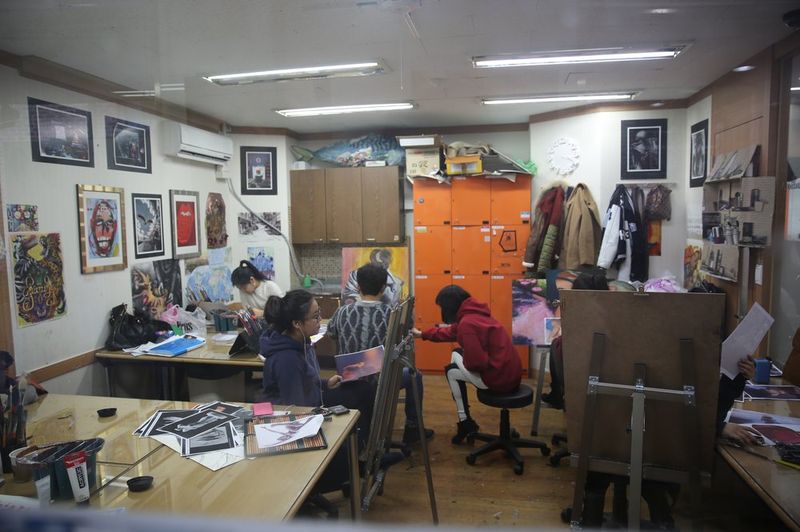
At Royal Blue, we see distinct patterns about who benefits from different educational contexts.
Korean students who thrive at the first option typically value what that option offers uniquely — whether that is cost structure, cultural context, specific program reputation, or post-graduation pathway. Their career goals align with what that institution and its context prepare them for.
Korean students who thrive at the second option value different institutional dimensions. Both profiles can produce successful careers; neither is inherently superior.
The right choice depends on honest assessment of financial reality, career goals, cultural fit preferences, and personal temperament.
Career Outcomes
Alumni outcomes vary significantly by institution and context. US art school graduates often pursue US-based creative careers; European program graduates often pursue European careers; Asian program graduates often return to Korea or work in Asian creative industries. Exceptions exist, but institutional context shapes network and career pathways substantially.
For Korean students, both international and US paths lead to meaningful career opportunities. Many Korean alumni from international programs build successful Korean careers using their international training; similarly, US-trained Korean alumni often return to Korea for positions at major companies.
How to Decide
Ask three honest questions.
First: What is your financial reality? Cost differences between US private art schools and international programs can be dramatic. Calculate full cost of attendance for each option.
Second: Where do you want to build your career? Post-graduation network and career pathways often follow institutional geography and language.
Third: What is your language and cultural adaptability? Be honest about your English fluency, willingness to learn new languages, and comfort with cultural adjustment.
Frequently Asked Questions
Are international art schools respected by Korean employers?
Yes — top international art schools are well-recognized by Korean employers in creative industries. Samsung, LG, Hyundai, Kia, and major Korean brands actively hire from top international programs. Specific program reputation matters more than country location.
Can I get financial aid at international schools?
Varies significantly. European public universities often have low tuition but limited aid. UK schools sometimes offer international scholarships. Asian programs may have scholarships for Korean students. Research specific options for each institution.
How does language barrier affect my education?
For English-language programs (US, UK, some European programs in English), strong English matters. For programs in local languages (Italian, German, French, Finnish), language learning becomes part of the experience. Consider your adaptability honestly.
Will a BA be treated equally to a BFA?
Depends on context. For graduate school admission in the US, strong BA portfolios are accepted competitively. For US employer recognition, BA from recognized international institution is treated well but may require more explanation than BFA. Research how Korean employers and specific target graduate programs view each credential.
How do I decide between international and US options?
Calculate total costs, identify career goals, assess cultural fit, and research specific program strengths for your discipline. Neither category is universally better — the right choice is highly individual.
The Royal Blue Perspective
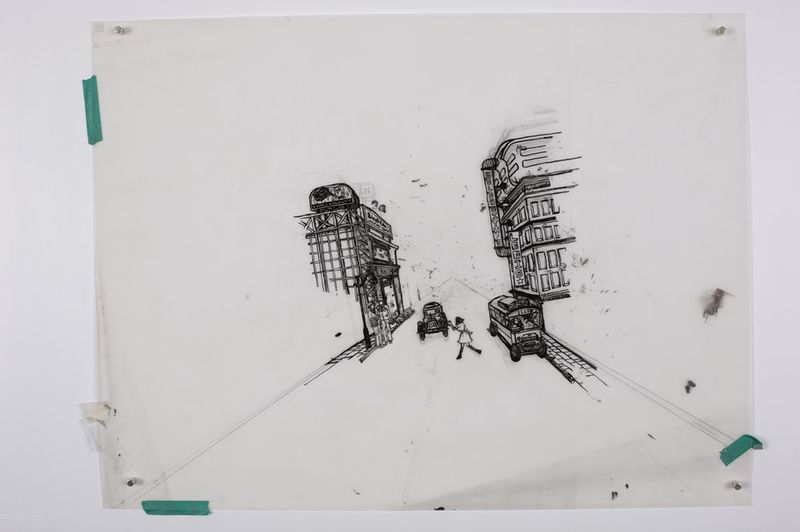
At Royal Blue Art & Design in Apgujeong, Seoul, we have prepared Korean students for international programs across Europe, UK, US, and Asia — alongside dedicated US art schools. The best choice depends on the individual student’s specific profile, not abstract institutional comparisons.
We have sent students to RISD, Parsons, CalArts, Carnegie Mellon, Cornell, WUSTL, and 50+ other institutions including international options. Every application strategy is tailored to the specific student.
Book a free consultation today or review our recent admissions results.
Related Reading
Other School Comparisons
공식 정보: RISD 공식 입시
- Parsons vs SVA: Which Is Better for Graphic Design?
- Parsons vs Pratt: Which New York Art School Is Right for You?
- CalArts vs USC: Fine Art vs University Experience
- RISD vs OCAD: US vs Canada for Art School
- Boston University vs RISD: Which Is Better for Art?
Essential Admission Topics
- What Accreditation Means for Art Schools
- How to Evaluate Art School Quality Beyond Rankings
- Is Art School Worth It in 2026?