QUICK ANSWER
For experimental work, CalArts is the more direct answer — and its published portfolio instructions prove it rather than merely suggesting it. CalArts explicitly tells applicants to leave out figure drawing, still life and generic class assignments unless they reveal a personal or unusual approach, welcomes sketches and works-in-progress, and requires a video introduction plus an artist statement of 500–1,000 words. That is an admissions process built to find a voice, not a skill level. The financial side is the other half: in Royal Blue’s records RISD awarded scholarships to just 4 of 68 accepted students (6%), our lowest rate anywhere, while our CalArts sample of 15 is too small to publish a rate for.
Experimental art — work that pushes against conventional forms, media, and expectations — finds genuine institutional support at both RISD and CalArts. But the kind of experimental work each school produces, and the educational environment that surrounds it, is significantly different. This comparison explains what each school offers students whose creative practice is genuinely unconventional.
RISD and Experimental Art
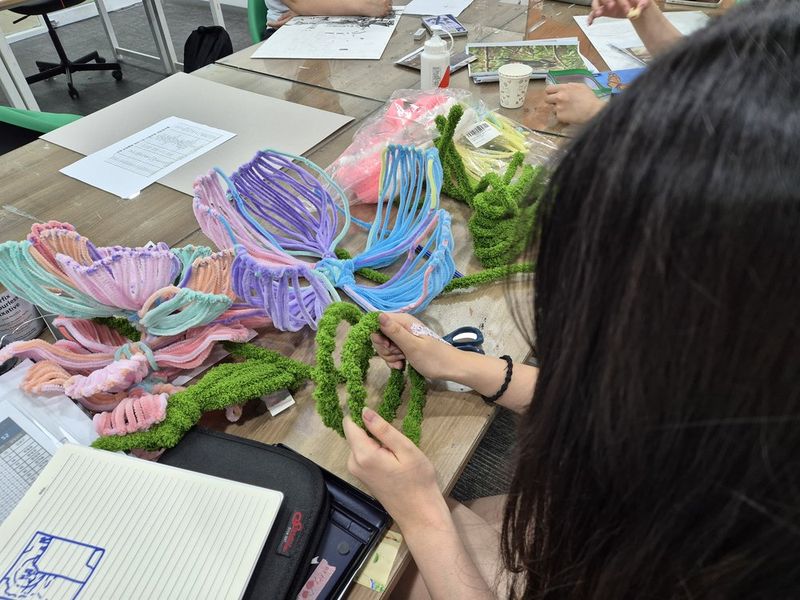
RISD supports experimental work through several programs — Film/Animation/Video, Digital Media, and the more experimental corners of its painting and sculpture programs. Experimental work at RISD is typically developed from a strong material foundation — students who push against conventional forms at RISD usually do so from a position of material mastery.
Key Insight: CalArts
Frequently Asked Questions
The institutional culture at RISD is somewhat more conservative than CalArts — there is a stronger expectation of technical development and a more structured path through the curriculum. Experimental work is welcomed but is usually developed in dialogue with established disciplines rather than in replacement of them.
CalArts and Experimental Art
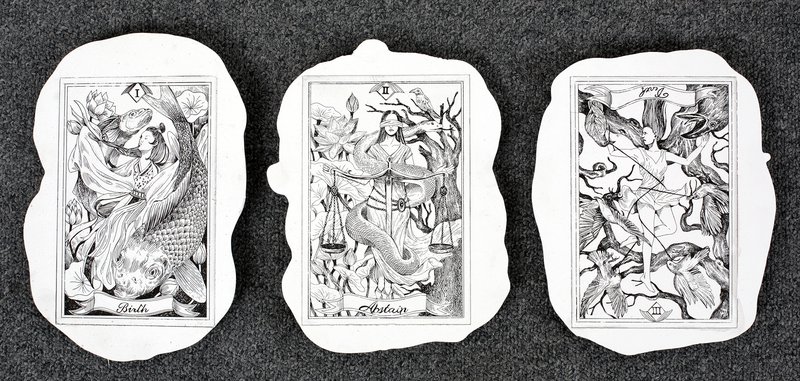
CalArts was founded specifically to support experimental creative practice. Its entire institutional culture is oriented toward creative freedom, risk-taking, and the questioning of established conventions. Experimental Animation, Experimental Film, and the fine arts programs at CalArts are specifically designed for students whose work does not fit conventional categories.
CalArts’s Experimental Animation program in particular is one of the most distinctive programs in the world — supporting animation that operates as visual poetry, abstract expression, or conceptual installation rather than conventional narrative. CalArts gives experimental work a level of institutional legitimacy and support that is genuinely unusual.
RISD vs CalArts Experimental Art: Key Differences
| Factor | RISD | CalArts |
| Institutional Culture | Experimental within structure | Experimental as primary value |
| Path to Experimental Work | Through material foundations | Direct — from the first semester |
| Faculty Support | Strong in specific programs | Entire faculty culture supports experimentation |
| Cross-Disciplinary Access | Available but structured | Central to the CalArts model |
| Critical Framework | Studio-based critique | Theoretical, discourse-engaged |
| Acceptance Rate | ~20% overall | ~26% overall |
| Best For | Materially grounded experimentalists | Conceptually driven, form-questioning artists |
Which Is Better for Experimental Art: RISD or CalArts?
Choose RISD if:
Your experimental practice is rooted in material exploration — in pushing a specific medium to its limits rather than abandoning medium entirely. You want the support of a strong technical foundation as a base for your experimental work. You prefer a more structured environment where experimentation is encouraged within a framework.
Choose CalArts if:
Your experimental practice is genuinely unconventional — you make work that does not fit standard categories and that would be constrained by a curriculum focused on medium-specific development. You want an institution that treats experimentation as the primary value rather than as a tolerated deviation. CalArts is the most supportive institutional environment for genuinely experimental creative practice available in US art education.
A Note for Korean Students
Korean students pursuing experimental art paths face a specific challenge: experimental creative practices are relatively underrepresented in Korean art education, which means that most Korean applicants to experimental programs are developing this direction specifically for the application. Royal Blue works with students whose creative instincts are experimental to help them develop genuine experimental practices — not to perform experimentalism for an admissions committee.
The Portfolio Instruction That Settles This Question
Most comparisons of these two schools describe culture — Providence rigour versus Valencia freedom. That framing is not wrong, but it is unverifiable. Here is the same distinction stated by the school itself, in its own admission requirements.
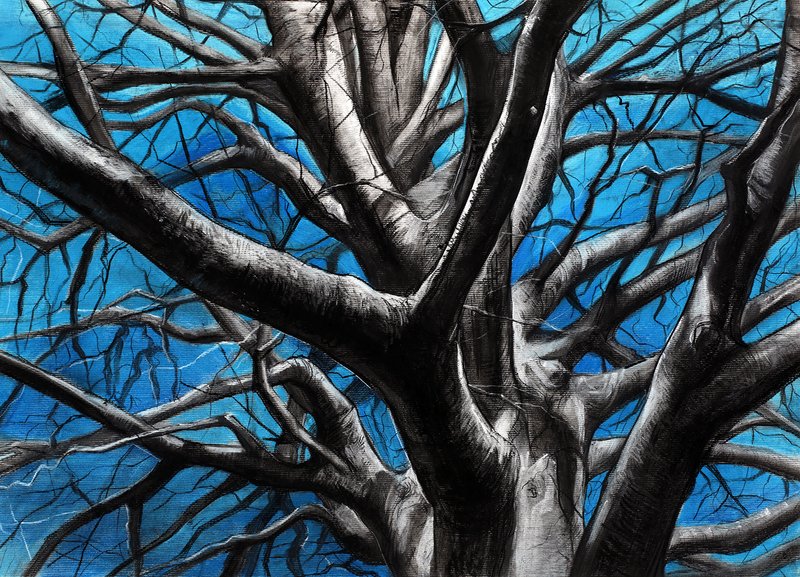
CalArts asks for personal work and names figure drawing, still life and generic class assignments as material to leave out unless it shows a personal or unusual approach. Sketches and works-in-progress are welcome. Around 15–20 pieces for BFA Art, preferably from the last three years.
It also asks you to speak. A video introduction is required — a phone camera is fine, and they would rather hear you talk about your practice in general than about a single piece — alongside an artist statement of 500 to 1,000 words for several programs.
Read what that process is designed to detect. Unfinished work is admissible. Technical exercises are discouraged. You must articulate your practice on camera and in writing. This is a school selecting for artistic position rather than demonstrated craft — which is precisely what “experimental” means in practice.
For a Korean applicant the consequence is concrete. Two years of observational drawing skill, which strengthens most portfolios, can read at CalArts as exactly the material they asked you not to send. If both schools are on your list, plan two selections from a larger body of work rather than one portfolio submitted twice.
What Our Records Add — and Where They Stop
Royal Blue has recorded 1,099 acceptances across 95 schools since 2009. RISD appears 68 times, CalArts 15. That gap reflects our applicant pool, not relative difficulty — most students who reach us are heading into graphic design, illustration and communication design, while CalArts is weighted toward animation and experimental film. Fifteen is also too small a base for a reliable award rate, so we mark it rather than estimate it.
| School | Acceptances | Awarded | Award rate | Average award |
|---|---|---|---|---|
| MICA | 64 | 51 | 80% | $54,290 |
| SAIC | 81 | 56 | 69% | $46,775 |
| CalArts | 15 | — | sample too small | sample too small |
| RISD | 68 | 4 | 6% | Not reported (n=4) |
Source: Royal Blue admissions records, 1,099 acceptances across 95 schools, 2009–2026. Initial award letters. Overall award rate 41.3% (454 awards, $23,746,972 total, $52,306 average).
There is a further pattern worth naming for anyone drawn to experimental practice. Fine arts has the lowest award rate of any major in our archive — 26% across 148 acceptances — though the awards that do arrive average $58,451, the second highest of any major. Experimental and fine-art applicants are funded rarely and heavily; design applicants are funded often and moderately.
That combination is the real risk in this decision. An experimental applicant targeting RISD is stacking a low-award major on top of our lowest-award school. It is a legitimate choice — but only if the list also contains somewhere aid is statistically likely.
How to Decide
Choose CalArts if you already have a body of personal work, can describe your practice in 500–1,000 words, and are comfortable talking about it on camera. Note that applying to two CalArts programs means two separate applications and two fees, each with its own portfolio requirements.
Choose RISD if your experimental interests sit on top of sustained studio craft and you want the depth and the name. Just budget it as full cost — 6% is not a plan.
Applying to both is reasonable, provided you accept that it is two portfolios rather than one, plus a video and a written statement that exist only on the CalArts side.
And the standing caution — an award rate is not an admission rate and not a measure of program quality. RISD’s 6% says nothing about RISD’s teaching. It describes how each school distributed its own money among students we worked with.
Frequently Asked Questions
What does an experimental art portfolio look like?
An experimental art portfolio does not look like a conventional portfolio. It may include video work, performance documentation, installation photographs, artist books, or process-based work that resists easy categorization. What matters is that the work demonstrates genuine creative thinking and a clear artistic intelligence, not technical perfection in a conventional medium.
Does CalArts have specific programs for experimental work?
Yes. CalArts’s Experimental Animation program is specifically designed for animation that does not follow conventional narrative or character-based approaches. The fine arts programs also support experimental practice across all media. The entire CalArts culture treats experimental work as the norm rather than the exception.
Can a student with no experimental art background apply to CalArts experimental programs?
Students with conventional backgrounds can apply, but the portfolio must demonstrate genuine experimental creative thinking — not just technical skill. CalArts’s reviewers are specifically looking for evidence that a student’s creative instincts are unconventional, regardless of their prior training environment.
Is experimental art a viable career path?
Experimental artists typically build careers that combine studio practice with teaching, residencies, grants, and other income sources. CalArts’s experimental art alumni have strong representation in the international contemporary art world and in academic positions at art schools and universities.
How does Royal Blue help students develop experimental portfolios?
Royal Blue works with students whose creative direction is experimental by creating the conditions for genuine experimental practice to develop — through open-ended briefs, permission to pursue unconventional directions, and a critique culture that values creative risk-taking. We specifically do not try to make experimental portfolios look conventional.