QUICK ANSWER
For animation this is not an even contest — CalArts’ Character Animation program sits in its School of Film/Video and is the reason most applicants know the school at all. What Korean families usually miss is the money. Animation is the best-funded major in Royal Blue’s archive: 25 of 43 animation acceptances came with scholarship money — a 58% award rate averaging $56,140, the highest rate of any major we track. If animation feels like the financially reckless choice, our data says the opposite. The school-level warning runs the other way: RISD awarded scholarships to only 4 of 68 accepted students overall (6%), our lowest rate anywhere.
Animation is one of the clearest cases where school culture determines outcomes as much as program quality. RISD and CalArts both produce successful animators — but they produce very different kinds of animators, and understanding that difference is essential for choosing the right school. This RISD vs CalArts animation comparison explains what each school actually develops in its animation students.
RISD Animation: What You Need to Know
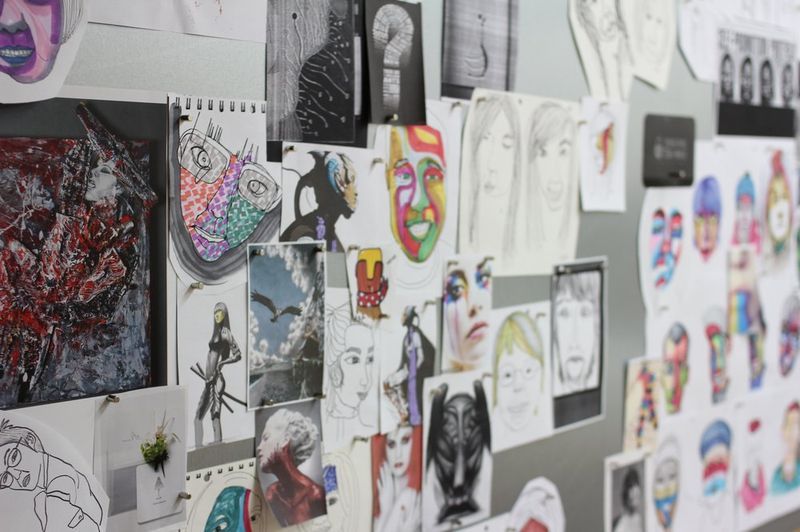
RISD’s Film/Animation/Video program approaches animation from a fine arts perspective. Students develop skills across drawing, painting, printmaking, and experimental video alongside animation-specific technical training. The program emphasizes animation as a personal artistic medium — a tool for individual expression and storytelling rather than primarily a commercial craft.
Key Insight: CalArts
Frequently Asked Questions
RISD animation graduates work across independent film, experimental animation, music videos, and commercial production. The program’s fine art orientation means that RISD animators often have a more distinctive personal visual language than graduates of more production-focused programs. RISD is an excellent choice for students who see animation as an art form first.
CalArts Animation: What You Need to Know
CalArts’s Character Animation and Experimental Animation programs are among the most legendary in the world. Character Animation has produced an extraordinary proportion of the directors, animators, and story artists at major studios — Disney, Pixar, DreamWorks, and beyond. The program is intensely focused on the craft of character animation: drawing, performance, timing, and storytelling.
Experimental Animation is CalArts’s second animation track — more oriented toward avant-garde and independent animation, with fewer constraints and more freedom to explore animation as an artistic medium. Both programs operate within CalArts’s distinctively free and self-directed studio culture.
RISD vs CalArts Animation: Key Differences
| Factor | RISD | CalArts |
| Program Name | Film/Animation/Video | Character Animation / Experimental Animation |
| Core Orientation | Fine art, personal expression | Industry craft / avant-garde exploration |
| Industry Connection | Independent film, experimental | Major studios (Disney, Pixar, etc.) |
| Location | Providence, RI | Valencia, CA (near Los Angeles) |
| Drawing Emphasis | Strong — fine art foundation | Exceptional — character drawing is central |
| Acceptance Rate | ~20% overall | ~26% overall (Animation much lower) |
| Career Paths | Independent, experimental, commercial | Major studio, TV, independent, experimental |
Which Is Better for Animation: RISD or CalArts?
Choose RISD if:
You see animation as a personal artistic medium and want to develop it within a broader fine arts context. You are interested in experimental animation, independent film, or music video work rather than studio production. You want the flexibility of a fine arts education alongside animation training.
Choose CalArts if:
You want to work in the animation industry — at a major studio, in TV animation, or as an independent animator. You are passionate about the craft of character animation — drawing, performance, and storytelling. You thrive in CalArts’s intensely self-directed, high-expectation studio culture. CalArts Character Animation is the clearest path to a major studio animation career available anywhere.
A Note for Korean Students
CalArts animation is among the most competitive programs Korean students apply to. The portfolio — which typically includes a character reel, life drawings, and personal work — must demonstrate not just technical skill but genuine character animation sensibility. Royal Blue has helped Korean students gain admission to CalArts animation programs and provides specific preparation for the character animation and experimental animation portfolio requirements.

Animation Is the Best-Funded Major We Track
Korean parents frequently treat animation as the risky option — the major you allow rather than encourage. Our record across 1,099 acceptances at 95 schools since 2009 does not support that.
| Major | Acceptances | Awarded | Award rate | Average award |
|---|---|---|---|---|
| Animation | 43 | 25 | 58% | $56,140 |
| Communication Design | 95 | 51 | 54% | $53,490 |
| Graphic Design | 211 | 77 | 36% | $48,591 |
| Illustration | 102 | 33 | 32% | $42,373 |
| Fine Arts | 148 | 39 | 26% | $58,451 |
Source: Royal Blue admissions records, 1,099 acceptances across 95 schools, 2009–2026. Major labels normalised. Initial award letters. Overall award rate 41.3% (454 awards, $23,746,972 total, $52,306 average).
Animation tops the table, and the contrast with illustration is the useful one. These are the two majors Korean families most often confuse. Illustration sits at 32% and $42,373; animation at 58% and $56,140. Two students with adjacent portfolios can land in very different financial positions depending on which major they declare.
One honest limit. Animation’s 43 acceptances is a smaller base than graphic design’s 211, so a 58% rate here carries less certainty than a 36% rate there. The direction is clear; the precision is not. We would rather say that plainly than dress the number up.
What Our School-Level Records Say
RISD appears 68 times in our archive, CalArts 15. That gap reflects our applicant pool rather than relative difficulty — most students who reach us are heading into design fields, while CalArts is weighted toward animation and experimental film. Fifteen is too small a base for a reliable award rate, so we mark it rather than estimate it.
| School | Acceptances | Award rate | Average award |
|---|---|---|---|
| Ringling | 36 | — | — |
| MICA | 64 | 80% | $54,290 |
| CalArts | 15 | sample too small | sample too small |
| RISD | 68 | 6% | Not reported (n=4) |
Source: Royal Blue admissions records, 1,099 acceptances across 95 schools, 2009–2026. Ringling’s scholarship figures are not separately tallied in our top-school breakdown.
Worth noting for anyone building an animation list: Ringling appears 36 times in our records — more than double our CalArts count. Its computer animation program is large and career-structured, which suits students aiming at studio pipelines, while CalArts is smaller and weighted toward authorial work. Neither is the better school; they select for different intentions.
The Application Difference That Costs Time
CalArts refuses SlideRoom, PDFs and external links entirely — everything goes through its own application. Applying to two CalArts programs means two separate applications and two fees, each with its own portfolio requirements. A video introduction is required, and several programs ask for an artist statement of 500 to 1,000 words.
CalArts also asks applicants to leave out figure drawing, still life and generic class assignments unless they reveal a personal approach. For a Korean applicant with two years of observational drawing behind them, that instruction reshapes the entire submission — and it is the opposite of what USC’s animation division states, where human figure drawing is listed among accepted work.
If you are applying to several animation programs, build a larger body of work and select differently for each. One portfolio uploaded three times is the most common avoidable mistake we see in animation applications.
How to Decide
CalArts if your interest is authorial — you want to make your own films and already have personal work you can talk about on camera.
RISD if animation sits on top of broader studio practice and you want the depth and the name — but budget it as full cost, because 6% is not a plan.
And do not stop at these two. Animation is the major where funding is most likely to follow the offer, which is an argument for applying broadly within animation rather than hedging into a “safer” major you are less committed to.
The standing caution applies here too — an award rate is not an admission rate and not a measure of program quality. It describes how schools distributed their own money among students we worked with.
Frequently Asked Questions
Is CalArts the best animation school in the world?
CalArts Character Animation is consistently regarded as one of the top two or three animation programs globally for studio-track careers. Ringling College of Art and Design and Gobelins in France are also highly regarded. For working in US major studios specifically, CalArts has an unmatched track record.
Can an international student get into CalArts animation?
Yes, and international students are present throughout CalArts’s animation programs. The program evaluates portfolios on their merits regardless of nationality. The challenge for Korean students is producing the kind of character animation work — which requires sustained practice in a specifically American animation tradition — that CalArts’s reviewers respond to.
What does a CalArts animation portfolio include?
CalArts Character Animation portfolios typically include life drawings, character designs, animation tests (even rough ones), and any finished animated work. The portfolio should demonstrate observational drawing ability, character design sensibility, and an understanding of movement and performance.
Is RISD a good backup option for CalArts animation applicants?
RISD and CalArts serve different animation students. They are not directly interchangeable. If your primary goal is a studio animation career, CalArts is the more direct path. RISD is an excellent choice in its own right for students whose animation interests are more fine-art oriented — not simply a backup.
How competitive is CalArts Character Animation compared to RISD?
CalArts Character Animation is significantly more competitive than RISD’s animation program in terms of the specificity of what it is looking for. Both are selective, but CalArts’s character animation review has a very clear sense of what a successful applicant looks like.