Quick Answer: Korean pavilion drawing (사실화) trains students in architectural precision and specific structural rendering but doesn’t develop the compositional decision-making that US portfolio pieces require. The transition to free composition involves: choosing your own subjects, making your own compositional arrangements, developing personal cropping and focal point decisions, and building visual hierarchy based on your interests rather than given requirements. Specific exercises accelerate this transition. Royal Blue Art guides Korean students through structured composition development drawing on 19+ years of successful US art school placements.
Making the transition from pavilion drawing free composition requires specific skill development beyond technical drawing. According to portfolio expectations at RISD and Parsons, compositional decision-making is primary evaluation criterion distinct from technical rendering. At Royal Blue Art & Design in Apgujeong, Seoul, we structure specific exercises for Korean students making this transition.
This guide covers transition exercises and common challenges.
What Pavilion Drawing Develops
Korean 사실화 pavilion drawing builds specific capabilities: (1) Precise perspective construction — understanding vanishing points, horizon lines, and spatial relationships, (2) Architectural proportion — rendering traditional Korean structures accurately, (3) Detailed surface rendering — wood grain, tile patterns, stone textures, (4) Scale relationships between architectural elements, (5) Light and shadow on complex structures, (6) Patience for extended detail work, (7) Understanding of how structures sit in space. These skills are real and valuable. Architectural rendering capability transfers to any drawing requiring precision and structural understanding. The issue isn’t that pavilion drawing skills are useless — it’s that pavilion drawing training doesn’t develop compositional decision-making because the composition is given, not chosen.
What Free Composition Requires
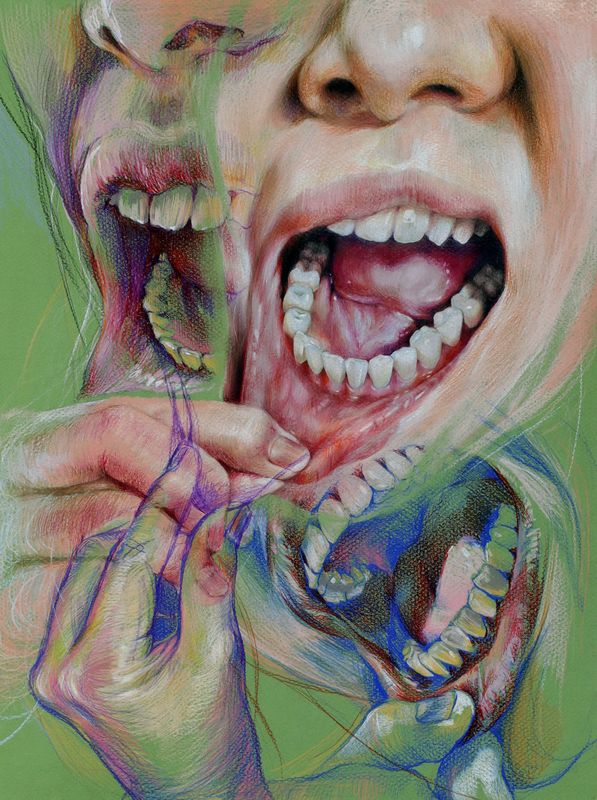
Free composition involves decisions pavilion drawing doesn’t require: (1) Subject selection — choosing what to draw from infinite possibilities, (2) Viewpoint decision — where to position yourself relative to subject, (3) Cropping choices — what to include and exclude from composition, (4) Focal point placement — where you want viewer attention, (5) Visual hierarchy — which elements receive emphasis, (6) Negative space decisions — empty areas as active compositional elements, (7) Scale and proportion choices based on expressive intent, (8) Balance decisions — symmetrical, asymmetrical, or deliberately off-balance. Each decision is yours to make in free composition. In pavilion drawing, these decisions are already made by exam format. Students trained only for pavilion subjects often freeze when faced with open compositional choices.
Transition Exercise 1: Cropping Studies
Start with cropping exercises on existing images: (1) Take photograph you find interesting — landscape, interior, still life, (2) Create 5-6 different crops of same source image, varying what’s included and excluded, (3) Draw each crop as separate study, noting how composition feels different, (4) Analyze which crops feel strongest and why, (5) Repeat with different source images over 2-3 weeks. This exercise develops seeing for composition before requiring subject selection. Working from photographs removes the challenge of observation while focusing on compositional decisions. After 15-20 cropping studies, students typically develop stronger compositional intuition. The exercise bridges from given subjects to chosen subjects gradually.
Transition Exercise 2: Subject Selection
Move to subject selection exercises: (1) Walk through familiar environment (home, neighborhood, school), (2) Note 10 potential drawing subjects with different compositional possibilities, (3) Photograph or sketch each briefly, (4) Select 3 most interesting and develop into more complete drawings, (5) Reflect on what made you choose those subjects — specific visual qualities, personal meaning, challenge interest, (6) Repeat with different locations weekly. This exercise develops subject selection capability. Korean students accustomed to exam subjects often feel anxious making these choices. Starting with familiar environments reduces decision anxiety. Reflecting on choices builds awareness of personal visual interests. Over weeks, subject selection becomes natural rather than paralyzing.
Transition Exercise 3: Multiple Compositions of Same Subject
Develop compositional flexibility through repetition: (1) Choose single subject — specific still life, interior corner, figure arrangement, (2) Create 5-8 different compositional drawings of same subject, (3) Vary viewpoint, cropping, emphasis, mood in each version, (4) Some versions should feel deliberately unusual or unconventional, (5) Compare versions to identify which work and why, (6) Develop one version into finished piece applying Korean technical skills. This exercise demonstrates that same subject supports many compositional approaches. Korean students often assume one correct way to compose exists — this exercise reveals compositional choice as genuinely open. Selecting final version teaches compositional evaluation. The exercise combines Korean technical strength with US compositional emphasis.
Transition Exercise 4: Unusual Viewpoints
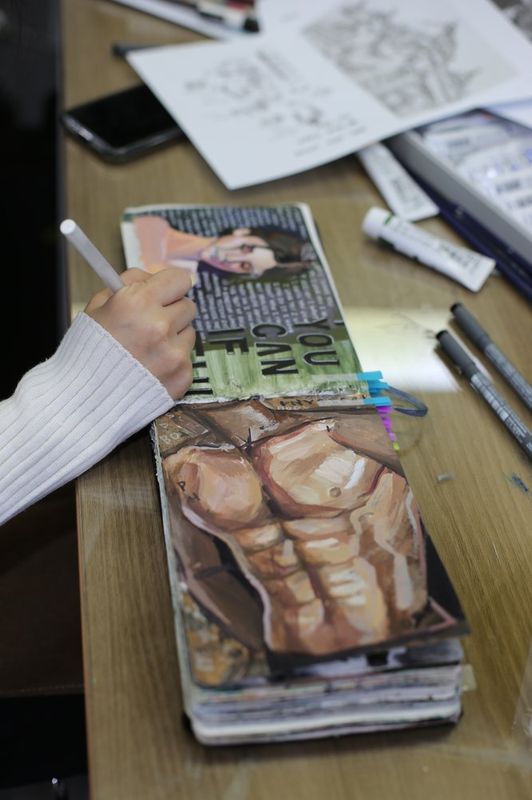
Challenge conventional viewpoints through specific exercises: (1) Draw subjects from viewpoints typically avoided in Korean training — extreme close-up, bird’s eye, worm’s eye, (2) Draw familiar subjects from angles that require mental rotation, (3) Compose with significant negative space rather than filled frames, (4) Include intentional cropping that cuts through subject, (5) Work with unusual framing that emphasizes atmosphere over completeness. These exercises build compositional range. Korean exam training rewards conventional viewpoints that maximize evaluation ease. US portfolios benefit from some unusual viewpoints demonstrating compositional adventurousness. The exercises don’t require abandoning conventional skills but expand compositional vocabulary. Students who can produce both conventional and unusual compositions have stronger compositional capability than those limited to either alone.
Transition Exercise 5: Personal Subject Pieces
After cropping, subject selection, and compositional exploration exercises, progress to personal subject pieces: (1) Identify subject with personal meaning — specific place, person, object with history, (2) Develop multiple compositional options before choosing final version, (3) Invest substantial time (10-20 hours) rather than single-session approach, (4) Apply Korean technical skills to personal subject, (5) Discuss completed piece with mentor examining both technique and composition, (6) Repeat with different personal subjects over 2-3 months. Personal subject pieces with intentional composition become portfolio core. After completing 5-8 personal pieces, students have substantial US-ready portfolio material. The progression from exercises to finished pieces takes 4-6 months typically but produces competitive portfolio content.
Common Transition Difficulties
Challenges during pavilion-to-free-composition transition: (1) Anxiety about “correct” composition — free composition doesn’t have single correct answer, (2) Over-reliance on central placement habit from exam work — strong compositions use whole picture space, (3) Including too much in compositions — exam training encourages complete rendering; US pieces often benefit from selective inclusion, (4) Avoiding asymmetry that feels wrong but often works compositionally, (5) Rushing to complete exercise rather than experimenting within it, (6) Seeking mentor approval on each compositional choice — autonomy is the skill being developed, (7) Measuring progress only by technical quality not by compositional development. Recognizing these difficulties as normal rather than personal failure helps students persist through transition. Each exercise builds capability that emerges gradually across months.
Frequently Asked Questions
How long does this transition take?
4-8 months for noticeable improvement; 12+ months for strong compositional autonomy. Pace depends on starting capability and practice intensity. Early portfolio work often shows transition in progress.
Should I include pavilion drawing in US portfolio?
1 strong pavilion drawing piece can demonstrate architectural rendering capability. Primary portfolio should be free composition work reflecting personal direction.
What if my Korean academy doesn’t teach free composition?
Independent work essential in this case. Supplement academy training with personal exercises, possibly with outside mentor. Some Apgujeong academies (including Royal Blue Art) specifically address this gap.
Can I continue exam preparation while developing free composition?
Yes with structured time allocation. Many Korean students maintain both tracks. Requires careful time management but preserves both application options.
Next Steps
Starting compositional transition exercises early gives time for skills to develop before portfolio completion. Systematic progression from cropping through personal subjects builds capability reliably.
Ready for compositional development coaching? Contact Royal Blue Art & Design for structured guidance.
Related Reading
Korean Art Education Topics
- Why Sogyeong Drawing Won’t Work for US Portfolio
- Why Suneung Drawing Won’t Work for US Art Schools
- Entrance Exam Art vs Portfolio Art: Key Differences
- AI and Korean Drawing Instruction: Cultural Differences
- How Korean Students Should Navigate AI in US Art Admissions
Essential Admission Topics
- How to Build a Portfolio for RISD
- Is Art School Worth It in 2026?
로얄블루 유학미술학원 무료 상담
무료 상담 신청하기 →