Quick Answer: Busan (부산) art students represent Korea’s second-largest city with distinctive port city culture, Gyeongsang regional identity, different urban experience than Seoul. Busan advantages include: distinctive regional material, Busan International Film Festival and active cultural scene, port city working-class heritage, specific Busan identity separating from Seoul. Challenges include: limited access to Seoul specialty US-focused academies, smaller local US-bound student network, more travel required for preparation. Strategic Busan students leverage regional distinctiveness while addressing preparation access. Royal Blue Art supports Busan students with 19+ years of experience and remote-compatible coaching options.
| Korean Heritage Element | Portfolio Application | US School Reception |
|---|---|---|
| Hangeul Typography | Type design, visual systems, graphic identity | Highly valued |
| Minhwa / Folk Painting | Pattern design, illustration, cultural narrative work | Very positive |
| Pojagi (patchwork) | Textile design, surface pattern, color theory | Distinctive |
| Celadon / Ceramics | 3D work, craft-based portfolio, material exploration | Strong reception |
| Hanok Architecture | Spatial studies, architectural drawing, structural analysis | Positive for arch |
| K-Pop Visual Culture | Graphic design, brand identity, digital art direction | Contemporary/Relevant |
Frequently Asked Questions
Q1. What are the most important factors in choosing a US art school?
The most critical factors in art school selection are: program quality in your specific discipline (overall rankings are less important than departmental strength), faculty whose work you genuinely admire and who are actively practicing in their field, location and industry access relevant to your career goals, cost and scholarship availability, and the creative culture and community of the school. Visit campuses when possible—direct experience of a school’s environment is irreplaceable in making the right choice.
Q2. How does US art school education differ from Korean art education?
US art school education fundamentally differs in its emphasis on conceptual development and personal voice over technical execution and trend awareness. Korean art education typically prioritizes technical precision, recognizable styles, and demonstrable skills. US programs push students to ask ‘why am I making this?’ before ‘how do I make this?’ The critique culture—presenting and defending your work publicly—develops communication skills essential in professional practice that Korean students often need to specifically prepare for.
Q3. What role does the portfolio play in US art school admissions?
The portfolio is the single most important factor in US art school admissions. Admissions reviewers look for: a distinct personal creative voice, evidence of genuine conceptual thinking, technical skill appropriate to your stage of development, and creative risk-taking. A strong portfolio can compensate for modest academic performance. Korean students should be cautious about submitting portfolios that focus exclusively on technical excellence—US programs want to see what makes you uniquely creative, not just competently skilled.
Q4. What is the typical financial burden of US art school, and how can it be managed?
Total annual cost at top US art schools ranges from $65,000-$80,000 (tuition + living). Four-year totals can exceed $280,000. International students are eligible for institutional merit scholarships but not US federal financial aid. Strategies for managing cost include: applying Early Decision when scholarship consideration is higher; applying to a range of schools and negotiating offers; researching Korean government overseas study grants; considering public universities with strong art programs (lower tuition); and applying for departmental and external scholarships.
Q5. How should I approach the personal statement for art school applications?
The personal statement for art school should authentically articulate your creative motivations, current artistic practice, and why the specific program fits your development. Avoid generic statements about ‘always loving art’—be specific about what questions, ideas, or problems drive your current work. Reference specific faculty, facilities, or program aspects that genuinely attract you. Demonstrate that you’ve researched the program beyond surface-level familiarity. Show intellectual curiosity about art, design, and ideas, not just enthusiasm for making things.
Q6. What facilities should I expect at a top US art school?
Top US art programs provide access to: dedicated studio spaces (often 24-hour access for advanced students); professional printmaking facilities; darkrooms and digital photo labs; ceramics kilns and sculpture yards; digital fabrication labs (laser cutters, 3D printers, CNC routers); model shops with woodworking and metal equipment; film and video production facilities; comprehensive art and design libraries; and gallery spaces for student exhibitions. Program-specific facilities are often the differentiating factor between good and exceptional programs.
Q7. What career outcomes can I expect from a top US art school?
Career outcomes vary by discipline. Design graduates (graphic, industrial, UX, fashion) typically enter the workforce in relevant industries within 6-12 months of graduation with entry-level salaries of $45,000-$70,000 in the US. Fine arts graduates pursue more varied paths including gallery representation, artist residencies, teaching, and commercial work. Architecture graduates enter firms with variable starting salaries. Korean graduates often return to Korea or work at companies with Korea operations, where US art school degrees carry significant prestige in design and fashion industries.
Q8. How important is it to visit art school campuses before applying?
Campus visits are highly valuable if feasible. Direct experience of a school’s physical environment, student culture, and active work is irreplaceable. On visits: observe student work in studios and hallways (the best indicator of program quality); talk to current students honestly about their experience; visit the facilities you’ll actually use; and attend a critique if possible. Many schools also offer virtual visits and portfolio reviews. If physical visits aren’t possible, virtual open houses, student video tours, and direct outreach to current students provide important information.
Q9. What is the first year of art school like, and how should I prepare?
Most top art schools require a foundation year focusing on drawing fundamentals, color theory, 2D and 3D design, and art history. This year is typically the most intensive—students often work 10-14 hours daily. Prepare by: taking life drawing classes seriously (figure drawing is central to foundation year at most schools); exploring diverse media to develop flexibility; reading art history broadly; and practicing articulating ideas about your work verbally and in writing. The foundation year establishes relationships with peers and faculty that shape the rest of your education.
Q10. How do I evaluate an art school’s alumni network?
Evaluate alumni networks by: researching where graduates from the specific program actually work (not just what the school claims); looking at whether alumni who graduated 5-10 years ago are in positions you aspire to; checking whether the school maintains active alumni engagement or just claims an ‘alumni network’; contacting alumni directly on LinkedIn to ask about their experience and the value of their degree; and checking if the school has alumni in Korea-based opportunities if that’s your target market. A genuine alumni network opens doors throughout a career—this long-term value is often underweighted in the immediate application decision.
Q11. What should Korean students know about cultural adjustment at US art schools?
Cultural adjustment at US art schools involves both American cultural norms and the specific subculture of art and design education. Prepare for: critique culture (public presentation and defense of your work, sometimes with harsh feedback); a more individualistic studio culture compared to Korean collective approaches; expectation of independent initiative in driving your creative practice; diverse student backgrounds that may challenge assumptions; and different social norms around directness and self-advocacy. Korean students who embrace these differences—rather than resisting them—typically report the most transformative educational experiences.
Understanding Busan art students Seoul comparison helps Busan students position applications strategically. According to regional patterns among Korean applicants to programs like RISD and Parsons, regional distinctiveness serves applicants when developed thoughtfully. At Royal Blue Art & Design in Apgujeong, Seoul, we work with Busan students through remote and intensive in-person options.
This guide covers Busan-specific advantages and strategies.
Busan Cultural Distinctiveness
Busan’s distinct cultural elements: port city identity different from landlocked Seoul, Gyeongsang regional dialect and culture, working-class industrial heritage, Japanese colonial-era urban development visible in architecture, post-war refugee influx shaping population, Busan International Film Festival making city cultural center, specific Busan seafood culture, Haeundae and Gwangalli beaches as urban features, Gamcheon Cultural Village as distinctive neighborhood. Busan offers distinct material from Seoul. Students growing up in Busan have specific regional experience. Port city perspective different from landlocked Seoul resident experience. Busan culture increasingly recognized — film festival, K-drama locations, global attention growing.
Port City Material
Port city-specific artistic material: ocean presence in daily life, maritime industries and their workers, specific architecture of port city, Japanese-era waterfront and contemporary redevelopment, fish markets as distinctive social spaces, ship industry and its contemporary transformation, seafarer culture and global connections, weather patterns shaped by ocean. Port city material distinctive relative to landlocked urban Korean experience. Students with authentic port city engagement have specific territory to investigate. International contemporary art includes substantial port city work — Busan material joins broader conversation. Specific port city neighborhoods (Jagalchi, Yeongdo, Nampo-dong) offer particular investigation sites.
Busan International Film Festival Context
BIFF cultural context: since 1996 major international film festival making Busan cultural center, contemporary art programming alongside film, Busan Cinema Center as architectural landmark, creative scene developed around festival, international connections enabling cultural exchange, Gwangalli area as creative district. Students growing up with BIFF presence have cultural context different from other Korean cities. Some Busan students develop international cultural network through festival engagement. Film-focused students particularly benefit from Busan context. Contemporary art and film increasingly overlap — BIFF-context students have useful cross-disciplinary exposure.
Gyeongsang Regional Identity
Gyeongsang regional cultural elements: distinctive dialect and speech patterns, regional historical identity separate from Seoul/Gyeonggi dominance, specific regional foods and traditions, Yeongnam academic tradition (different from Seoul’s Giho tradition), contemporary political and cultural regional identity, relationship with Gyeongju ancient capital and Silla heritage, regional industrial development patterns. Gyeongsang identity distinct within Korean context. Students with authentic regional identity have material Seoul-centric students don’t. Regional Korean identity increasingly recognized rather than assimilated to Seoul template. Specific Gyeongsang cultural traditions offer investigation subjects.
Preparation Access Challenges
Busan students’ preparation challenges: limited Busan academies focused on US applications, distance requires travel to Seoul for specialty preparation, smaller local US-bound student community, KTX travel to Seoul 2.5-3 hours making weekly commute difficult, higher cost for Seoul intensive preparation due to travel/lodging, regional academies may not understand US admission requirements fully. Strategies: concentrated summer/vacation Seoul intensives rather than weekly commute, online mentorship supplementing local preparation, combining Seoul sessions with family or friend hosting, developing authentic Busan material as distinctive advantage. Busan students with planning navigate access challenges.
Local Busan Resources
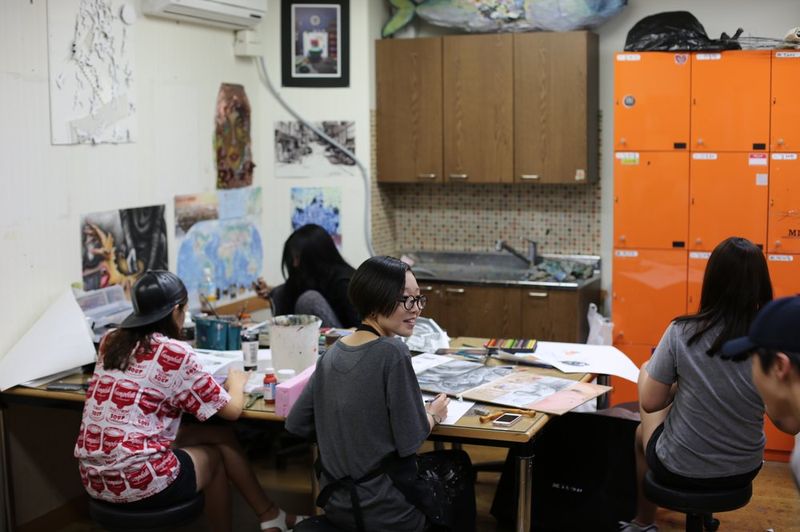
Available Busan resources: Dongseo University art programs and facilities, Busan National University art programs, Kyungsung University art programs, Busan Biennale contemporary art exposure, Busan Museum of Art and programming, local galleries increasing in number, some academies with art focus though typically Korean-university-oriented. Students building on local Busan resources while supplementing with Seoul access create productive preparation. Local teachers may not have specific US admissions expertise but provide technical foundation. Combination of local resources plus targeted Seoul/online US-specific preparation works for many Busan students.
Positioning Regional Identity
Strategic regional positioning: embrace Busan identity confidently in applications, develop substantive Busan/Gyeongsang cultural material, differentiate from Seoul template where applicable, use regional distinctiveness as portfolio advantage, mention Busan context in artist statements when relevant, discuss regional identity in interviews substantively. Busan students sometimes feel regional origin as disadvantage relative to Seoul students — actually asset when owned. Seoul-centric thinking assumes Seoul as default — reality is Korea multi-regional with distinct cultures. US admissions appreciates specific regional identity rather than generic Korean identity. Confident regional ownership distinguishes.
Frequently Asked Questions
Will US reviewers recognize Busan as specific city?
Some familiarity growing through BIFF and K-drama locations. Not universal recognition but increasing. Can briefly contextualize Busan in artist statement when relevant.
Should I attend Seoul academies despite distance?
If resources permit. Summer intensives rather than weekly commute often most practical. Supplements local Busan preparation with Seoul-specific US admissions expertise.
Is Busan regional identity too obscure internationally?
No — specificity serves applications. Generic Korean identity interchangeable. Specific regional identity distinguishes. Introduce Busan context thoughtfully rather than assuming universal recognition.
Can Busan preparation match Seoul quality?
With supplementation yes. Local Busan technical training plus targeted Seoul/online US-specific coaching produces competitive preparation. Requires more coordination than Seoul-based students.
Next Steps
Busan students have distinctive regional advantages when owned authentically. Regional material, confident identity positioning, strategic preparation across Busan-Seoul resources produce strong applications.
Ready for Busan-specific preparation guidance? Contact Royal Blue Art & Design for consultation.
Related Reading
Korean Art Education Topics
- How Jeju Island Artists Approach US Art School Portfolios
- Seoul vs Gyeonggi Arts High School: Different Paths to US Art Schools
- How Korean Students Can Own Their Cultural Background Proudly
- Korean History in Contemporary Portfolio Work
- Korean Modern History as Source Material for Art
Essential Admission Topics
- How to Build a Portfolio for RISD
- Is Art School Worth It in 2026?