Quick Answer: AI can accelerate early character design brainstorming by generating silhouette variations, costume directions, and stylistic options quickly. Strong character designers use AI for broad exploration, then develop final designs through extensive traditional drawing — turnarounds, expression sheets, action poses, and model sheets that demonstrate drawing capability. Animation and illustration programs at CalArts, SVA, Ringling, and SCAD evaluate draftsmanship rigorously, making hand-drawn character development essential. Royal Blue Art guides Korean students through hybrid workflows that use AI productively while building the drawing skills animation schools require.
Using AI character design brainstorming effectively matters for Korean students targeting animation and illustration programs. According to faculty at CalArts and Ringling, character design portfolios must demonstrate extensive hand-drawn capability regardless of AI tool availability. At Royal Blue Art & Design in Apgujeong, Seoul, we guide students through workflows that leverage AI exploration while building the draftsmanship animation programs require.
This guide covers practical hybrid workflows for character design brainstorming.
When AI Helps Character Design
Productive AI uses in character design workflow: (1) Silhouette exploration — generating 30-50 silhouette variations quickly to identify strong shape languages, (2) Costume and accessory brainstorming — testing different cultural periods, aesthetic directions, or narrative contexts, (3) Color scheme testing — trying color combinations across character designs without committing to full renders, (4) Reference gathering — collecting visual references for specific attributes like hair textures, fabric behaviors, or mechanical elements, (5) Rough pose ideation — quick visualization of action possibilities before committing to finished drawings. Each use treats AI as brainstorming accelerator rather than design finalizer. Character design as a discipline requires specific skills — consistent construction, clear expressions, believable anatomy — that only come through sustained drawing practice.
The Traditional Character Design Skills
Animation and illustration programs evaluate specific capabilities AI cannot demonstrate: (1) Construction skill — the ability to draw the same character from multiple angles consistently, (2) Appeal — the elusive quality that makes characters feel alive and engaging, developed through thousands of drawings, (3) Gesture — capturing movement and weight in character poses, (4) Expression range — showing the same character across emotional states with clear facial acting, (5) Model sheets — professional industry format showing front, side, back views with proportion guides. These skills cannot be prompted — they come from figure drawing classes, animation studies, and dedicated character sketching over years. CalArts Character Animation, Ringling Computer Animation, and similar programs require hand-drawn evidence of these skills in every portfolio.
Productive Brainstorming Workflow
Step-by-step workflow for AI-assisted character design: (1) Write character brief — personality, role, context, emotional register in traditional notes, (2) AI silhouette exploration — 15-30 minute session generating varied silhouettes matching brief, (3) Identify 3-5 strongest silhouettes from AI outputs, (4) Traditional thumbnail sketching — draw 20-30 small variations by hand building on strongest silhouettes, (5) Select final direction through hand drawing, not AI regeneration, (6) Build model sheet entirely through hand drawing — turnarounds, expressions, props, (7) Develop into final portfolio pieces through extensive drawing practice. The workflow front-loads AI for quick exploration, then transitions decisively to hand drawing for development. The finished portfolio pieces come from your hand, not from AI output refinement.
What to Put in Character Portfolios
Strong character design portfolio contents: (1) Full model sheets for 3-5 original characters showing front, 3/4, side, back views with consistent proportions, (2) Expression sheets showing each character across 8-12 emotional states, (3) Action pose sheets with each character in 6-10 dynamic positions showing gesture and weight, (4) Costume variations or age progression showing character flexibility, (5) Final illustration pieces featuring characters in environments with clear storytelling, (6) Process documentation showing development from rough sketches through final design. All content should demonstrate clear hand drawing. AI-generated character sheets presented as your work fail immediately when reviewers notice the lack of consistent construction that only hand drawing produces. Hand drawing variations in line quality across a model sheet signal genuine skill development.
Avoiding AI Character Design Pitfalls
Common problems that hurt character design applications: (1) AI-generated characters that cannot be reliably redrawn by the applicant — when reviewers ask to see the character in different pose, the applicant struggles, (2) Characters with AI-typical aesthetic (specific lighting, certain anatomical tells, consistent glossiness) that clearly identify source, (3) Inconsistent character across portfolio because AI outputs vary, (4) Over-polished single illustrations without development sketches showing process, (5) Reliance on AI for action poses the applicant cannot actually draw from imagination, (6) Character concepts that feel generic because AI trained on existing animation conventions produces conventional results. Each pitfall signals to reviewers that the portfolio does not represent the applicant’s actual capabilities.
Korean Student Character Design Advantages
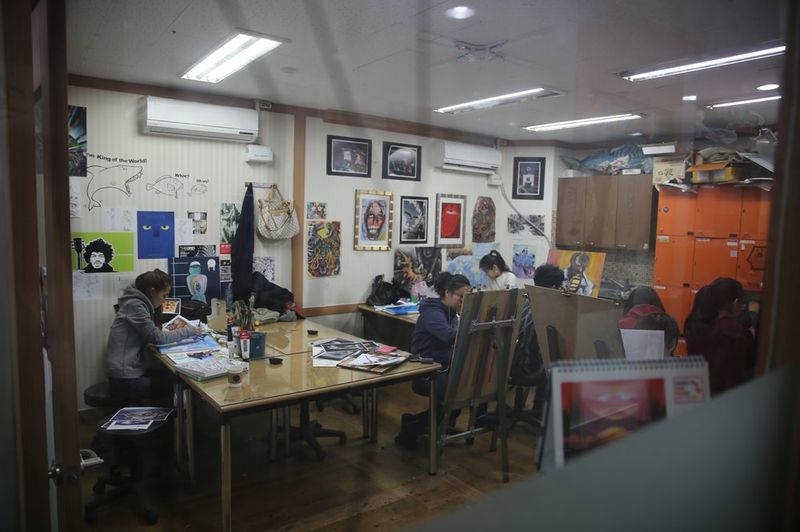
Korean applicants often have distinctive strengths to leverage: (1) Strong foundational drawing education from Korean academies translates directly to character design requirements, (2) Exposure to Korean animation tradition (Studio Mir, Studio Reve) offers cultural reference beyond Western mainstream, (3) Access to Korean illustration community on platforms like Grafolio and Postype provides peer learning networks, (4) Familiarity with Korean webtoon conventions adds unique perspective valued by some programs, (5) Bilingual capability enables engagement with both Korean webtoons and Western animation history. These advantages strengthen applications when demonstrated through hand-drawn portfolio pieces. AI shortcuts undercut these advantages because they hide the very skills Korean education develops. Apgujeong-based students at Royal Blue Art develop character design skills grounded in traditional Korean drawing education and extended to international animation industry standards.
Target School Specifics
Character-focused programs and their expectations: CalArts Character Animation — life drawing, character design, story sketches, all hand-drawn with clear draftsmanship evidence, Ringling Computer Animation — strong hand-drawing foundation expected before digital specialization, SVA Computer Art/Illustration — traditional foundation with exploration of media, SCAD Sequential Art or Animation — story-focused with character consistency, ArtCenter Entertainment Design — industry-focused character work for film and games. Each program publishes portfolio guidelines emphasizing hand-drawn work. AI-heavy portfolios consistently underperform at these programs regardless of visual polish. The applicants who stand out show drawing obsession visible in sketch pages, expression studies, and consistent characters drawn dozens of times from different angles.
Frequently Asked Questions
Can I use AI-generated character reference for my hand-drawn designs?
Yes, treating it like any other reference. Use multiple sources including AI, then develop your own character through hand drawing. Document the reference use and do not let any single AI generation dominate your final design.
Should I include AI-generated character concepts in my portfolio?
Usually no, especially for animation programs. Include process documentation showing brainstorming if relevant, but portfolio pieces should be hand-drawn character development work. AI concepts as portfolio pieces weaken rather than strengthen applications.
How many characters should my portfolio include?
Most strong character design portfolios feature 3-5 original characters developed thoroughly. Depth across fewer characters typically outperforms breadth across many underdeveloped characters. Show each character from multiple angles and expressions.
Can AI help me overcome drawing weaknesses?
Not in ways that help applications. AI can hide drawing weaknesses temporarily but cannot develop drawing skill. Sustained drawing practice over months addresses weaknesses genuinely. AI shortcuts delay skill development that programs will ultimately require.
Next Steps
Using AI for brainstorming while building strong hand-drawing practice positions character design applicants for success at competitive programs. Start with drawing foundation, add AI selectively for exploration, develop final work through sustained traditional practice.
Ready to develop strong character design skills? Contact Royal Blue Art & Design for structured guidance.
Related Reading
AI & Portfolio Topics
- How to Use AI for Mood Boards as a Fine Artist
- How to Use AI for Reference Gathering Without Plagiarism
- Why Fully AI-Generated Work Underperforms at Art Schools
- How to Keep a Human-Driven Practice in an AI Era
- AI Disclosure on Art School Portfolios: Best Practices
Essential Admission Topics
- How to Build a Portfolio for RISD
- Is Art School Worth It in 2026?
로얄블루 유학미술학원 무료 상담
무료 상담 신청하기 →Character Design Portfolio Requirements — Top Animation Schools 2026
| School | Program | Portfolio Requirements | AI Work Policy |
|---|---|---|---|
| CalArts | Character Animation BFA | 15-24 pieces: life drawing, character sheets, storyboards | Disclose AI use; hand-drawing ability must be evident |
| RISD | Film/Animation | 12-20 works: drawing fundamentals + animation concepts | Portfolio must show hand-drawing capability |
| SVA | Animation | 15-20 pieces + demo reel if available | AI concepts acceptable; final work must show craft |
| Ringling | Computer Animation | Drawing portfolio + demo reel | Strong traditional drawing foundation required |
| SCAD | Animation | 12-20 pieces across multiple media | Flexible; AI tools in process acceptable |
Building AI-Assisted Character Design Into Your Portfolio Correctly
The key mistake animation applicants make with AI character design tools: using AI-generated characters directly in their portfolio without demonstrating they can draw those characters themselves. Admissions readers at CalArts, RISD, and Ringling are specifically looking for evidence of hand-drawing capability. A portfolio full of AI-generated character concepts with no traditional drawing work will typically be rejected regardless of how visually polished it looks.
The correct approach: use AI for initial concept exploration — generating 20-30 rough character directions in minutes, identifying silhouettes and color relationships that are interesting. Then select the most promising 2-3 directions and develop them entirely by hand: turnaround sheets, expression sheets, action poses, model sheets. The AI work stays in your sketchbook as process documentation. Your portfolio shows the hand-drawn development.
Character Design AI Tools — FAQ for Animation Applicants
Q. Which AI tools are most useful for character design brainstorming?
A. Midjourney and Adobe Firefly are most commonly used for initial concept generation. For style exploration, Stable Diffusion with specific character design models gives more control. For Korean applicants targeting animation programs, familiarity with these tools is increasingly expected — but hand-drawing ability remains the foundation.
Q. Can I include AI-generated character concepts in my portfolio sketchbook?
A. Yes, in a sketchbook or process documentation section. Frame them clearly as “initial AI concept exploration” and show your hand-drawn development following from them. This demonstrates you can use AI as a research tool while possessing the traditional skills programs require.
Q. CalArts says they want to see my “artistic voice” — how does AI fit with that?
A. AI-generated work does not demonstrate artistic voice — it demonstrates prompting ability. Your artistic voice emerges from the specific choices you make in your hand-drawn character development: the proportions you favor, the expressiveness of your linework, the personality you give characters through drawing. Those qualities cannot be generated by AI.
Q. Should I mention AI use in my personal statement for animation programs?
A. If AI was part of your process, briefly acknowledging it in your statement is honest and appropriate. Frame it around how you used AI as a brainstorming tool and why hand-drawing remains central to your practice. Programs value self-awareness about tools and their limitations.
Character Design Skills That AI Cannot Replace
Animation programs are looking for applicants who can draw — specifically, who can draw characters that move, emote, and exist in three-dimensional space. The skills that demonstrate this are: turnaround sheets (front, side, three-quarter, back views of the same character in consistent proportion), expression sheets (the same face expressing a range of emotions through drawing), action poses (the character in dynamic movement), and model sheets (the complete character specification document). None of these can be generated by AI because they require understanding anatomy, proportion, weight, and personality as drawing problems — not as image generation prompts.
Build these skills first. Use AI second, only for initial brainstorming.
Start with drawing. Add AI. Never reverse that order.