Quick Answer: Art schools detect AI-generated portfolio work through multiple methods: experienced visual review spotting AI aesthetic signatures, comparison of pieces within a portfolio for stylistic inconsistency, interview questions probing material understanding and creative decisions, AI detection software flagging high-probability generated content, reverse image search, and occasional demonstration requests during interviews. Hidden AI involvement regularly gets discovered, with consequences ranging from rejected applications to revoked acceptances. Royal Blue Art guides Korean students toward transparent disclosure strategies that protect against detection-based problems.
Understanding how art schools detect AI in portfolio submissions helps applicants make informed decisions about disclosure. According to admissions staff at RISD, SAIC, and similar programs, detection capabilities have improved substantially through 2024-2026. At Royal Blue Art & Design in Apgujeong, Seoul, we help Korean students understand the risk landscape clearly.
This guide covers detection methods and implications for application strategy.
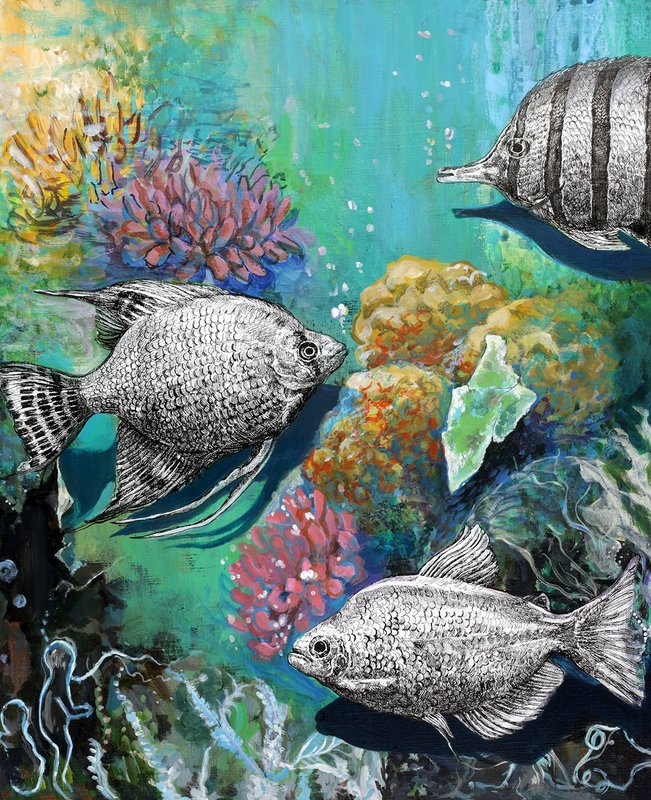
Experienced Visual Review
The primary detection method is experienced review by faculty and staff who see thousands of portfolios annually. Recognizable AI signatures include: (1) Midjourney-specific aesthetic — characteristic lighting quality, surface glossiness, shallow depth of field patterns, (2) Stable Diffusion artifacts — specific texture patterns, compositional conventions, anatomical tells, (3) DALL-E signatures — distinctive color palettes, specific spatial relationships, characteristic subject positioning, (4) Anatomical errors — hands with wrong finger counts, ears with incorrect geometry, eye focus inconsistencies, (5) Text rendering — any text in AI-generated images typically shows obvious errors, (6) Background-foreground consistency — AI often handles backgrounds differently than foreground subjects in telltale ways. Reviewers identify these signatures within seconds once trained. The signatures evolve as tools improve, but experienced reviewers update their visual vocabulary continuously.
Portfolio Consistency Analysis
Within-portfolio comparison reveals AI use through inconsistency patterns: (1) Skill level varying inexplicably between pieces — sophisticated AI work alongside weak traditional work suggests AI assistance, (2) Stylistic disconnection across portfolio — AI pieces often feel aesthetically unrelated to disclosed traditional work, (3) Technical consistency on specific elements (hair, fabric, texture) that would challenge most students working traditionally, (4) Output quality exceeding what interview or demonstration reveals as actual skill level, (5) Process documentation that doesn’t align with finished work quality. Strong portfolios show coherent artistic identity across pieces. AI-assisted portfolios often look like multiple different artists worked on them. Reviewers specifically look for coherence across portfolio, and inconsistency triggers deeper investigation.
Interview Probing Methods
Interviews include specific AI-detection questions: (1) “Tell me about your process for this specific piece” — inability to describe detailed creative decisions suggests limited involvement, (2) “What mediums did you use and why” — vague or incorrect material discussion suggests unfamiliarity, (3) “Can you describe your materials’ specific properties” — probe reveals depth of hands-on experience, (4) “What would you do differently if you redrew this piece” — evaluates genuine artistic thinking, (5) “Can you sketch for me right now” — some interviews include demonstration, (6) “How did you solve this technical problem” — tests whether applicant actually solved it. Strong applicants with genuine skill answer these easily. Applicants whose portfolios exceed their actual capabilities struggle visibly. Interview probing is often the definitive detection method because it tests capabilities directly.
Technical Detection Tools
Some schools use technical detection software: (1) Commercial AI detectors (Optic, Hive Moderation) that analyze image properties for generation signatures, (2) Reverse image search to check if images appear in AI generation galleries or model training data, (3) Metadata analysis for telltale AI generation signatures in file structures, (4) C2PA credentials that some AI tools embed voluntarily, (5) Style-matching against known generative models. Detection accuracy varies: strong for obvious generative work, less reliable for heavily edited hybrid work. False positives and false negatives both occur. Most schools use technical tools as one input among several rather than as primary decision tool. The detection tools improve continuously, and what passes undetected in 2026 may be flagged in 2027 when applicants’ work is reviewed in archived records.
Consequences of Hidden AI Use
Detection consequences vary by timing and severity: (1) Pre-admission detection typically results in application rejection without full review, (2) During-admission detection may mean interview invitation withdrawal, (3) Post-admission pre-enrollment detection can result in acceptance revocation, (4) Post-enrollment detection can lead to academic integrity hearings, (5) Post-graduation detection of original application fraud has led to degree revocation at some institutions. The seriousness increases when hidden AI use appears to be intentional deception rather than inadequate disclosure. Honest applicants who disclose imperfectly face much smaller consequences than those who actively misrepresent. Korean applicants should understand that US art school ethics follows US academic integrity standards, which treat misrepresentation seriously.
What Increases Detection Risk
Behaviors that increase detection probability: (1) Using default settings on popular AI tools without modification, producing highly recognizable outputs, (2) Submitting work with quality dramatically exceeding your demonstrated capability, (3) Including multiple pieces with similar AI aesthetic signatures, (4) Providing vague or inconsistent process descriptions, (5) Having difficulty discussing specific materials or techniques, (6) Using prompt templates shared in online AI art communities where other applicants may use similar outputs, (7) Heavy editing that leaves AI signatures partially visible, (8) Recent generation dates visible in file metadata conflicting with claimed creation timeline. Each behavior increases detection likelihood significantly. Combining several behaviors almost guarantees detection.
Why Transparency Works Better
Strategic case for disclosure rather than hiding: (1) Disclosed AI use evaluated fairly; hidden AI use treated as integrity violation, (2) Reviewers appreciate applicants who demonstrate mature tool reasoning, (3) Disclosure accommodations allow AI-involved work to contribute to portfolio without disqualifying applicant, (4) Hidden AI creates constant application anxiety about detection, (5) Transparency builds habits that serve professional art career where misrepresentation ends careers, (6) Interview performance improves when applicants can discuss work honestly rather than defensively, (7) Admitted students who are honest about AI use integrate easily with faculty and peer discussions. Korean students specifically benefit from transparent practice because some academy contexts normalize less transparent approaches that create problems in US admissions.
Frequently Asked Questions
Can I hide AI use with careful editing?
Sometimes temporarily, but unreliable long-term. Detection tools improve continuously and re-review occurs. The strategic calculation strongly favors disclosure rather than hiding, regardless of editing skill.
Do all schools use AI detection software?
Not all, but increasing numbers. Most major US art schools use some technical detection. Even schools not using software rely on experienced visual review that often outperforms software.
Will I get flagged for Topaz or minor editing tools?
Typically no. Detection focuses on generative AI that created image content, not editing tools that improved existing photography or scans. Topaz for documentation enhancement is not considered AI generation.
What if my disclosed AI use is misinterpreted as more involvement?
Specific disclosure usually prevents this. Detailed process descriptions of what AI did and didn’t contribute clarify involvement level. Vague disclosure sometimes gets interpreted more broadly than accurate.
Next Steps
Understanding detection methods supports informed disclosure decisions. Choose transparency strategy that matches your actual AI use, document clearly, disclose specifically.
Ready to develop transparent application strategy? Contact Royal Blue Art & Design for guidance.
Related Reading
AI & Portfolio Topics
- How to Respond to AI Questions in Art School Interviews
- AI Disclosure on Art School Portfolios: Best Practices
- How to Document AI Use in Your Portfolio Process
- Why Fully AI-Generated Work Underperforms at Art Schools
- Ethical Considerations for AI Use as an Art Student
Essential Admission Topics
- How to Build a Portfolio for RISD
- Is Art School Worth It in 2026?
로얄블루 유학미술학원 무료 상담
무료 상담 신청하기 →FURTHER READINGHow to Use Sora and AI Video Tools Ethically — Using Sora and AI video tools without misrepresenting authorship
How to Use Luma AI for 3D Capture in Art — Luma AI for 3D capture
How to Use Figma AI Features for Design Portfolios — Figma AI features for design portfolios
How to Use Canva AI for Quick Presentation Prep — Canva AI for presentation prep
How to Use AI Background Removal for Portfolio Images — AI background removal for portfolio images
How AI Is Changing How Students Research Art Schools — AI has already changed how students research schools.
How to Make Sure AI Recommends the Right Art Academy — AI recommendations for Korean academies deserve scrutiny.