Quick Answer: Certain human capabilities in art practice remain beyond current AI — sustained observational attention to specific subjects, physical material intuition built through years of practice, cultural perspective emerging from lived experience, integrated conceptual framework developed through reading and reflection, and artistic decision-making grounded in personal values. Korean students who master these capabilities specifically stand out in US applications and build careers resilient to AI advancement. Royal Blue Art in Apgujeong focuses curriculum on these human-specific capabilities while providing appropriate AI literacy.
Understanding what AI cannot do art students must master helps Korean applicants focus preparation on capabilities that matter most. According to discussions with faculty at RISD and Parsons, admissions increasingly value human-specific capabilities as AI handles more visual production. At Royal Blue Art & Design in Apgujeong, Seoul, we focus curriculum on capabilities AI cannot replicate.
This guide identifies specific capabilities and how to develop them.
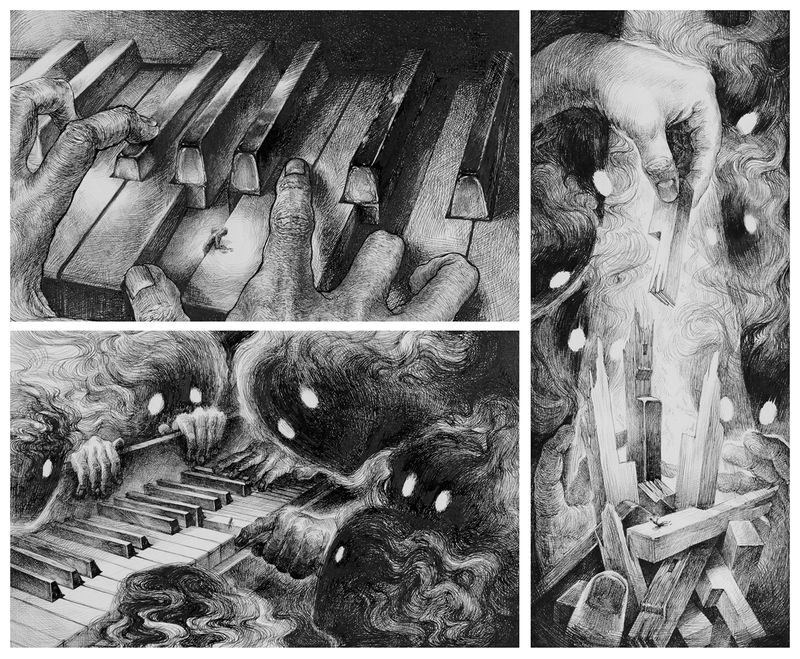
Sustained Observational Attention
AI processes images instantly; humans can observe same subject across hours, days, or years, accumulating depth of understanding impossible to generate. This sustained attention reveals: (1) How light changes on familiar subject through hours, (2) Subtle shifts in plant or animal behavior over days, (3) How people’s faces carry their histories in specific small details, (4) How places weather and change across seasons and years, (5) How materials behave differently with prolonged attention, (6) What becomes visible only after extensive looking. Korean students can develop this capability through: daily drawing practice from direct observation, returning to same subjects repeatedly across weeks, keeping observation journals noting what emerges with time, resisting the urge to photograph and use AI instead. Sustained observational attention produces artistic content AI genuinely cannot replicate.
Physical Material Intuition
AI generates images of materials but cannot develop the physical understanding that comes from actual handling: (1) How oil paint dries across different surfaces and temperatures, (2) How charcoal responds to different paper weights and textures, (3) How clay reveals structural possibilities through touch, (4) How different pigments mix physically versus theoretically, (5) How gesso layers build specific surface qualities, (6) How brushes with different hair types make specific marks. This embodied knowledge develops only through extensive hands-on practice. Korean students with strong traditional training often have this intuition well-developed through hours with physical materials. Preserving and extending this capability through portfolio preparation matters. Students who shortcut material exploration through AI lose capability that cannot be rebuilt quickly later.
Cultural Perspective From Lived Experience
AI cannot replicate cultural perspective emerging from specific lived experience: (1) Understanding of Korean family dynamics from inside Korean family, (2) Knowledge of Seoul urban experience from daily navigation, (3) Sensitivity to Korean visual culture developed through childhood exposure, (4) Recognition of cultural nuance that only in-culture people perceive, (5) Cross-cultural perspective from navigating Korean and international contexts, (6) Specific historical and political understanding from Korean context, (7) Particular emotional register from Korean relational culture. Korean students bring perspective international applicants cannot access. Portfolios that authentically draw on this cultural specificity stand out against AI-generated imagery trained primarily on Western data. Leveraging cultural perspective requires intentional development — specific Korean subjects, honest engagement with Korean experience, reflection on what your specific position reveals about universal themes.
Integrated Conceptual Framework
AI summarizes concepts from training data but cannot develop integrated personal framework: (1) Ideas that connect to specific personal experience in meaningful ways, (2) Frameworks built through years of reading, observation, and reflection, (3) Conceptual positions tested against specific encounters and conversations, (4) Values informed by specific cultural and personal context, (5) Questions that keep recurring across different work because they matter to specific person, (6) Connections between different fields — art and Korean literature, art and Korean film, art and Korean history, (7) Integrated worldview emerging from decade or more of sustained thinking. Korean students develop this through reading broadly across Korean and international texts, engaging with Korean contemporary artists and writers, discussing ideas with mentors and peers, writing regularly to clarify thinking, connecting artistic practice to other interests. Integrated framework signals maturity admissions values specifically.
Values-Grounded Decision-Making
AI optimizes for stated objectives but cannot develop personal values that guide decisions: (1) Choices about what subjects to pursue based on personal significance, (2) Decisions about what to include and exclude from portfolio based on artistic integrity, (3) Judgments about when to revise versus accept, (4) Ethical decisions about tool use and disclosure, (5) Priority setting based on what actually matters to you, (6) Choices that resist efficiency pressure when quality matters more, (7) Commitments maintained under pressure that prioritize values over expedience. Korean students develop values-grounded decision-making through sustained reflection on what matters to them specifically, conversations with mentors about ethical questions, practice making difficult choices in low-stakes contexts, reading philosophy and ethics, understanding their own tendencies and biases. This capability distinguishes mature applicants from efficient producers.
Real-Time Relational Response
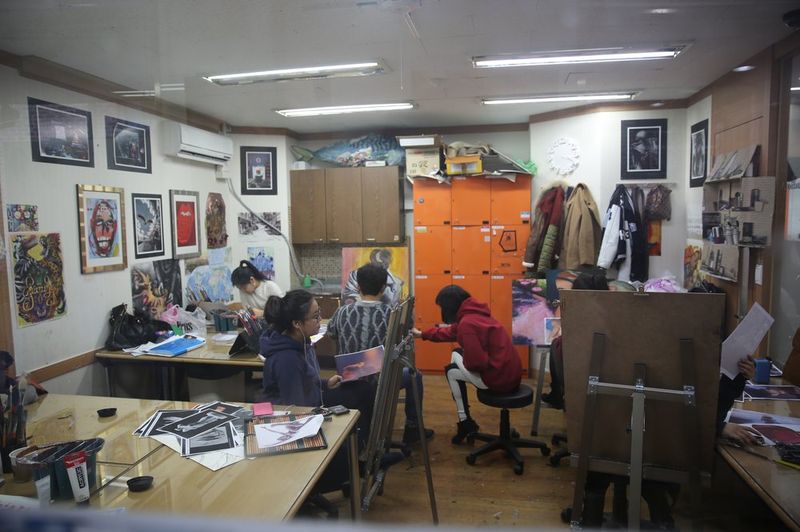
AI responds to inputs but cannot replicate human relational capabilities: (1) Reading nonverbal communication during interviews and critiques, (2) Building rapport through conversation requiring genuine presence, (3) Responding to group dynamics in studio settings, (4) Collaborating with peers on projects requiring negotiation, (5) Receiving difficult feedback gracefully and incorporating it productively, (6) Teaching others capabilities you’ve developed, (7) Mentoring relationships across years supporting mutual growth. These capabilities matter for art school studies and professional careers. Korean students can develop them through: participating in group critiques even when uncomfortable, maintaining mentor relationships across years, finding peer communities of serious artists, practicing giving and receiving feedback specifically, engaging in collaborative projects that require negotiation. Relational capabilities cannot be shortcut through tools — they develop through repeated human interaction.
Long-Term Career Implications
Why these capabilities matter beyond admissions: (1) Art careers span 40-60 years during which AI capabilities will change dramatically, (2) Capabilities AI cannot replicate remain valuable across technological shifts, (3) Professional contexts increasingly value human-specific skills as AI handles production work, (4) Teaching, curation, and art-adjacent careers depend on capabilities discussed here, (5) Artistic voice and cultural perspective become more valuable as generic AI production proliferates, (6) Sustained practice capabilities support creative longevity, (7) Relational and collaborative skills support career resilience. Korean students who invest in these capabilities during portfolio preparation build foundation for sustainable art careers. Students focused primarily on AI-assisted production may find their capability set becomes obsolete as AI improves. The investment in human-specific capabilities during 2026 applications pays compound returns across careers.
Frequently Asked Questions
How do I develop these capabilities during busy portfolio preparation?
Most develop through practices you’re already doing — observational drawing, material exploration, reflection — done with intentional awareness of what you’re building. The framework matters more than additional time.
Will AI eventually do all these things?
Some capabilities AI may partially replicate over time. Others — lived experience, relational presence, values-based decisions — remain fundamentally human. Hedging toward human capabilities is reasonable strategy.
Should I avoid AI entirely to build these capabilities?
No. The goal is thoughtful AI use alongside development of capabilities AI cannot replicate. Balance matters — neither AI rejection nor AI dependence serves well.
How will admissions know I have these capabilities?
Through portfolio evidence of sustained observation, interview discussion of your thinking, artist statement revealing integrated framework, process documentation showing decision-making. These capabilities become visible through how you present your work.
Next Steps
Focusing preparation on capabilities AI cannot replicate builds foundation for strong applications and sustainable careers. Integrate this awareness into ongoing practice.
Ready for human-capability-focused preparation? Contact Royal Blue Art & Design for guidance.
Related Reading
AI & Portfolio Topics
- How Korean Art Academies Are Adopting AI Into Curricula
- How AI Changed Portfolio Prep in Gangnam in the Last Year
- How to Keep a Human-Driven Practice in an AI Era
- How to Use AI Without Becoming Creatively Dependent
- How Korean Students Should Navigate AI in US Art Admissions
Essential Admission Topics
- How to Build a Portfolio for RISD
- Is Art School Worth It in 2026?
로얄블루 유학미술학원 무료 상담
무료 상담 신청하기 →