Quick Answer: UC Berkeley offers an Art Practice BA within a top-ranked public research university. CCA (California College of the Arts) offers a dedicated BFA in San Francisco — but CCA is closing by the end of the 2026-2027 academic year, with Vanderbilt University taking over the campus to establish new programs. Korean students considering CCA should understand this transition carefully before applying.
| Category | CCA | UC Berkeley |
|---|---|---|
| School Type | Art School | University |
| Location | San Francisco, CA | Berkeley, CA |
| Acceptance Rate | ~75% | ~16% |
| Annual Tuition | $50,000 | $44,000 |
| Ranking Strength | Strong West Coast Design | Strong Art Practice |
Frequently Asked Questions
Q1. What are the key differences between CCA and UC BERKELEY?
For Korean students comparing UC Berkeley Art vs CCA, there is a major development that reshapes this comparison: California College of the Arts announced it will wind down its current operations and close by the end of the 2026-2027 academic year. Vanderbilt University will become the owner of the campus and establish new undergraduate and graduate art and design programs. At Royal Blue Art & Design in Apgujeong, Seoul, we are actively monitoring this transition and advising Korean applicants accordingly.
This guide compares both schools as they currently stand — while being transparent about CCA’s transition — with data for the 2025–2026 cycle.

The CCA Transition: What Korean Applicants Must Know
CCA has announced it will close operations at the end of the 2026-2027 academic year. Students currently enrolled will complete their degrees, and students admitted for Fall 2025 or Spring 2026 will also complete CCA degrees. However, admission cycles beyond that are uncertain, and the campus will transition to Vanderbilt University, which plans to establish new art and design programs.
What this means practically: if you are a Korean student planning to apply for Fall 2026 or later, you should NOT apply to CCA expecting a traditional CCA education through completion. You may instead be applying to a new Vanderbilt-administered program. The curriculum, faculty, and culture of that new program are not yet established.
For students currently enrolled or admitted for near-term entry (Fall 2025, Spring 2026), CCA has committed to teaching out admitted students through their degree completion. If you are in this group, your education will continue as planned, though the institution’s culture may shift during your final years.
UC Berkeley vs CCA at a Glance
- UC Berkeley Art Practice: BA concentration within UC Berkeley’s College of Letters & Science. Top-ranked public research university. Overall UC Berkeley acceptance rate ~11%. 2025–2026 in-state tuition approximately $15,500; out-of-state (including international) approximately $48,000. Located in Berkeley, California.
- CCA (current, pre-closure): Dedicated art and design school. BFA and MFA programs. Acceptance rate historically ~73% (more accessible than most peers). 2025–2026 undergraduate tuition $60,864. Located in San Francisco, California. Closing end of 2026-2027; Vanderbilt taking over.
UC Berkeley Art Practice: Public University Art
UC Berkeley’s Art Practice department offers a BA within the College of Letters & Science. Students complete roughly 11 upper-division courses in the department, covering drawing, painting, sculpture, printmaking, photography, new media, and performance. The program combines studio practice with critical theory and art history.
Berkeley’s strength for Art Practice students comes from the broader university context. Students can integrate art with studies in computer science, rhetoric, film, or any of Berkeley’s world-class departments. The Art Practice community is small and intimate — typically 30 to 50 majors — but connects to Berkeley’s vast intellectual resources.
For Korean students, Berkeley’s public-university tuition is a major advantage, though out-of-state tuition (which applies to international students) eliminates much of the cost benefit. Financial aid for international students is limited compared to private universities like Stanford or the Ivy League.
CCA (Current State): Dedicated Art School
CCA has historically been one of the most established art schools on the West Coast, founded in 1907. The school offers BFA programs in Animation, Illustration, Graphic Design, Industrial Design, Photography, Fashion Design, Architecture, and numerous fine art disciplines. The urban San Francisco setting provides access to Bay Area galleries, museums, and the tech industry.
CCA’s historically high acceptance rate (~73%) reflected the school’s mission to train a wide range of creative students rather than select an extremely narrow pool. This meant CCA was accessible for students with developing portfolios who would have strong support through the BFA curriculum.
For students who currently attend or are near-term admitted to CCA, the education continues as planned. The closing announcement affects future application cycles, not current students.
The Vanderbilt Transition
Vanderbilt’s plans for the former CCA campus are still developing. The university has indicated it will establish new undergraduate and graduate art and design programs. What this means for prospective students is uncertain — we do not yet know the curriculum, faculty composition, admission criteria, or philosophy of the new programs.
Korean students considering the Bay Area for art education should monitor Vanderbilt’s announcements carefully. Some students may find the new programs exciting; others may prefer established institutions with known quantities.
Alternatives to Consider
Given CCA’s transition, Korean students interested in Bay Area art education should consider alternative options:
UC Berkeley Art Practice: Established public-university program. Different kind of education than a dedicated art school, but stable and well-resourced.
Stanford Art Practice: Graduate only (MFA), fully-funded, extremely selective. For the right emerging artist, an exceptional option.
San Francisco Art Institute (SFAI): Another historic Bay Area art school, though SFAI itself has faced significant challenges in recent years. Research current status carefully.
Outside the Bay Area: CalArts in Los Angeles, ArtCenter in Pasadena, or major schools like RISD, Parsons, SVA, SAIC for students willing to relocate.
Which Fits Korean Students Better?
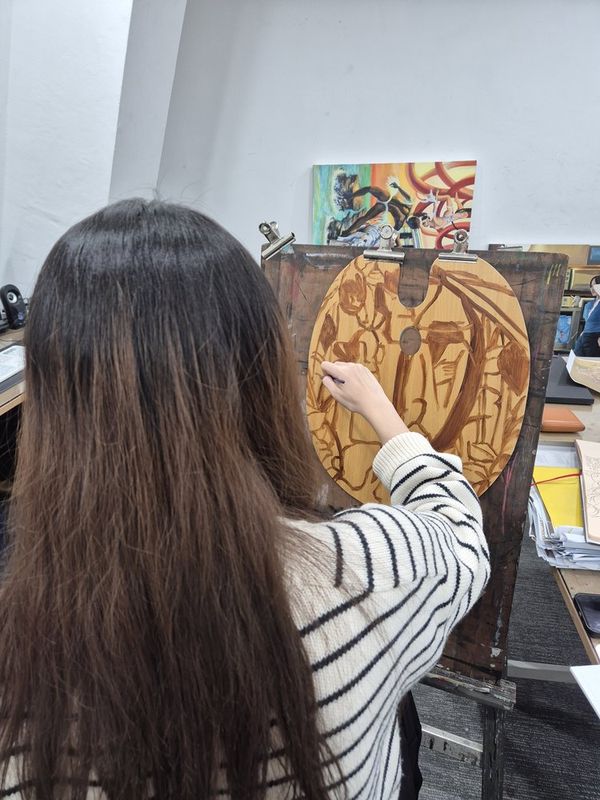
At Royal Blue, we historically saw two patterns with Berkeley and CCA.
Korean students who thrived at UC Berkeley Art Practice wanted the breadth of a top public university alongside serious creative practice. They often combined art with another interest — computer science, literature, rhetoric — and benefited from Berkeley’s rigorous academic environment.
Korean students who chose CCA wanted dedicated art-school immersion and the San Francisco setting. CCA’s accessibility (higher acceptance rate) made it reachable for students with developing portfolios who planned to grow significantly during the BFA.
Given CCA’s closure, this second pathway is now limited. Korean students who previously would have considered CCA should look at alternative dedicated art schools or reconsider UC Berkeley’s model.
Career Outcomes
UC Berkeley Art Practice alumni pursue careers across contemporary art, design, technology-integrated creative fields, academia, and interdisciplinary practice. Many go on to MFA programs at leading schools. The Berkeley BA functions as strong credential in competitive graduate admissions and broader career contexts.
CCA alumni (historically) moved into design industries (graphic design, industrial design, fashion, animation), independent studio practice, architecture firms, and creative entrepreneurship. The BFA functioned as working professional credential in creative industries.
How to Decide
Ask three honest questions.
First: Do you need an established program with known quantity, or are you comfortable with institutional transitions? If stability matters, avoid CCA until Vanderbilt’s plans are clear. Berkeley remains a stable option.
Second: Do you want public-university art education (Berkeley) or dedicated art school (options outside CCA for now)?
Third: Are you committed to the Bay Area specifically, or would you relocate for a stronger program match? Many Korean students find that relocating to Los Angeles, New York, or other art hubs opens more options.
Frequently Asked Questions
Is CCA really closing?
Yes. CCA announced it will wind down operations by the end of the 2026-2027 academic year. Vanderbilt University will take over the campus and establish new programs. Currently enrolled students and those admitted for Fall 2025 and Spring 2026 will complete their CCA degrees. Future admission cycles are uncertain.
Should I still apply to CCA?
If you are applying for Fall 2025 or Spring 2026, CCA has committed to teaching out admitted students. You can still apply and complete a CCA degree. For Fall 2026 and beyond, the situation is uncertain — you may be applying to what will become a Vanderbilt-administered program. We advise Korean students to research the transition carefully before committing.
What will replace CCA at the campus?
Vanderbilt University plans to establish new undergraduate and graduate art and design programs at the former CCA campus. Details are not yet finalized. Monitor Vanderbilt’s communications for updates on curriculum, faculty, and admission criteria.
Is UC Berkeley good for Korean international students?
Yes, though with caveats. UC Berkeley is a top-ranked university, and Art Practice is a solid program. However, international students pay out-of-state tuition (approximately $48,000), which eliminates much of the public-university cost advantage. Financial aid for international students at public universities is also limited compared to private universities.
What are the best Bay Area alternatives to CCA?
UC Berkeley Art Practice (for BA programs), Stanford Art Practice (MFA only), and outside the Bay Area options like CalArts (Los Angeles), ArtCenter (Pasadena), or major East Coast schools (RISD, Parsons, SVA). San Francisco Art Institute has faced institutional challenges; research its current status carefully.
The Royal Blue Perspective
At Royal Blue Art & Design in Apgujeong, Seoul, we are actively tracking the CCA closure and Vanderbilt transition. Korean students who had considered CCA as a primary option need updated guidance — the institutional landscape has changed significantly, and recommendations that made sense a year ago may not apply now.
UC Berkeley Art Practice remains a stable, strong option for the right student. For Korean students committed to dedicated art-school training, we now recommend looking beyond CCA — to RISD, Parsons, CalArts, or similar established institutions where program stability is not a concern.
We have sent students to RISD, Parsons, CalArts, Carnegie Mellon, Cornell, WUSTL, and 50+ other institutions. Every current applicant receives up-to-date guidance reflecting the real state of each institution.
Related Reading
공식 정보: CCA 공식
Essential Admission Topics
- Is Art School Worth It in 2026?