Quick Answer: MIT’s Art, Culture, and Technology (ACT) is not a traditional art school — it is a graduate research program and undergraduate minor within MIT’s School of Architecture and Planning, emphasizing experimental, research-based art. RISD is a dedicated BFA school. Choose MIT ACT if you want to integrate art with technology, science, or research. Choose RISD if you want professional art and design training.
| Category | RISD | MIT |
|---|---|---|
| School Type | Art School | University |
| Location | Providence, RI | Cambridge, MA |
| Acceptance Rate | ~20% | ~4% |
| Annual Tuition | $61,000 | $60,000 |
| Ranking Strength | #1-2 Art | Top Architecture/Media |
Frequently Asked Questions
Q1. What are the key differences between RISD and MIT?
For Korean students comparing MIT ACT vs RISD, the first thing to understand is that these are not comparable programs in the traditional sense. MIT’s Art, Culture, and Technology (ACT) is explicitly “not an art school in the traditional sense” — the program’s own language. ACT is a research-based transdisciplinary art program within MIT’s School of Architecture and Planning. RISD is a dedicated BFA art-and-design school. At Royal Blue Art & Design in Apgujeong, Seoul, we have guided Korean students through both paths over 19+ years.
This guide compares what each program actually offers, who thrives where, and how Korean students should think about choosing — with data for the 2025–2026 cycle.
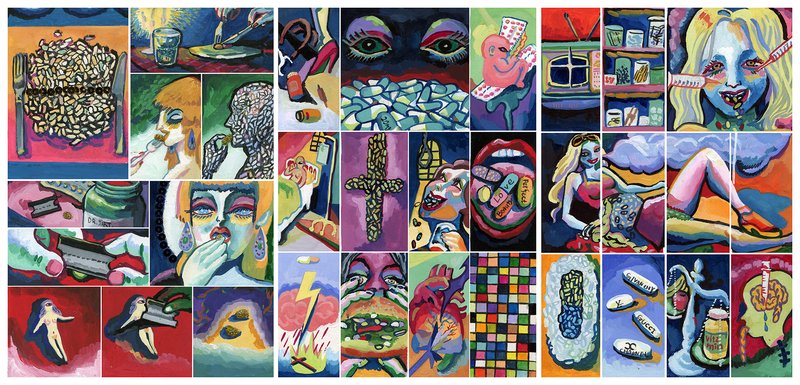
MIT ACT vs RISD at a Glance
- MIT Art, Culture, and Technology (ACT): Graduate program granting a Master of Science (not MFA) in Art, Culture, and Technology. Two-year duration. Undergraduate minor and concentration also available (MIT does not offer a standalone BFA or BA in art). Housed within MIT’s School of Architecture and Planning. Located in Cambridge, Massachusetts.
- RISD: Dedicated art and design school. BFA (undergraduate) and MFA (graduate) degrees. Acceptance rate ~17–19% at undergraduate level. 2025 undergraduate tuition $62,688. Located in Providence, Rhode Island.
For undergraduate students, the comparison is especially interesting: MIT does not have a traditional art major. Korean students interested in MIT must enroll in one of MIT’s degree programs (engineering, computer science, architecture, etc.) and can add ACT as a minor or concentration alongside their primary field.
Curriculum Philosophy
MIT ACT describes itself as promoting “critical artistic practice” that treats art as “a vital means of experimenting with new registers of knowledge and new modes of valuation and expression.” In practice, this means ACT students work on projects that integrate contemporary art practice with science, technology, computation, social science, or any other MIT field. Students might create installations using robotic systems, develop artworks that respond to climate data, or build interactive works involving artificial intelligence.
The program is small — a cohort of roughly 8 to 10 graduate students per year — and highly interdisciplinary. Faculty include distinguished artists whose practice engages directly with technology, science, or social systems. Graduate students receive significant funding support, making MIT ACT financially accessible for strong applicants.
RISD’s BFA is built around sustained studio practice in a chosen medium. Students in Painting focus on painting; students in Graphic Design focus on graphic design. The program trains artists and designers with deep mastery in their chosen field, not researcher-artists working across disciplines.
What MIT Undergraduates Actually Do
For undergraduate Korean students specifically interested in MIT’s arts offerings, the reality is that they must choose a primary major first — most commonly Architecture, Computer Science, Mechanical Engineering, or similar. Students can then add the ACT concentration (four subjects in ACT) or the ACT minor (six subjects). Both options let students work in MIT’s art facilities and engage with ACT faculty while earning a degree in another field.
This structure suits students with genuine interest in both art and another technical discipline. It does not suit students who want art to be their primary college focus. For that path, RISD or another dedicated art school is the better choice.
Studio Culture and Resources
ACT students work in MIT’s media-rich environments — labs with cutting-edge technology, fabrication facilities, computational resources, and collaboration opportunities with engineering, science, and architecture peers. The program deliberately breaks down boundaries between art studio and research laboratory.
Korean students who thrive in ACT often have technical backgrounds that complement their artistic interests — computer science, engineering, biology, mathematics — and want to explore art as another dimension of rigorous research. The environment rewards experimentation and conceptual depth over traditional craft.
RISD’s studios are entirely art-and-design focused. Facilities for painting, sculpture, ceramics, metalsmithing, glass, printmaking, graphic design, and film are all world-class. The program develops mastery within specific disciplines, with peer community focused on shared artistic concerns.
Acceptance Reality
MIT undergraduate admission is extremely competitive — acceptance rate around 4%. Applicants apply to MIT generally, not to a specific program. Strong math, science, and computational backgrounds matter significantly. Artistic interest is an asset but must coexist with technical aptitude. The ACT minor or concentration is available to admitted MIT students who demonstrate interest in the program.
MIT’s graduate ACT program is highly selective, admitting roughly 8 to 10 students per year from a competitive pool of international applicants. The application requires a portfolio of work, statement of purpose describing research interests, and strong recommendations. Work demonstrating intellectual rigor and originality is essential.
RISD’s undergraduate admission centers on portfolio. The 12-to-20-work portfolio and required assignment drive the decision. Academic records support but do not determine outcomes. RISD’s graduate MFA programs are also portfolio-focused, with acceptance rates varying by department.
Which Fits Korean Students Better?
At Royal Blue, we see distinct patterns.
Korean students who thrive at MIT ACT typically have strong STEM backgrounds alongside serious artistic interest. They want to combine computational thinking with creative practice, often exploring generative art, interactive media, biotechnology-based art, or similar hybrid fields. They are comfortable working in research environments and enjoy intellectual discourse that spans disciplines.
Korean students who thrive at RISD have committed to art or design as their primary professional direction. They want deep studio immersion and a traditional BFA credential. They are not necessarily interested in integrating art with computer science or engineering; they want to master their craft within its own tradition.
Some Korean students combine both paths — completing a BFA at RISD and then pursuing an MS at MIT ACT for graduate work, or vice versa. This combination produces artists with both classical training and technical research experience.
Career Outcomes
MIT ACT alumni pursue careers in contemporary art, academic research, design consultancy, technology-integrated creative fields, and interdisciplinary artistic practice. Many hold teaching positions at major universities or research institutions. Some maintain studio practices that explicitly engage with technology and science.
RISD alumni work across traditional creative industries — design firms, animation studios, fashion houses, independent studios — as well as in academia and entrepreneurship. The BFA credential functions in creative industries in ways that the MIT ACT credential does not.
How to Decide
Ask three honest questions.
First: Do you want art to be your primary academic discipline, or do you want art to work alongside another field? If primary, RISD. If alongside, MIT (as minor or graduate work).
Second: How comfortable are you with technology, science, or research-based work? MIT ACT expects deep engagement with these dimensions. RISD does not.
Third: Where do you want your creative practice to live five years from now? In a traditional art-and-design industry (RISD prepares you), or in a hybrid research-creative context (MIT ACT is designed for this)?
Frequently Asked Questions
Does MIT have a BFA program?
No. MIT does not offer a BFA. Undergraduate students interested in art at MIT can pursue the ACT minor or concentration alongside a degree in another field (Architecture, Computer Science, Engineering, etc.). Students who want a BFA should consider RISD, Parsons, or another dedicated art school.
What degree does MIT ACT offer?
The graduate ACT program grants a Master of Science (MS) in Art, Culture, and Technology — not an MFA. This distinction matters in some academic and professional contexts. The MS positions ACT within MIT’s research framework rather than within traditional art-school credentialing.
Is MIT ACT free for graduate students?
MIT ACT graduate students typically receive significant funding support through fellowships, teaching assistantships, and research assistantships. Many students attend with substantial or full tuition coverage. Admission is need-blind, and strong applicants should not self-select out for cost reasons.
Can I do an MFA at MIT?
No. MIT does not offer an MFA. The ACT MS is MIT’s graduate art degree, and it is structured differently from a traditional MFA — more research-based and less focused on portfolio production in a traditional sense.
Which is better for Korean students who love both art and tech?
MIT ACT, clearly, if the student has strong technical background. RISD, clearly, if the student wants dedicated studio training. Some Korean students combine both — RISD BFA followed by MIT ACT MS, or vice versa — for a uniquely powerful hybrid profile.
The Royal Blue Perspective
At Royal Blue Art & Design in Apgujeong, Seoul, we have worked with Korean students with both traditional art-school ambitions and technology-integrated creative interests. MIT ACT suits a small subset of students with unusual backgrounds — strong in both science or engineering and in contemporary art practice. For the student who fits that profile, ACT is transformative.
For most Korean students interested primarily in art or design, RISD remains the more direct path. We help students understand which category they actually belong to — and then prepare applications that match their real strengths.
We have sent students to RISD, Parsons, CalArts, Carnegie Mellon, Cornell, WUSTL, and 50+ other institutions.
Related Reading
공식 정보: RISD 공식 입시 안내
Essential Admission Topics
- Is Art School Worth It in 2026?