Quick Answer: Korean pottery tradition — celadon (청자), buncheong (분청), moon jar (달항아리), onggi (옹기) — offers distinguished material for ceramics portfolios. International ceramics community highly respects Korean pottery heritage. Contemporary translation approaches include technical investigation (specific glazes, firing methods, forming techniques), historical form reinterpretation, material investigation (specific Korean clay bodies), philosophical engagement with Korean ceramic aesthetics (the valuing of imperfection, asymmetry, quietness). Students with ceramics focus have uniquely strong position drawing on this heritage. Royal Blue Art guides ceramics-focused Korean students with 19+ years of placement experience at top US programs including RISD Ceramics.
| Grade/Year | Portfolio Focus | Hours/Week | Key Milestone |
|---|---|---|---|
| 9th Grade | Foundation: drawing, color theory, diverse media | 5-8 | Build foundational skills |
| 10th Grade | Explore specific interests, life drawing, mixed media | 8-12 | Identify creative direction |
| 11th Grade | Develop personal voice, ambitious projects | 12-18 | Build 15+ strong pieces |
| 12th Grade (Fall) | Curate portfolio, write essays, research schools | 15-20 | Submit applications |
| Summer (any) | Art camps, intensive studios, personal projects | 20-30+ | Accelerate development |
Frequently Asked Questions
Q1. When should I start building my art school portfolio?
The ideal timeline begins in 9th or 10th grade (age 14-15) for students planning to apply to US art schools. Early preparation allows genuine artistic development rather than rushed portfolio manufacturing. 9th grade: explore diverse media, develop foundational skills, take drawing classes. 10th-11th grade: identify your creative direction, develop more ambitious projects, research programs. 12th grade: finalize portfolio, write personal statement, apply. Students who start in 12th grade often submit technically polished but artistically underdeveloped work.
Q2. How many pieces should be in an art school portfolio?
Most programs request 12-20 pieces, with sweet spots around 15 works. Quality is more important than quantity—14 exceptional pieces are more impressive than 20 mediocre ones. Include only your best work; padding with weaker pieces dilutes the overall quality impression. Many programs also specify proportion of required pieces (some works must be from direct observation, for example). Read each school’s portfolio guidelines carefully, as requirements vary significantly by program and institution.
Q3. What types of artwork should I include in my portfolio?
A strong portfolio typically includes: direct observational drawing (life drawing, still life, landscape)—which demonstrates fundamental skill; work in multiple media (drawing, painting, collage, digital, photography, 3D) showing versatility; your strongest conceptual or thematic work; process documentation (sketches, iterations) for 1-2 projects; and a few pieces in your developing personal style. Avoid submitting only one type of work—even if you’re applying to Illustration, showing painting and life drawing demonstrates broader artistic capacity.
Q4. Should I include unfinished work in my portfolio?
Unfinished work can be valuable if it reveals your thinking process more clearly than finished work. A sketch that shows dynamic gestural thinking may be stronger than a finished, tightened version of the same image. The key question is: does this piece contribute to a positive overall impression, or does it raise doubts? Process documentation (sequential sketches showing how a piece developed) is different from simply submitting incomplete work—the former demonstrates thinking, the latter can suggest poor time management.
Q5. How important are observational drawing skills for art school?
Observational drawing—drawing from direct observation of figures, objects, landscapes—remains fundamental at virtually all art schools. Even programs with strong digital or conceptual emphases expect applicants to demonstrate they can observe and render the visual world accurately. Life drawing is particularly important: figure drawing classes appear at every major art school. Students who neglect observational drawing in favor of exclusively digital or stylized work often struggle in first-year programs. Take life drawing classes throughout high school.
Q6. How should I document and photograph my portfolio work?
Portfolio documentation significantly affects how work is perceived. For 2D work: shoot in natural light or even, non-directional artificial light; ensure the image is straight (not skewed); show the full work without cropping; shoot on a neutral background; crop out any table edges or props; use a camera (not phone camera) for large works. For 3D work: multiple views from different angles; neutral background; scale reference if helpful. For digital work: submit final files directly rather than photographing screens. Poor photography of strong work is a common application mistake.
Q7. What is a ‘home test’ and how should I approach it?
A home test is a creative assignment given to art school applicants as part of the application. RISD’s famous ‘bicycle’ drawing and their abstract geometric prompt are examples. Approach the home test as a creative challenge, not a technical exercise—programs want to see how you think and respond to creative constraint, not whether you can execute the most technically polished version. Read the prompt carefully for specified constraints; beyond those, interpret as broadly and originally as possible. The most memorable responses are genuinely surprising.
Q8. How do art schools evaluate portfolio work from Korean preparation academies?
US admissions committees regularly review portfolios from Korean art preparation academies (입시 미술학원). They have developed familiarity with both the strengths (strong technical foundation, disciplined drawing skills) and weaknesses (formulaic compositions, lack of personal voice) of Korean academy preparation. Portfolios that transcend the academy template—showing genuine personal creative interests, unexpected conceptual choices, or distinctive visual language—stand out strongly. Include work from outside your academy preparation that reflects your authentic creative interests.
Q9. What should I include in my artist statement for art school applications?
An artist statement for art school applications should: explain your creative motivations authentically and specifically; describe what questions or ideas drive your work currently; connect your past development to your future aspirations; reference specific influences (artists, experiences, cultural backgrounds) that inform your work; and demonstrate that you’ve researched the specific program and can articulate why it fits your trajectory. Avoid vague generalizations (‘I’ve always loved art’); be specific about your current creative preoccupations and what you want to develop further.
Q10. How do digital portfolios differ from physical ones?
Most art school applications now use digital portfolio submission through platforms like SlideRoom, Acceptd, or the school’s own portal. Digital portfolios: must be high-resolution (minimum 1500px longest side, ideally 2000+); should be in appropriate file formats (JPEG for still images, PDF for process documentation, video for time-based work); require accurate color profiles; and benefit from thoughtful sequencing since reviewers often view quickly. A well-presented digital portfolio can exceed a physical portfolio in impact if the documentation is high quality. Include any 3D or installation work through multiple-view photography.
Exploring Korean pottery ceramic portfolios territory offers distinctive advantage for ceramics-focused Korean students. According to ceramics faculty at programs including RISD Ceramics and other top ceramics programs, Korean pottery heritage commands international respect. At Royal Blue Art & Design in Apgujeong, Seoul, we guide ceramics students drawing on Korean heritage.
This guide covers productive Korean pottery engagement.

Korean Pottery Heritage Richness
Major Korean pottery traditions: Goryeo celadon (고려청자) with distinctive blue-green glaze and inlaid decoration, Joseon buncheong (분청) with rougher aesthetic and lively decoration, Joseon white porcelain (백자) with moon jar (달항아리) as iconic form, onggi (옹기) as everyday functional pottery with specific breathing properties, specific regional pottery traditions (Icheon, Gangjin, Mungyeong), contemporary Korean ceramic artists continuing tradition. Each tradition offers substantial technical and aesthetic investigation. International ceramics world recognizes Korean pottery heritage — Korean students have significant cultural capital to draw on. Unlike some areas where Korean heritage adds distinctiveness, in ceramics Korean heritage adds authority.
Technical Investigation
Specific technical elements for portfolio work: celadon glaze chemistry and firing achieving distinctive color, buncheong slip decoration techniques (inlay, stamping, brushing), wheel throwing traditions for specific forms, moon jar two-piece joining technique and resulting subtle asymmetry, onggi construction and specific purposes, Korean pottery firing methods and kilns, specific Korean clay bodies. Technical engagement distinguishes ceramics portfolio substantively. Students investigating specific techniques produce work demonstrating genuine ceramic understanding. Surface pottery imagery without technical depth reads as less serious engagement. Ceramics programs value technical substance particularly.
Moon Jar Tradition
Moon jar (달항아리) as distinctive subject: 15th-18th century white porcelain form, two-hemisphere joining creating distinctive subtle asymmetry, philosophical associations with moon and natural imperfection, contemporary ceramic artists continuing tradition (Park Young-sook, Lee In-chin, others), specific collectors’ history including international museum collections (Victoria & Albert, British Museum, Metropolitan Museum). Moon jar form offers rich investigation subject. Contemporary reinterpretations varied — some students pursue traditional moon jar making, others explore philosophical concept through other forms. Either approach substantive when engaged thoughtfully.
Korean Ceramic Aesthetic
Distinctive Korean ceramic aesthetic principles: valuing of imperfection and asymmetry unlike some pottery traditions, quietness and restraint rather than decorative exuberance, natural beauty emerging from making process rather than imposed decoration, respect for material qualities, integration of utility and beauty, philosophical connection to Korean aesthetic concepts. These principles inform contemporary Korean ceramic artists. Students understanding aesthetic principles produce substantive work beyond surface reference. International ceramic community values Korean aesthetic principles particularly. Students bringing substantive aesthetic understanding distinguish applications at ceramics programs.
Contemporary Korean Ceramics Scene
Current Korean ceramics scene offers contemporary material: Icheon Ceramic Festival and active ceramics community, specific contemporary Korean ceramic artists with international recognition (Roger Law, Koh Young-joo, Yoon Ju-Cheol, Lee Young-mi), Korean university ceramics programs (Seoul National University Ceramics, Hongik University Ceramics) and their alumni, contemporary Korean ceramic galleries and collectors, Korean ceramic exchange programs internationally. Contemporary scene actively developing. Students engaging with current Korean ceramics community have connections and material beyond historical reference. Contemporary engagement shows living tradition rather than museum-piece approach.
Hands-On Practice
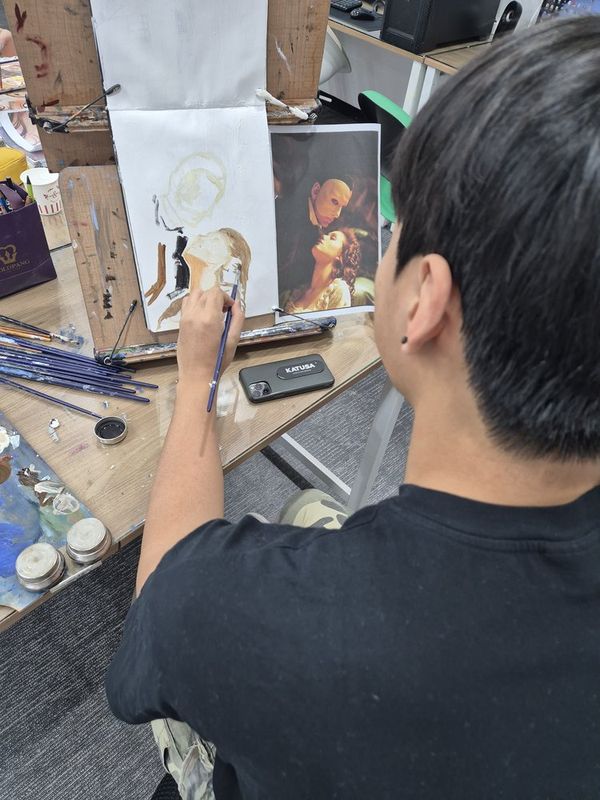
Ceramics portfolio requires actual making: wheel throwing and hand-building capability, glaze chemistry basics, firing experience, specific Korean techniques attempted, sustained technical development visible, experimentation with materials. Korean students with access to Korean ceramics academies or studios have substantial advantage. Ceramics requires physical practice beyond conceptual understanding. Students pursuing ceramics seriously should arrange access to ceramic facilities during preparation. Ceramics programs expect applicants with genuine making experience. Portfolio can’t substitute for actual ceramic work.
Research Resources
Substantive Korean pottery research: National Museum of Korea ceramic collections, Leeum Samsung Museum ceramic collection, specific ceramic museums (Gyeonggi Ceramic Museum, Horim Museum), Korean ceramic history publications, visits to active pottery regions (Icheon, Gangjin, Mungyeong), contemporary ceramic artist studios when accessible, international publications featuring Korean ceramics. Research foundation supports substantive portfolio work. Students investing in research produce distinctive work. Visits to specific ceramic regions and direct observation of making develop understanding images alone can’t provide.
Frequently Asked Questions
Do I need to make traditional Korean pottery forms?
Not required but can demonstrate technical ambition. Contemporary reinterpretation works equally well. Show some engagement with tradition through either approach.
How do I access Korean ceramic facilities?
Icheon area offers substantial ceramic facility access. Some Seoul universities offer summer programs. Some private studios accept students. Research specific options in your region.
Is ceramics viable US art school path?
Yes at programs with strong ceramics departments. RISD, Cranbrook, Alfred, KCAI have notable ceramics programs. Korean students well-positioned in ceramics.
Should ceramics be my whole portfolio?
For ceramics programs, substantial ceramics focus appropriate. Some complementary work in related media helpful but ceramics should dominate if targeting ceramics programs.
Next Steps
Korean pottery tradition offers distinguished heritage for ceramics portfolios. Technical investigation, aesthetic understanding, and contemporary engagement support strong applications.
Ready for ceramics portfolio guidance? Contact Royal Blue Art & Design for consultation.
Related Reading
Korean Art Education Topics
- Korean Typography Heritage as a Portfolio Subject
- Korean Fashion Heritage in Modern Design Portfolios
- Korean Hanok Architecture in Design Portfolios
- Korean History in Contemporary Portfolio Work
- Korean Folklore in Contemporary Portfolio Work
Essential Admission Topics
- How to Build a Portfolio for RISD
- Is Art School Worth It in 2026?