Quick answer: MICA is one of the most reliably generous schools in our record. Royal Blue students have been accepted 64 times since 2012, and 51 of them received a scholarship — 80% — averaging $54,290. Our MICA admits concentrated in Graphic Design (16) and Illustration (12). For a Korean applicant who needs both a strong design program and a realistic chance of funding, MICA is among the best-value targets available.
The Maryland Institute College of Art is one of the most scholarship-generous art schools in the United States — and with an acceptance rate around 72-75%, it is a realistic target for a wide range of Korean applicants. Understanding the MICA admissions process and how to position for scholarship consideration is the most important strategic decision for MICA applicants. This complete guide covers both.
MICA Admissions at a Glance
| Factor | Details |
| Acceptance Rate | ~72-75% overall |
| Application Deadline | February 1 (Regular Decision) |
| Portfolio Required | Yes — 10-20 pieces |
| School-Specific Assignment | None |
| SAT/ACT | Not required |
| TOEFL (International) | 80 iBT minimum |
| Scholarship Reputation | Among the most generous for international students |
What MICA Is Looking For
The school values creative potential, personal artistic voice, and genuine engagement with the chosen discipline. The school is known for producing students with strong social awareness — its curriculum explicitly addresses art’s relationship to community, social justice, and cultural engagement. Students whose work reflects genuine engagement with the world around them are well-positioned.
Key Insight: Art School Admissions
Art school admissions are portfolio-driven, not test-driven. Even highly selective schools will admit students with average academics if their portfolio demonstrates exceptional creative potential. Conversely, perfect grades and scores don’t compensate for a weak or generic portfolio at top programs.
Frequently Asked Questions
Q1. What is the most important factor in getting into MICA?
The portfolio is overwhelmingly the most important factor in MICA admissions. A strong portfolio can compensate for average academic performance, while perfect grades and test scores cannot compensate for a weak portfolio. Admissions readers typically spend 3-8 minutes reviewing each portfolio, making first impressions critical. Your strongest, most original work should appear first. Process work—sketches, iterations—can be as valuable as finished pieces, demonstrating how you think creatively.
Q2. How early should I start preparing my art school application?
Start 18-24 months before your application deadline. The first 6-12 months should focus on developing genuine artistic work and interests—exploring media, finding your creative voice, working on ambitious projects. The final 6-12 months focus on portfolio curation, supplemental application materials (personal statement, recommendations, resume), and school research. Students who start too late often submit portfolios that reflect preparation anxiety rather than genuine creative development.
Q3. What makes a portfolio stand out to admissions reviewers?
Portfolios that stand out share common qualities: (1) A distinct personal visual voice—work that couldn’t have been made by anyone else; (2) Evidence of genuine creative curiosity—work that explores ideas, not just techniques; (3) Quality over quantity—10 exceptional pieces are better than 20 average ones; (4) Process documentation—sketches and development work that show how you think; (5) Range—multiple media or approaches demonstrating versatility; (6) Risk-taking—some work that clearly pushed beyond the student’s comfort zone.
Q4. How do art school acceptance rates compare, and what do they mean?
Acceptance rates range from 5-10% (Yale, CalArts Animation) to 50-60% (SCAD, Ringling). However, acceptance rates are less meaningful in art school than in traditional universities because the admission is portfolio-based. A student with an exceptional portfolio has a realistic chance even at a 10% acceptance rate school. Conversely, a weak portfolio won’t succeed at a 60% acceptance rate school. What matters more than acceptance rate is the quality of portfolios the school typically accepts.
Q5. What is the role of the personal statement in art school applications?
The personal statement (artist statement or application essay) has become increasingly important. It should: articulate your creative motivations and artistic interests authentically; explain how the specific program aligns with your creative goals; reference specific faculty, facilities, or approaches that attract you; demonstrate intellectual curiosity about art and design; and show your writing ability and critical thinking. Avoid generic statements about ‘always loving art since childhood’—be specific about what drives your current creative practice.
Q6. How important are grades and test scores for art school admissions?
GPA and standardized test scores matter less at art-focused schools than at traditional universities. Most art schools review academic credentials, but portfolio dominates. SAT/ACT scores are optional or not required at many schools (including RISD and CalArts). A GPA above 3.0 is generally sufficient; below 3.0, a compelling portfolio and strong recommendations can still succeed. For international students, English proficiency scores (TOEFL, IELTS) are required and more strictly evaluated.
Q7. How should I handle the creative prompt or home test in art school applications?
Many top art schools require a ‘home test’—an original work created in response to a creative prompt. Treat this as your most important application piece. Don’t create the safest or most technically accomplished response—create the most genuine and creative one. Admissions readers use this to see how you approach open-ended creative challenges. Read the prompt carefully for any constraints; otherwise, interpret broadly. A genuinely surprising, personal response is more memorable than a technically polished but expected one.
Q8. What are the biggest mistakes in art school applications?
Most common mistakes: (1) Submitting an overly safe, technically polished portfolio without personal voice; (2) Writing generic personal statements that could apply to any school; (3) Not researching specific programs, faculty, and cultures before applying; (4) Underestimating the writing component—many students neglect the personal statement; (5) Missing Early Decision or Early Action deadlines when scholarship competition is lower; (6) Submitting too many pieces—editing to only your strongest 12-15 works is more impressive than 20+ mediocre pieces; (7) Not visiting campus or attending virtual information sessions.
Q9. How do recommendation letters factor into art school admissions?
Strong recommendation letters at art schools should speak specifically to your creative practice, not just your academic performance. The best recommenders are art teachers or mentors who have seen your creative development over time. Ask recommenders to describe specific works, creative approaches, or artistic growth they’ve observed. Generic letters that could be written for any student add little value. Give recommenders ample time (6+ weeks) and provide them with your portfolio and artist statement to reference.
Q10. What should Korean students specifically know about applying to top US art schools?
Korean students have specific advantages: strong foundational drawing skills (from Korean art education), disciplined work ethic, and growing international recognition of Korean artistic traditions. Areas to develop: genuine personal creative voice (beyond technically proficient execution), comfort with conceptual articulation and critique, and English writing ability for the personal statement. Korean portfolios that authentically reference Korean cultural traditions—without being superficially decorative—are positively received by US admissions committees who value diverse cultural perspectives.
MICA’s Scholarship Advantage
MICA is one of the most scholarship-generous art schools in the US for international students. Merit awards can significantly reduce the total cost of attendance — in some cases by $15,000-$25,000 per year. For Korean families weighing art school costs, its scholarship generosity makes it a financially strategic option alongside RISD or Parsons.
Scholarship consideration at MICA is based on the overall application. Students who want maximum scholarship consideration should produce the strongest possible portfolio and written materials — not merely a competitive application.
The MICA Portfolio
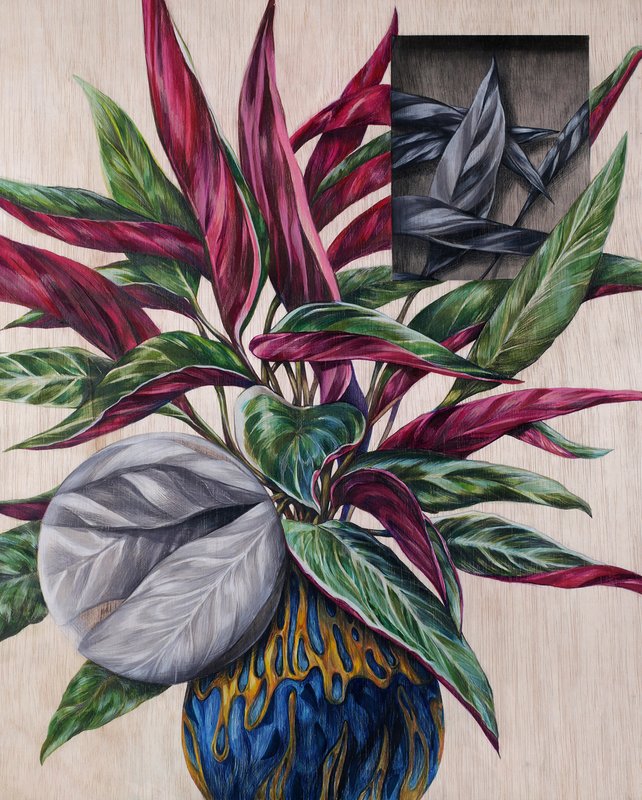
MICA’s portfolio review looks for personal creative voice, technical development, and genuine artistic curiosity. The school values work across a range of media and approaches. Process documentation showing creative development is welcomed alongside finished pieces. MICA’s social design orientation means that work which engages with community, culture, or social concerns is particularly resonant.
MICA’s Baltimore Location
Baltimore’s lower cost of living is a practical advantage for students there — housing, food, and materials are all more affordable than in New York or Los Angeles. Baltimore’s proximity to Washington D.C. and New York provides access to major cultural institutions and industry connections within easy travel distance.

What 64 MICA Acceptances Told Us
Royal Blue publishes every student outcome on our Results page. MICA appears 64 times since 2012, and the funding column is why it deserves a place on most lists.
| School | Acceptances | Awarded | Rate | Average award |
|---|---|---|---|---|
| Otis | 38 | 31 | 82% | $63,935 |
| SCAD | 42 | 34 | 81% | $30,221 |
| MICA | 64 | 51 | 80% | $54,290 |
| SAIC | 81 | 56 | 69% | $46,775 |
| Parsons | 63 | 38 | 60% | $53,116 |
| CCA | 50 | 24 | 48% | $57,167 |
| Pratt | 102 | 40 | 39% | $67,638 |
| SVA | 140 | 41 | 29% | $58,944 |
| ArtCenter | 43 | 5 | 12% | $49,200 |
| RISD | 68 | 4 | 6% | $103,760 |
Four in five of our MICA admits received an award. Compare RISD at 4 of 68 or ArtCenter at 5 of 43. MICA’s awards are not the largest we record — Pratt averaged $67,638 and RISD $103,760 — but they arrive far more often, which is what shapes a four-year budget. If aid is a requirement rather than a hope, MICA belongs on the list before RISD does.
Figures cover 1,099 Royal Blue acceptances across 95 schools, 2012–2026, published on our Results page. Major-level counts come from our own admissions records. Note: CCA announced in January 2026 that it will close at the end of the 2026–27 academic year; its figures here are historical. Details.
More Questions
Is MICA a well-known art school internationally?
MICA has strong recognition in the US art school community and is increasingly recognized internationally. Its social design programs and strong graphic design reputation give it specific areas of international distinction.
What programs is MICA strongest in?
MICA is particularly strong in Graphic Design, Illustration, Painting, Fiber Arts, and interdisciplinary programs. Its social design orientation gives it distinctive strength in community-engaged and socially conscious creative practices.
How do MICA scholarships compare to other art schools?
MICA’s scholarship program for international students is among the most generous in US art education. Combined with Baltimore’s lower cost of living, MICA can be significantly more affordable than RISD or Parsons even before scholarship consideration.
Can Korean students get full scholarships at MICA?
Full scholarships at MICA are rare but not unheard of for exceptional applicants. Partial scholarships of $10,000-$25,000/year are more common for strong international applicants.
Should MICA be on a Korean student’s school list?
Yes — particularly for students who are considering the cost of US art school seriously. MICA provides genuine educational quality with scholarship generosity that makes it one of the best financial values in US art education for strong Korean applicants.
Related Reading
Other Top Art School Guides
- How to Get Into RISD: A Complete Guide
- How to Get Into Parsons: A Complete Guide
- How to Get Into SVA: A Complete Guide
- How to Get Into SCAD: A Complete Guide
Essential Admission Topics
- How to Research Art Schools Effectively Online
- Is Art School Worth It in 2026?
합격을 결정짓는 요소는 단 하나가 아닙니다. 포트폴리오의 완성도, 아티스트 스테이트먼트의 설득력, 에세이의 진정성, 추천서의 신뢰도 이 모든 요소가 유기적으로 연결되어 하나의 강력한 지원서를 만들어야 합니다. 로얄블루는 이 모든 요소를 종합적으로 관리하고 최적화하는 시스템을 갖추고 있습니다. 각 학교의 심사 기준과 선호 스타일을 분석하여 맞춤형 전략을 수립하고, 학생이 가장 강력한 지원자로 보일 수 있도록 모든 요소를 정밀하게 조율합니다. 단순히 포트폴리오를 만드는 것이 아니라, 합격을 설계하는 것이 로얄블루의 접근 방식입니다. 지금 상담을 신청하시고 로얄블루의 체계적인 합격 설계 시스템을 직접 경험해보세요.