QUICK ANSWER
The decision has to be made earlier than families expect, because the two paths require different preparation and the work diverges around eleventh grade. Korean entrance examinations reward timed practical execution; US portfolio review rewards a sustained body of work selected differently for each school. Splitting a single year evenly between them usually produces two weak applications rather than one strong one. On cost, do not compare the two tuitions directly — a national university’s fee is set on a different basis from a US private art college’s, where the published figure is a starting number that scholarships reduce by wildly varying amounts. In Royal Blue’s records that reduction ranges from 82% of accepted students at Otis to 6% at RISD. Compare final out-of-pocket totals, and budget a RISD offer as full cost.
For Korean students (and their families) weighing domestic versus overseas art education, the comparison between Seoul National University’s College of Fine Arts and RISD is one of the most significant decisions in Korean art education. It’s a comparison between the most prestigious art education destination in Korea and the most globally recognized art school in the US — and it deserves an honest, specific examination.
At a Glance: SNU Fine Arts vs RISD
| Category | Seoul National University (College of Fine Arts) | RISD |
|---|---|---|
| Location | Seoul, Korea | Providence, Rhode Island, USA |
| Domestic Prestige | Highest in Korea | Highest in USA |
| International Recognition | Strong in Korea/Asia; limited internationally | Strong globally |
| Annual Tuition (Korean national) | ~₩4,000,000–₩5,000,000/year (~$3,000–$4,000) | ~$62,000–$65,000 |
| Admission (Korean students) | 수능 + 실기 | Portfolio + Hometest + Common App |
| Instruction Language | Korean | English |
| Programs | Fine Arts (painting, sculpture), Design, Applied Arts | 19 BFA/MFA programs |
| Post-graduation | Korean art/design market | US and global creative markets |
| QS Global Art & Design | Not consistently ranked in global top 20 | Top 5 globally |
Seoul National University: Korea’s Highest Academic Prestige
SNU’s College of Fine Arts is widely regarded as the most prestigious art education destination within Korea. Its brand recognition in the Korean art world — galleries, museums, teaching positions, public art commissions — is unmatched. Graduates of SNU’s fine arts programs have a specific status in Korean cultural institutions that no overseas degree replicates within the domestic context.
Key Insight: RISD
Frequently Asked Questions
Q1. What are the key differences between RISD and School B?
What SNU fine arts offers:
- The highest domestic prestige — SNU’s name opens doors in Korean cultural institutions, academia, and the public arts sector
- Extraordinary affordability (~₩4–5 million per year) compared to overseas art schools
- Immersion in Korean art culture, history, and contemporary practice
- Connection to Korean art faculty who are significant figures in the Korean contemporary art world
- Graduate programs that connect students to Korean art academia and cultural policy
Limitation for global ambition: SNU’s international recognition outside Korea and East Asia is limited. For Korean students whose career ambitions are international — working in New York galleries, major design firms in the US or Europe, or in the global entertainment industry — SNU’s brand does not carry the same weight as RISD outside of Korea.
RISD: Global Recognition, International Career Positioning
RISD’s advantages are primarily about international career positioning — the ability to work in the global creative industries with a degree that is recognized and respected anywhere.
What RISD offers for Korean students:
- Global name recognition that enables career opportunities in the US and internationally
- Access to the US creative industries — New York, Los Angeles, major design firms, galleries, and studios
- A fundamentally different pedagogy — creative voice, personal expression, and conceptual development rather than technical examination performance
- The RISD alumni network among working designers, artists, and architects in the US and internationally
The Pedagogical Difference: Two Fundamentally Different Art Educations
This is the most important part of the comparison — not prestige, but what each education actually produces.
Korean domestic art education (including SNU’s fine arts programs) has historically emphasized technical rigor, observational accuracy, and mastery of established media and forms. The 실기 (practical exam) culture rewards standardized excellence — doing the expected thing exceptionally well.
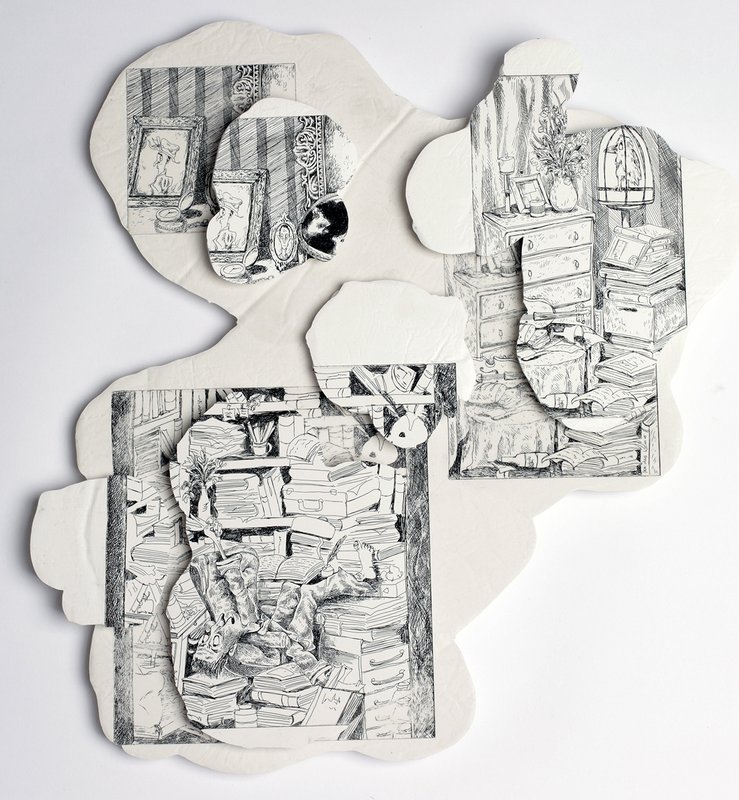
RISD’s pedagogy emphasizes creative voice, conceptual development, personal artistic identity, and the ability to articulate why you make what you make. Portfolio work that succeeds at RISD typically reflects genuine individual perspective rather than mastery of a standardized technical format.
Korean students who study at SNU and then pursue graduate study at RISD or RCA often describe a significant reorientation — learning to trust their own creative direction rather than meet a standard, to make work that is specifically theirs rather than technically exemplary.
Who Should Choose SNU vs RISD?
공식 정보: RISD 공식 입시 안내
Choose SNU if:
- Your career goals are specifically in the Korean art world — galleries, museums, teaching at Korean universities, public art practice within Korea
- The financial reality of a RISD education is prohibitive without scholarship support
- You want to be in Seoul, connected to Korean culture and community, during your undergraduate years
- You intend to pursue graduate study overseas after establishing Korean credentials first
Choose RISD if:
- You want to work in the global creative industries — US, European, or internationally
- You are prepared to develop the creative voice and conceptual orientation that RISD rewards
- The financial investment is viable with scholarship support
- You want to build your career network in the US creative ecosystem from the beginning
A common path: Many successful Korean artists attend SNU (or another domestic Korean art school) and then pursue graduate study at RISD, RCA, Goldsmiths, or CalArts. The domestic undergraduate education establishes Korean technical foundation; overseas graduate study develops conceptual and international dimensions.

The Preparation Splits Around Eleventh Grade
Most articles frame this as a choice between two educations. For a Korean family the more urgent framing is a choice between two preparations, because the required work diverges long before either application opens.
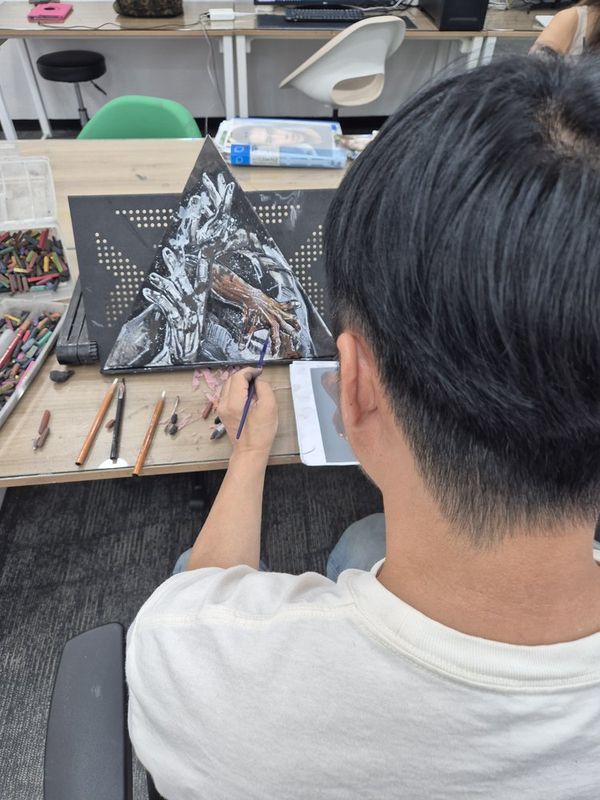
The Korean path trains for timed practical examination. Speed, accuracy and composure under pressure — repeated execution against a clock, alongside academic requirements.
The US path builds a body of work over months and then selects from it differently for each school. Twelve to twenty finished pieces, properly documented, with school-specific selections and essays on top.
These reward different strengths, and a student optimised for one is not automatically competitive in the other. The overlap is smaller than families assume — the technical foundation transfers, but the working method does not.
The failure mode is dividing the year evenly. A student who splits eleventh grade between examination drill and portfolio building often arrives with a portfolio too thin for US review and examination speed below the Korean standard. Both paths reward depth, and depth cannot be halved twice. This does not mean abandoning one — it means deciding which is primary and building the other around it.
Why the Two Tuitions Are Not Comparable
Korean families usually begin by placing the two published figures side by side. That comparison measures two different things.
A US private art college’s published tuition is a starting number that scholarships reduce — by amounts that differ enormously between institutions. Royal Blue has recorded 1,099 acceptances across 95 schools between 2012 and 2026, and the spread is the clearest thing in that data.
| School | Acceptances | Awarded | Award rate | Average award |
|---|---|---|---|---|
| Otis | 38 | 31 | 82% | $63,935 |
| MICA | 64 | 51 | 80% | $54,290 |
| SAIC | 81 | 56 | 69% | $46,775 |
| Parsons | 63 | 38 | 60% | $53,116 |
| SVA | 140 | 41 | 29% | $58,944 |
| RISD | 68 | 4 | 6% | $103,760 |
| Seoul National University | not tallied | — | — | — |
Source: Royal Blue admissions records, 1,099 acceptances across 95 schools, 2012–2026. Initial award letters, applied against tuition. Overall award rate 41.3% (454 awards, $23,746,972 total, $52,306 average). Our archive covers US art and design admissions, so Korean universities are not tracked.
Sixty-four of our 68 accepted RISD students received nothing. The four who did averaged $103,760, our largest figure anywhere — RISD concentrates rather than withholds. For an individual applicant the planning instruction is unchanged: budget a RISD offer as full cost.
A national university’s fee is set on an entirely different basis, so the two published figures are not measuring the same thing. The comparison that works is the same one we recommend everywhere: each school’s tuition minus its actual award, plus housing, materials and living costs, times four years, converted into one currency.
Three Costs Families Leave Out
Living abroad for four years. Housing, meals and transport in Providence are not a rounding error against a Seoul household where the student lives at home. Over four years this half of the equation frequently exceeds the tuition difference.
Materials, which vary sharply by major. A fashion student buys muslin, final fabrics, trims and hardware across four years plus show costs in the final year; a photography student buys equipment, storage and printing, and printing recurs rather than being a one-off purchase. Ask the department what a typical semester costs for your specific major.
Exchange-rate exposure. A four-year commitment denominated in dollars carries a variable a won-denominated budget does not. This is not an argument against studying abroad — it is an argument for building the total with a margin rather than a single fixed figure.
The Question That Should Decide It
Not rankings, and not prestige in either direction. Where do you intend to build a career?
A Korean degree places you inside Korean professional networks — the alumni relationships, the domestic industry, the exhibition circuits. For a student who intends to work in Korea, that is a substantive advantage rather than a fallback.
A US degree places you inside American ones, and post-study working rights differ by country and change with policy. Confirm current conditions with the immigration authority rather than relying on an article, including this one. Those rules can matter more to a career than a four-year cost difference.
And the honest middle case: a student who studies in the US and returns to Korea keeps the training and the international name but rebuilds the network. That is a workable path — many do it — but it should be chosen knowingly rather than discovered afterwards.
If You Apply to Both
Decide which is primary and build the other around it, in the spring of eleventh grade rather than the following autumn. The calendars run on different clocks and the preparations do not substitute for each other.
On the US side, add a high-award school. With RISD at 6%, a list weighted toward similar institutions produces a spring in which every US acceptance is unaffordable — and the Korean option wins by default rather than by decision. MICA at 80% or SAIC at 69% keeps the comparison real.
Note that US schools contradict each other on portfolios. CalArts asks applicants to leave out figure drawing and generic class assignments unless they show a personal approach; USC’s animation division lists human figure drawing among accepted work. Sustained observational training — a genuine strength of Korean preparation — does not read the same way everywhere, so a US list means several selections rather than one portfolio.
The standing caution on our figures: an award rate is not an admission rate and not a measure of programme quality. RISD’s 6% says nothing about its studios or teaching. These describe how schools distributed their own money among students we worked with — a planning input, not a ranking.
Frequently Asked Questions
Is a RISD degree recognized in Korea? Yes — RISD is well known among Korean art world professionals, galleries, and art schools. A RISD degree carries significant international prestige that is recognized and respected in Korea.
Can SNU fine arts graduates apply to RISD for graduate study? Yes. RISD’s graduate programs accept applicants with bachelor’s degrees from international universities including Korean institutions. A portfolio review is the primary admissions criterion.
What is the admission process difference between SNU and RISD? SNU admission requires the 수능 (CSAT) plus a 실기 examination in specific formats. RISD admission requires a portfolio of personal creative work plus the RISD Hometest — a fundamentally different evaluation of creative identity rather than standardized technical performance.
Royal Blue Art & Design