RISD vs Parsons: Campus Life Compared

For Korean students who will spend four years living and studying in a new country, the campus life experience matters as much as the academic program. This RISD vs Parsons campus life comparison explains what daily life actually looks like at each school — the environment, the community, the social culture, and the practical realities of living in Providence versus New York City.
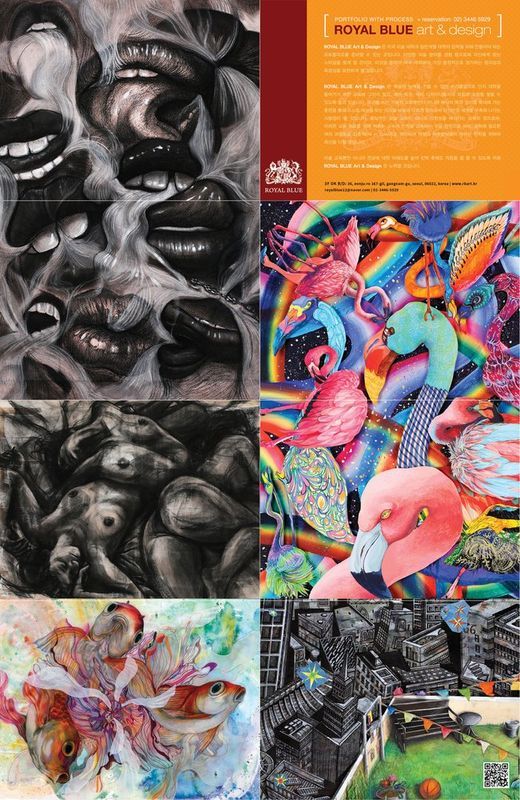
Royal Blue Art & Design student portfolio collection - diverse artwork for US art school admissions, Seoul

RISD Campus Life: Providence and the College Hill Community

RISD’s campus is located on College Hill in Providence, Rhode Island — a compact, walkable neighborhood shared with Brown University. The physical campus is defined by converted historic buildings, purpose-built studio facilities, and the RISD Museum, spread across a relatively small geographic area. Students can walk between most facilities in ten minutes or less.

Key Insight: RISD

Rhode Island School of Design (RISD) is consistently ranked America’s top art school. Its combination of rigorous craft training, strong liberal arts integration, and powerful alumni network makes it uniquely positioned among art schools. The Providence location, adjacent to Brown University, provides an intellectually rich environment for creative development.

Frequently Asked Questions

Q1. What are the key differences between RISD and PARSONS?

When comparing art and design programs, the most important differences are typically: pedagogical philosophy (studio-based vs. academic, experimental vs. technical); faculty composition (practicing artists/designers vs. academics); location and industry access; program scale and cohort size; and outcome data (where graduates actually work). Visiting both campuses when possible provides irreplaceable direct experience of each school’s culture and community.

Q2. How should I decide between two similarly ranked art schools?

When two programs are similarly ranked, the decision factors become: (1) Financial—which offers more scholarship aid; (2) Program fit—which faculty do work you genuinely admire; (3) Campus culture—which community feels like where you’ll do your best work; (4) Location—which city provides better opportunities in your specific career direction; (5) Alumni network—which alumni are in positions you aspire to. Visit both if possible. Talk to current students, not just admissions staff.

Q3. Does school prestige matter in art school career outcomes?

Prestige matters most in fine arts (gallery representation, academic positions) and least in commercial design fields where portfolio quality and skills are primary. A RISD or Yale degree opens gallery doors that a state school degree doesn’t. However, in graphic design, UX, product design, and most commercial creative fields, portfolio quality and experience matter more than school name. For Korean students returning to Korea, US prestige translates variably—some Korean companies specifically recruit from top US schools.

Q4. What role does location play in choosing between art programs?

Location is often underestimated in art school selection. NYC programs offer the most direct and immediate access to the full spectrum of creative industries. LA programs provide entertainment and tech industry proximity. Boston/Providence programs (RISD, MassArt) have strong connections to design, publishing, and academic industries. Chicago (SAIC) has a strong contemporary art scene and design industry. San Francisco/Oakland area schools access tech design and contemporary art. Location affects internship opportunities, gallery shows, and the urban creative ecosystem students experience daily.

Q5. How important is campus culture in choosing between art programs?

Campus culture profoundly affects your educational experience and creative development. Small programs with intense studio culture (CalArts, Cranbrook) foster deep peer relationships and concentrated focus. Large programs in urban settings (Parsons, SVA) provide diversity and anonymity alongside industry access. Research: (1) student-to-faculty ratio and accessibility of faculty; (2) critique culture (how critiques are structured and how constructive feedback is given); (3) interdisciplinary access (can you take courses in other departments); and (4) social and community life.

Q6. What should Korean students consider when comparing US art programs?

Korean students should evaluate: (1) International student community and support services (English-only environments require assessment of support structures); (2) Proximity to Korean cultural communities in each city; (3) Specific faculty working in areas relevant to your interests; (4) Alumni outcomes for Korean and Asian international students; (5) Recognition of the degree in Korea if you plan to return; and (6) Cost differences between programs—a $10,000/year difference over four years is $40,000, which should influence the decision.

Q7. Is there value in attending a less prestigious school with more scholarship money?

Yes, in many cases. A 50% scholarship at a strong second-tier program often produces better career outcomes than full tuition at a top program if the debt from the top program becomes paralyzing. The exception is when program prestige is essential for your specific career goal (gallery representation in fine arts, for example). Design careers are more agnostic about school name than fine arts careers. Weigh the quality differential carefully—there is often a significant quality difference between the top 5 and top 15 programs, but not always.

Q8. How do I evaluate the quality of art school faculty?

Evaluate faculty by: (1) Researching their active practice—are they currently exhibiting, publishing, designing, or consulting? (2) Checking student outcomes from their specific courses/studios; (3) Looking for faculty who have mentored students with careers you admire; (4) Attending virtual or in-person open studios or portfolio reviews if available; (5) Reading interviews and artist statements to understand their aesthetic approach and educational philosophy. Faculty change, so check current rosters rather than relying on historical reputations.

Q9. What are transfer policies between art schools?

Transferring between art schools is possible but challenging. Most schools accept transfer students but evaluate portfolios de novo, not just academic transcripts. Credits transfer variably—studio course credits often don’t transfer because programs want students in their specific curriculum. Transfers after sophomore year (junior standing) typically have the best options. If you’re considering transferring, apply as broadly as you would for freshman admission, and communicate honestly about why you want to transfer. Financial aid may be more limited for transfer students.

Q10. What questions should I ask on art school campus visits?

Essential questions for campus visits: (1) Where are alumni from this program working right now? (2) What is the average class size and how accessible are faculty? (3) What happens if I’m not satisfied with my assigned studio or advisor—how are conflicts resolved? (4) What internship or professional connections does the school actively maintain? (5) What is the critique culture like—how is feedback given? (6) What facilities are exclusive to this program, and what is shared? (7) What do current students find most challenging, and how does the school support them?

The campus community is small and concentrated — approximately 2,500 students across undergraduate and graduate programs. This creates an unusually tight-knit creative community where students know each other across disciplines and class years. The downside of this intimacy is that it can feel insular — there is relatively little exposure to people outside the art school world in daily life.

Providence itself is a manageable mid-sized city with a lower cost of living than New York. The food and social scene are limited compared to major cities, but the city has a genuine arts community of its own. The Brown University neighborhood provides access to a broader academic and social community than RISD alone.

Parsons Campus Life: New York City as the Campus

Parsons does not have a traditional campus in the conventional sense. The school occupies several buildings in Greenwich Village, Manhattan, but the campus boundaries are effectively the entire city of New York. Students live throughout Manhattan, Brooklyn, and other boroughs, and the city itself is the primary social and cultural environment.

New York City provides an unmatched cultural environment — museums, galleries, theaters, restaurants, and communities from every part of the world. For Korean students specifically, New York has one of the largest and most established Korean communities in the US, with Korean neighborhoods, restaurants, and cultural institutions that can ease the adjustment to life abroad.

The challenges of New York City life are real: high cost of living, demanding pace, and the social complexity of a very large city. Students who struggle with New York’s intensity sometimes find that it competes with rather than supports their studio work.

RISD vs Parsons Campus Life: Key Differences

FactorRISDParsons
EnvironmentCompact college campus in ProvidenceUrban dispersed in Manhattan
Community Size~2,500 students, tight-knitThousands — more anonymous
Cost of LivingModerateHigh (NYC)
Cultural AccessProvidence arts scene, NYC 3.5hrsNYC — unlimited cultural access
Korean CommunitySignificant Korean student groupLarge NYC Korean community
HousingOn-campus and off-campus optionsPrivate market in NYC
Social CultureStudio-centered, intimateCity-centered, diverse

Which Campus Life Is Better: RISD or Parsons?

RISD is better for students who:

Want a concentrated, studio-focused daily life where art is the center of everything. Prefer a smaller, more intimate community where they will know their peers well. Value the quieter pace of a mid-sized city for creative development. Want the social infrastructure of a combined RISD-Brown community.

Parsons is better for students who:

Are energized by New York City’s intensity and want to be immersed in the world’s most active cultural environment. Want access to a large Korean community and the full range of New York’s international cultural offerings. See the city itself as an extension of their creative practice and want to be embedded in professional networks during their studies.

A Note for Korean Students

Korean students consistently report that both environments offer genuine support for international students, but in different ways. RISD’s small campus creates a community where Korean students are visible and connected to each other. New York’s Korean community provides a different kind of cultural continuity — the ability to find Korean food, language, and cultural connection easily in daily life. Both are genuine assets; the preference depends on what kind of support feels most important.
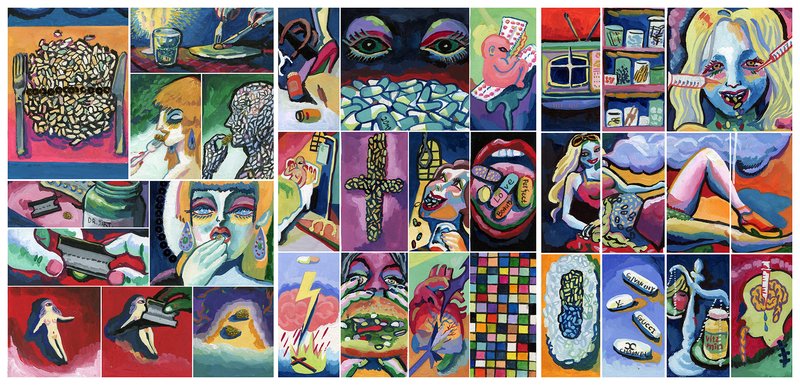
Series of twenty-five small gouache paintings exploring themes of pharmaceutical culture and consumerism, depicting pills, syringes, mouths, brand logos, and body fragments in bold flat colors across a large grid installation.

Frequently Asked Questions

Is Providence or New York safer for Korean students?

Both environments are safe for students who take standard precautions. RISD’s College Hill neighborhood is consistently rated as very safe. New York City has specific safe neighborhoods and specific areas requiring more awareness. Both schools provide orientation on safety for international students.

How do RISD and Parsons students typically find housing?

RISD offers limited on-campus housing for first-year students; most upperclassmen live in off-campus apartments in Providence. Parsons does not have traditional dormitories — students find housing in New York’s private rental market, which is expensive and competitive. Both schools provide housing resources, but New York’s market is significantly more challenging to navigate.

Can RISD students easily visit New York City?

Yes. Providence is approximately 3.5 hours from New York by Amtrak train. Many RISD students make regular weekend trips to New York for gallery visits, internships, and industry connections. The connection is real but requires planning.

What is the Korean student community like at RISD?

RISD has a significant Korean student population — Korean students are among the most represented international groups at the school. Korean student organizations, informal networks, and cultural connections are well-established. Many Korean RISD alumni maintain connections that help incoming Korean students navigate the school and Providence.

Is New York City overwhelming for students coming from Korea?

The adjustment to New York City is real — it is louder, faster, and more expensive than most Korean students are prepared for initially. However, New York’s large Korean community and the presence of many Korean students at Parsons means that the cultural isolation that affects international students in less diverse cities is significantly reduced.

Royal Blue Art & Design is a US art school admissions academy in Apgujeong, Seoul, with 19 years of experience helping Korean students gain acceptance to RISD, Parsons, CalArts, and other top programs. Contact us → royalblue-art.com

로얄블루 유학미술학원은 20년 이상 미국 명문 미대 입시를 전문으로 해온 최고의 유학 미술 전문 기관입니다. RISD, Parsons, ArtCenter, SVA, CalArts 등 미국 Top 30 미대에 매년 다수의 합격생을 배출하고 있으며, 강사진은 모두 미국 명문 미대를 직접 졸업한 전문가들로 구성되어 있습니다. 학생 한 명 한 명의 개성과 잠재력을 파악하여 맞춤형 포트폴리오 전략을 수립하고, 포트폴리오 제작부터 지원서 작성까지 합격에 필요한 모든 과정을 종합적으로 지원합니다. 지금 상담 신청하시면 무료로 맞춤 로드맵을 받으실 수 있습니다.

합격을 결정짓는 요소는 단 하나가 아닙니다. 포트폴리오 완성도, 아티스트 스테이트먼트의 설득력, 에세이의 진정성, 추천서의 신뢰도 이 모든 요소가 유기적으로 연결되어야 합니다. 로얄블루는 이 모든 요소를 종합적으로 관리하고 최적화하는 시스템을 갖추고 있습니다. 각 학교의 심사 기준과 선호 스타일을 분석하여 맞춤형 전략을 수립하고, 학생이 가장 강력한 지원자로 보일 수 있도록 모든 요소를 정밀하게 조율합니다. 단순히 포트폴리오를 만드는 것이 아니라, 합격을 설계하는 것이 로얄블루의 접근 방식입니다. 지금 상담을 신청하시고 로얄블루의 체계적인 합격 설계 시스템을 직접 경험해보세요.

Leave a Comment

Your email address will not be published. Required fields are marked *

Scroll to Top
🤖 AI 상담