Is Parsons a good art school? If you’re a Korean student considering US art schools, this is one of the first questions worth answering honestly. The short answer: yes — but the fuller answer depends on your discipline and goals.
Yes, Parsons Is One of the Best Art Schools in the US
Parsons School of Design, part of The New School in New York City, is consistently ranked among the top art and design schools in the world. In the QS World University Rankings for Art & Design, Parsons regularly appears in the global top five — often alongside RISD, the Royal College of Art, and MIT.
Key Insight: US Art School Education
US art schools offer a uniquely rigorous environment where creative risk-taking and conceptual development are central. The best programs balance technical training with critical thinking, preparing graduates for careers that span studio practice, design industry, and academia. Portfolio quality and artistic vision are the primary criteria—everything else is secondary.
Frequently Asked Questions
Q1. What are the most important factors in choosing a US art school?
The most critical factors in art school selection are: program quality in your specific discipline (overall rankings are less important than departmental strength), faculty whose work you genuinely admire and who are actively practicing in their field, location and industry access relevant to your career goals, cost and scholarship availability, and the creative culture and community of the school. Visit campuses when possible—direct experience of a school’s environment is irreplaceable in making the right choice.
Q2. How does US art school education differ from Korean art education?
US art school education fundamentally differs in its emphasis on conceptual development and personal voice over technical execution and trend awareness. Korean art education typically prioritizes technical precision, recognizable styles, and demonstrable skills. US programs push students to ask ‘why am I making this?’ before ‘how do I make this?’ The critique culture—presenting and defending your work publicly—develops communication skills essential in professional practice that Korean students often need to specifically prepare for.
Q3. What role does the portfolio play in US art school admissions?
The portfolio is the single most important factor in US art school admissions. Admissions reviewers look for: a distinct personal creative voice, evidence of genuine conceptual thinking, technical skill appropriate to your stage of development, and creative risk-taking. A strong portfolio can compensate for modest academic performance. Korean students should be cautious about submitting portfolios that focus exclusively on technical excellence—US programs want to see what makes you uniquely creative, not just competently skilled.
Q4. What is the typical financial burden of US art school, and how can it be managed?
Total annual cost at top US art schools ranges from $65,000-$80,000 (tuition + living). Four-year totals can exceed $280,000. International students are eligible for institutional merit scholarships but not US federal financial aid. Strategies for managing cost include: applying Early Decision when scholarship consideration is higher; applying to a range of schools and negotiating offers; researching Korean government overseas study grants; considering public universities with strong art programs (lower tuition); and applying for departmental and external scholarships.
Q5. How should I approach the personal statement for art school applications?
The personal statement for art school should authentically articulate your creative motivations, current artistic practice, and why the specific program fits your development. Avoid generic statements about ‘always loving art’—be specific about what questions, ideas, or problems drive your current work. Reference specific faculty, facilities, or program aspects that genuinely attract you. Demonstrate that you’ve researched the program beyond surface-level familiarity. Show intellectual curiosity about art, design, and ideas, not just enthusiasm for making things.
Q6. What facilities should I expect at a top US art school?
Top US art programs provide access to: dedicated studio spaces (often 24-hour access for advanced students); professional printmaking facilities; darkrooms and digital photo labs; ceramics kilns and sculpture yards; digital fabrication labs (laser cutters, 3D printers, CNC routers); model shops with woodworking and metal equipment; film and video production facilities; comprehensive art and design libraries; and gallery spaces for student exhibitions. Program-specific facilities are often the differentiating factor between good and exceptional programs.
Q7. What career outcomes can I expect from a top US art school?
Career outcomes vary by discipline. Design graduates (graphic, industrial, UX, fashion) typically enter the workforce in relevant industries within 6-12 months of graduation with entry-level salaries of $45,000-$70,000 in the US. Fine arts graduates pursue more varied paths including gallery representation, artist residencies, teaching, and commercial work. Architecture graduates enter firms with variable starting salaries. Korean graduates often return to Korea or work at companies with Korea operations, where US art school degrees carry significant prestige in design and fashion industries.
Q8. How important is it to visit art school campuses before applying?
Campus visits are highly valuable if feasible. Direct experience of a school’s physical environment, student culture, and active work is irreplaceable. On visits: observe student work in studios and hallways (the best indicator of program quality); talk to current students honestly about their experience; visit the facilities you’ll actually use; and attend a critique if possible. Many schools also offer virtual visits and portfolio reviews. If physical visits aren’t possible, virtual open houses, student video tours, and direct outreach to current students provide important information.
Q9. What is the first year of art school like, and how should I prepare?
Most top art schools require a foundation year focusing on drawing fundamentals, color theory, 2D and 3D design, and art history. This year is typically the most intensive—students often work 10-14 hours daily. Prepare by: taking life drawing classes seriously (figure drawing is central to foundation year at most schools); exploring diverse media to develop flexibility; reading art history broadly; and practicing articulating ideas about your work verbally and in writing. The foundation year establishes relationships with peers and faculty that shape the rest of your education.
Q10. How do I evaluate an art school’s alumni network?
Evaluate alumni networks by: researching where graduates from the specific program actually work (not just what the school claims); looking at whether alumni who graduated 5-10 years ago are in positions you aspire to; checking whether the school maintains active alumni engagement or just claims an ‘alumni network’; contacting alumni directly on LinkedIn to ask about their experience and the value of their degree; and checking if the school has alumni in Korea-based opportunities if that’s your target market. A genuine alumni network opens doors throughout a career—this long-term value is often underweighted in the immediate application decision.
Q11. What should Korean students know about cultural adjustment at US art schools?
Cultural adjustment at US art schools involves both American cultural norms and the specific subculture of art and design education. Prepare for: critique culture (public presentation and defense of your work, sometimes with harsh feedback); a more individualistic studio culture compared to Korean collective approaches; expectation of independent initiative in driving your creative practice; diverse student backgrounds that may challenge assumptions; and different social norms around directness and self-advocacy. Korean students who embrace these differences—rather than resisting them—typically report the most transformative educational experiences.
But rankings only tell part of the story. Here’s what actually makes Parsons strong.
What Makes Parsons a Good Art School?
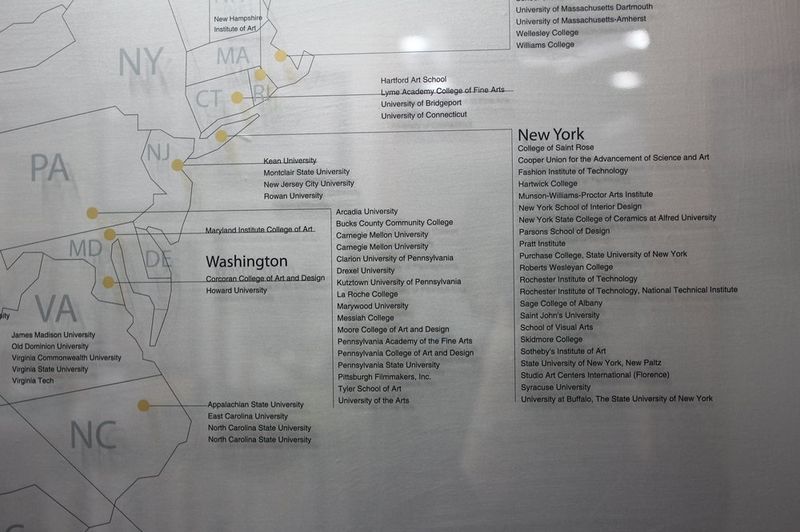
New York City as your campus. Parsons sits in the heart of Manhattan. Fashion Week, gallery openings, design studios, advertising agencies, and film productions are not field trips — they’re part of your daily environment. For students who want industry access built into their education from day one, no school in the world offers what Parsons does.
Exceptional design programs. Parsons is particularly renowned for fashion design, graphic design, interior design, and strategic design. Its BFA in Fashion Design is widely considered the best in the US, and its alumni include Donna Karan, Marc Jacobs, Tom Ford, and Alexander Wang.
The Parsons Challenge. Unlike most art schools, Parsons requires applicants to complete a creative project called the Parsons Challenge — a two-part assignment that tests conceptual thinking and visual communication. This process selects for students who think, not just those who can draw.
Strong industry connections. Parsons has deep ties to the fashion, design, media, and technology industries. Internship placements, studio visits, and guest critics from top firms are a regular part of the curriculum.
A diverse, international student body. Parsons is one of the most internationally diverse art schools in the US. Korean students in particular have a strong presence and a long track record of success at Parsons.
How Does Parsons Compare to Other Top Art Schools?
| Parsons | RISD | CalArts | |
|---|---|---|---|
| Location | New York City | Providence, RI | Valencia, CA |
| Strongest programs | Fashion, Graphic Design, Interior Design | Fine Art, Industrial Design, Illustration | Animation, Film, Experimental Art |
| Campus feel | Urban, industry-integrated | Tight-knit studio culture | Experimental, community-driven |
| Best for | Design careers, fashion industry | Studio art depth | Conceptual and media arts |
Parsons and RISD are the two schools most Korean students compare when applying to US art schools. The right choice depends on your discipline and the kind of environment where you do your best work. [→ See our full Parsons vs RISD comparison]
Is Parsons Right for You?
Parsons is likely a great fit if:
- You want to study fashion, graphic design, interior design, or product design
- You want to live and work in New York City during your studies
- You learn well in a fast-paced, industry-connected environment
- You’re interested in design as a commercial and cultural practice
Parsons may not be the right fit if:
- You prefer a quieter, more insular studio environment
- Your primary interest is fine art, ceramics, printmaking, or traditional craft — RISD or SAIC may serve you better
- You’re looking for a strong animation or film program — CalArts is the stronger choice there
What Do Parsons Graduates Do?
Parsons alumni work across fashion, branding, interior design, film, technology, and education. Notable graduates include some of the most recognized names in global fashion and design. The school’s location in New York means graduates are already embedded in professional networks before they finish their degree.
Employment outcomes for Parsons graduates are strong, particularly in fashion, branding, and UX design — three fields where the Parsons name carries significant weight with employers.
The Verdict: Is Parsons a Good Art School?
Yes — Parsons is an excellent art school, and for certain disciplines and career paths, it is the best choice in the world. It is particularly dominant in fashion design and offers unmatched access to New York’s creative industries.
For Korean students specifically, Parsons has a strong track record. Is Parsons a good art school for students from Korea? The answer is consistently yes — particularly in fashion design and graphic design, where Korean graduates have built significant careers.
Like any school, it’s not the right fit for everyone. But if you’re a design-oriented student who wants to graduate into one of the world’s most competitive creative markets, Parsons belongs at the top of your list.
Frequently Asked Questions
Is Parsons hard to get into? Parsons is selective, with an acceptance rate of around 65% overall — but the programs most Korean students apply to, such as fashion design and graphic design, are significantly more competitive. The portfolio and Parsons Challenge carry the most weight. [→ See our complete guide to getting into Parsons]
Is Parsons better than RISD? Neither school is objectively better — they excel in different areas. Parsons leads in fashion and commercial design; RISD leads in fine art and industrial design. The right choice depends on your discipline and learning style. [→ See our Parsons vs RISD comparison]
Is Parsons worth the cost? Parsons is expensive, and financial aid for international students is limited. However, for students in fashion, design, and related fields, the New York location and industry connections offer a return on investment that is hard to find elsewhere. [→ See our guide to Parsons financial aid for international students]
Is Parsons good for Korean students? Yes. Parsons has a large and established Korean student community, and Korean students have a strong track record of success there. [→ See our guide to Parsons for Korean students]