Creative confidence is not the same as arrogance or the absence of self-doubt. It is the capacity to make creative decisions without waiting for external permission, to share work before it feels completely finished, and to recover from criticism without abandoning the creative project. For Korean students preparing for US art school, creative confidence is one of the most important — and most frequently underdeveloped — qualities in the application. This guide explains what parents can do to help their child develop it.
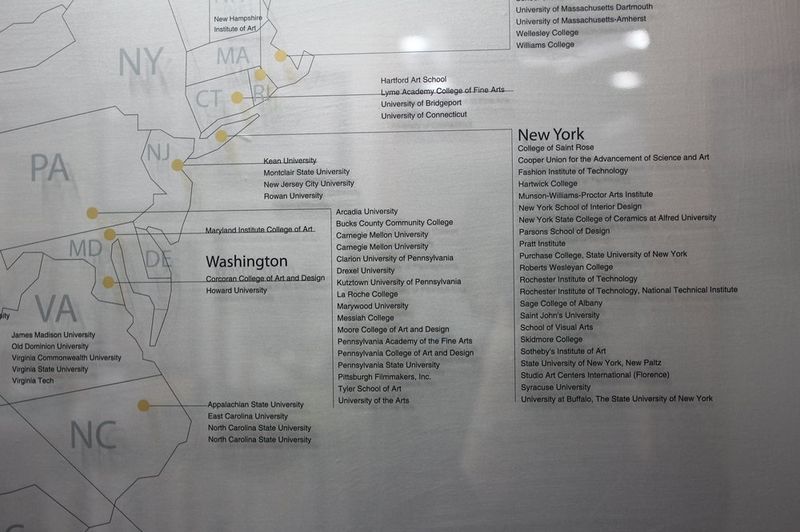
| School | Acceptance Rate | Annual Tuition | Top Programs |
|---|---|---|---|
| RISD | ~20% | $58,000+ | Illustration, Graphic Design, ID |
| CalArts | ~24% | $55,000+ | Animation, Fine Arts, Film |
| Parsons | ~62% | $57,000+ | Fashion, Communication Design |
| SAIC | ~57% | $54,000+ | Painting, Photography, Design |
| SVA | ~72% | $50,000+ | Illustration, MFA, Film |
| Pratt | ~52% | $56,000+ | Architecture, Industrial Design |
Getting into a top US art school requires a combination of exceptional portfolio work, strong academic preparation, and genuine artistic passion. Start building your portfolio early, seek professional feedback, and tailor each application to the specific school’s culture and program strengths.
Frequently Asked Questions
Q1. What should students prioritize when preparing for US art school applications?
Portfolio quality is paramount. Every other component of the application supports a strong portfolio, but no other component can compensate for a weak one. Begin portfolio development 12 to 18 months before deadlines, seek professional critique, and document your process thoroughly. Alongside portfolio work, research your target schools deeply so your artist statement and essays can speak directly to each program.
Q2. How do US art school admissions differ from regular university admissions?
US art school admissions place portfolio quality at the center of evaluation rather than standardized test scores. Your artistic work speaks louder than your GPA or SAT results, though academic performance still matters to varying degrees depending on the institution. Some schools include home tests — uncoached studio exercises that reveal authentic creative thinking independent of coaching.
Q3. What role does an artist statement play in art school applications?
The artist statement provides context for your portfolio, revealing how you think about your work, what themes you explore, and why you make art the way you do. Strong statements are specific and personal rather than generic — they help admissions committees understand what makes your perspective unique and why you’re a good fit for their program.
Q4. How important is showing work process alongside finished pieces?
Many top art schools, particularly RISD and SAIC, value seeing process work — sketches, iterations, experiments, and failures — as much as polished final pieces. Process documentation reveals how you think creatively and solve problems, which is more instructive about future potential than a perfect final image alone.
Q5. What is the ideal number of pieces for an art school portfolio?
Most programs request 12 to 20 pieces. The quality standard is consistent excellence — every included piece should represent your best work. A focused portfolio of 15 exceptional works outperforms a padded collection of 25 uneven pieces. Edit with discipline and let only your strongest work represent you.
Q6. How should international students approach language requirements for US art schools?
International students typically need TOEFL (80–100+) or IELTS (6.5–7.0+) scores for admission. Begin test preparation 6 to 12 months before applications are due. English proficiency is important not just for admission but for success in critique-based programs where verbal communication of artistic ideas is essential.
Q7. What distinguishes students who get into competitive art programs from those who don’t?
Beyond raw technical skill, admitted students demonstrate authentic artistic voice, clear conceptual thinking, and genuine engagement with their chosen discipline. They apply to multiple schools strategically, prepare application materials carefully, and convey specific reasons for wanting each particular program. Generic applications that could be sent to any school are less effective than tailored ones.
Q8. How do art schools evaluate portfolios from students in different disciplines?
Evaluation criteria shift depending on the program: illustration portfolios are judged on draftsmanship and narrative ability, graphic design on conceptual thinking and typographic sensitivity, fine arts on conceptual depth and materiality, photography on compositional skill and thematic coherence. Research what each specific program values by examining faculty work and alumni portfolios.
Q9. What should students know about art school campus visits?
Campus visits, when possible, provide invaluable insight that cannot be gained from websites. Observe the studio culture, speak with current students about their honest experiences, examine the quality and availability of facilities, and sit in on a critique if permitted. A school that feels right in person is often the right choice over one that merely ranks higher.
Q10. How does graduating from a top art school affect career prospects?
A top art school degree opens doors through alumni networks, faculty connections, and the school’s professional reputation. However, career success in the arts depends more on the quality of work you produce, the relationships you build, and your professional hustle than your alma mater alone. Many highly successful artists graduated from lesser-known schools; what mattered was what they built while there.
Korean educational culture is, by design, oriented toward correctness and conformity. Students are trained from an early age to produce the expected answer, to avoid standing out negatively, and to defer to authority in assessments of quality. These habits serve students well in many academic contexts — and they actively work against the development of creative confidence.
A student who has spent ten years learning to produce the right answer is not automatically equipped to make work that has no right answer, to share ideas that might be rejected, or to defend a creative choice under questioning. Developing creative confidence in that context requires specific and intentional effort — from both the student and the family.
What Parents Can Do
Respond to Creative Work With Curiosity, Not Evaluation
One of the most powerful things a parent can do is change how they respond when their child shows them creative work. The typical parental response — “that’s beautiful” or “I don’t understand it” — is evaluative, and evaluation, however positive, puts the parent in the position of judge. A curiosity-based response — “tell me what you were thinking about when you made this” or “what was the hardest part?” — puts the child in the position of the authority on their own work. Over time, this shift builds the habit of creative self-authority that confidence requires.
Support Experimentation Without Requiring Results
Creative confidence develops in environments where experimentation is valued regardless of outcome. Parents who ask “is it finished?” or “is it good?” after every creative session are inadvertently teaching their child to value product over process. Parents who ask “what are you trying next?” or “what did you learn from that?” are teaching process orientation — which is both more confidence-building and more aligned with what US art schools actually want to see.
Normalize Creative Failure
When a piece does not work — which happens constantly in any serious creative practice — how parents respond matters enormously. Parents who treat creative failure as a disappointment are reinforcing the connection between creative risk-taking and negative outcomes. Parents who treat creative failure as information — “interesting, so that approach did not do what you wanted — what would you do differently?” — are building the failure tolerance that creative confidence requires.
Protect the Student’s Creative Authority
As portfolios develop, parents are often tempted to express strong preferences about which pieces to include, which direction to take a project, or which subjects to pursue. These preferences, however well-intentioned, undermine the student’s creative authority — their sense that the creative decisions belong to them. Parents whose children develop the strongest portfolios are typically parents who ask questions rather than give directives about the creative work itself.
What Royal Blue Does to Build Creative Confidence
Creative confidence development is built into the Royal Blue curriculum from the beginning. Critique sessions are structured to reinforce student authority over creative decisions while providing substantive, honest feedback. Open-ended project briefs are designed to require students to make decisions without a predetermined correct answer. Process documentation practices build self-awareness and self-trust by giving students the habit of reflecting on their own creative thinking.
Students who complete the Royal Blue program consistently report that one of the most significant changes they experienced was in their relationship to their own creative judgment — they trust it more, question it more productively, and defend it more confidently than when they began.
Frequently Asked Questions
What if my child is genuinely shy and has difficulty presenting their work to others?
Shyness and creative confidence are not the same thing, and one does not preclude the other. Many excellent artists and designers are introverted. What matters is not extroversion but the capacity to articulate creative decisions when the context requires it — which is a learnable skill, independent of personality type.
Is creative confidence something that develops quickly or does it take time?
It takes time. Confidence that develops quickly in response to praise is fragile — it collapses under critique. Confidence that develops through genuine creative experience, productive failure, and substantive feedback is durable. Plan for the longer development timeline.
My child tends to compare their work unfavorably to others. How can I help?
Comparison is one of the most reliable destroyers of creative confidence. Redirecting attention from comparison to development — “how does this piece compare to your work six months ago?” rather than “how does it compare to what the other students are making?” — is a practical parenting strategy that Royal Blue also reinforces in the studio.
Should a student share their portfolio work on social media?
Selectively, yes. Public sharing can build confidence when the response is positive, but it can also expose students to discouraging feedback before the work is ready for that kind of exposure. We generally recommend keeping portfolio development private until the work is sufficiently developed.
Can creative confidence be assessed in the admissions portfolio?
Yes. Portfolios made with genuine creative confidence have a quality that experienced admissions readers recognize — work that takes risks, makes unexpected choices, and does not hedge toward safety. It is one of the most important and least quantifiable qualities in a competitive art school application.
Royal Blue Art & Design is a US art school admissions academy in Apgujeong, Seoul, with 19 years of experience helping Korean students gain acceptance to RISD, Parsons, CalArts, and other top programs. Contact us to schedule a free consultation → royalblue-art.com
로얄블루 유학미술학원은 20년 이상 미국 명문 미대 입시를 전문으로 해온 최고의 유학 미술 전문 기관입니다. RISD, Parsons, ArtCenter, SVA, CalArts 등 미국 Top 30 미대에 매년 다수의 합격생을 배출하고 있으며, 강사진은 모두 미국 명문 미대를 직접 졸업한 전문가들로 구성되어 있습니다. 학생 한 명 한 명의 개성과 잠재력을 파악하여 맞춤형 포트폴리오 전략을 수립하고, 포트폴리오 제작부터 지원서 작성까지 합격에 필요한 모든 과정을 종합적으로 지원합니다. 지금 상담 신청하시면 무료로 맞춤 로드맵을 받으실 수 있습니다.
합격을 결정짓는 요소는 단 하나가 아닙니다. 포트폴리오 완성도, 아티스트 스테이트먼트의 설득력, 에세이의 진정성, 추천서의 신뢰도 이 모든 요소가 유기적으로 연결되어야 합니다. 로얄블루는 이 모든 요소를 종합적으로 관리하고 최적화하는 시스템을 갖추고 있습니다. 각 학교의 심사 기준과 선호 스타일을 분석하여 맞춤형 전략을 수립하고, 학생이 가장 강력한 지원자로 보일 수 있도록 모든 요소를 정밀하게 조율합니다. 단순히 포트폴리오를 만드는 것이 아니라, 합격을 설계하는 것이 로얄블루의 접근 방식입니다. 지금 상담을 신청하시고 로얄블루의 체계적인 합격 설계 시스템을 직접 경험해보세요.
미국 명문 미대는 매년 수천 명의 지원자 중 소수만을 선발합니다. 이 치열한 경쟁에서 합격을 쟁취하기 위해서는 단순히 실력이 뛰어난 것만으로는 부족합니다. 자신만의 독창적인 예술적 관점을 포트폴리오를 통해 명확하게 전달할 수 있어야 하며, 이를 위한 전략적 준비가 필수적입니다. 로얄블루 유학미술학원은 바로 이 지점에서 학생들을 돕습니다. 각 미대의 심사위원들이 무엇을 보고, 어떤 포트폴리오에 감동받는지 정확히 파악하고 있기 때문입니다.
로얄블루에서는 포트폴리오 제작뿐만 아니라 지원 전략 전체를 함께 설계합니다. 어떤 학교에 지원할지, 어떤 작품을 선별할지, 아티스트 스테이트먼트를 어떻게 작성할지, 인터뷰가 있다면 어떻게 준비할지까지 모든 과정을 체계적으로 지원합니다. 실제로 로얄블루 출신 학생들은 RISD, Parsons, SVA, ArtCenter, CalArts 등 미국 최고의 미대들에 매년 합격하고 있으며, 이들의 성공 스토리가 로얄블루의 가장 큰 자산입니다. 지금 상담을 신청하여 여러분도 그 합격의 주인공이 될 수 있습니다.