Quick Answer: Art schools receive final senior year transcripts after acceptance. Small grade drops (A to B) rarely matter. Moderate drops (A/B to C) may trigger warning letters. Severe drops (multiple failing grades, major academic decline) can result in rescinded acceptance. Korean students should maintain senior year performance close to their application records. If you experience a difficult semester, proactively communicate with admitted schools about extenuating circumstances before they see the transcript.
| School | Common App? | ED Deadline | RD Deadline | Portfolio Platform |
|---|---|---|---|---|
| RISD | Yes | Nov 1 | Jan 15 | RISD SlideRoom |
| Parsons | Yes | Nov 1 | Jan 1 | SlideRoom |
| CalArts | No (own portal) | N/A | Jan 5 | CalArts portal |
| SVA | No (own portal) | N/A | Feb 1 | SVA portal |
| Pratt | Yes | Nov 1 | Jan 5 | SlideRoom |
| SAIC | Yes | Nov 15 | Feb 1 | SlideRoom |
Frequently Asked Questions
Q1. When should I start building my art school portfolio?
The ideal timeline begins in 9th or 10th grade (age 14-15) for students planning to apply to US art schools. Early preparation allows genuine artistic development rather than rushed portfolio manufacturing. 9th grade: explore diverse media, develop foundational skills, take drawing classes. 10th-11th grade: identify your creative direction, develop more ambitious projects, research programs. 12th grade: finalize portfolio, write personal statement, apply. Students who start in 12th grade often submit technically polished but artistically underdeveloped work.
Q2. How many pieces should be in an art school portfolio?
Most programs request 12-20 pieces, with sweet spots around 15 works. Quality is more important than quantity—14 exceptional pieces are more impressive than 20 mediocre ones. Include only your best work; padding with weaker pieces dilutes the overall quality impression. Many programs also specify proportion of required pieces (some works must be from direct observation, for example). Read each school’s portfolio guidelines carefully, as requirements vary significantly by program and institution.
Q3. What types of artwork should I include in my portfolio?
A strong portfolio typically includes: direct observational drawing (life drawing, still life, landscape)—which demonstrates fundamental skill; work in multiple media (drawing, painting, collage, digital, photography, 3D) showing versatility; your strongest conceptual or thematic work; process documentation (sketches, iterations) for 1-2 projects; and a few pieces in your developing personal style. Avoid submitting only one type of work—even if you’re applying to Illustration, showing painting and life drawing demonstrates broader artistic capacity.
Q4. Should I include unfinished work in my portfolio?
Unfinished work can be valuable if it reveals your thinking process more clearly than finished work. A sketch that shows dynamic gestural thinking may be stronger than a finished, tightened version of the same image. The key question is: does this piece contribute to a positive overall impression, or does it raise doubts? Process documentation (sequential sketches showing how a piece developed) is different from simply submitting incomplete work—the former demonstrates thinking, the latter can suggest poor time management.
Q5. How important are observational drawing skills for art school?
Observational drawing—drawing from direct observation of figures, objects, landscapes—remains fundamental at virtually all art schools. Even programs with strong digital or conceptual emphases expect applicants to demonstrate they can observe and render the visual world accurately. Life drawing is particularly important: figure drawing classes appear at every major art school. Students who neglect observational drawing in favor of exclusively digital or stylized work often struggle in first-year programs. Take life drawing classes throughout high school.
Q6. How should I document and photograph my portfolio work?
Portfolio documentation significantly affects how work is perceived. For 2D work: shoot in natural light or even, non-directional artificial light; ensure the image is straight (not skewed); show the full work without cropping; shoot on a neutral background; crop out any table edges or props; use a camera (not phone camera) for large works. For 3D work: multiple views from different angles; neutral background; scale reference if helpful. For digital work: submit final files directly rather than photographing screens. Poor photography of strong work is a common application mistake.
Q7. What is a ‘home test’ and how should I approach it?
A home test is a creative assignment given to art school applicants as part of the application. RISD’s famous ‘bicycle’ drawing and their abstract geometric prompt are examples. Approach the home test as a creative challenge, not a technical exercise—programs want to see how you think and respond to creative constraint, not whether you can execute the most technically polished version. Read the prompt carefully for specified constraints; beyond those, interpret as broadly and originally as possible. The most memorable responses are genuinely surprising.
Q8. How do art schools evaluate portfolio work from Korean preparation academies?
US admissions committees regularly review portfolios from Korean art preparation academies (입시 미술학원). They have developed familiarity with both the strengths (strong technical foundation, disciplined drawing skills) and weaknesses (formulaic compositions, lack of personal voice) of Korean academy preparation. Portfolios that transcend the academy template—showing genuine personal creative interests, unexpected conceptual choices, or distinctive visual language—stand out strongly. Include work from outside your academy preparation that reflects your authentic creative interests.
Q9. What should I include in my artist statement for art school applications?
An artist statement for art school applications should: explain your creative motivations authentically and specifically; describe what questions or ideas drive your work currently; connect your past development to your future aspirations; reference specific influences (artists, experiences, cultural backgrounds) that inform your work; and demonstrate that you’ve researched the specific program and can articulate why it fits your trajectory. Avoid vague generalizations (‘I’ve always loved art’); be specific about your current creative preoccupations and what you want to develop further.
Q10. How do digital portfolios differ from physical ones?
Most art school applications now use digital portfolio submission through platforms like SlideRoom, Acceptd, or the school’s own portal. Digital portfolios: must be high-resolution (minimum 1500px longest side, ideally 2000+); should be in appropriate file formats (JPEG for still images, PDF for process documentation, video for time-based work); require accurate color profiles; and benefit from thoughtful sequencing since reviewers often view quickly. A well-presented digital portfolio can exceed a physical portfolio in impact if the documentation is high quality. Include any 3D or installation work through multiple-view photography.
A grade drop after art school acceptance can trigger serious consequences —
here’s what Korean students need to know before senior year ends.
For Korean students navigating US art school admissions, understanding senior year grades matters significantly. At Royal Blue Art & Design in Apgujeong, Seoul, we have guided Korean students through every stage of the admissions process over 19+ years of practice.
This guide covers the essential details with data for the 2025–2026 cycle.

Understanding Senior Year Grades
Colleges admit students based on expected academic trajectory. When final transcripts arrive, admissions officers compare them to application transcripts. A normal pattern of A grades with one or two B grades falls within expected variation. A pattern of straight A grades suddenly replaced by C grades signals disengagement and triggers review. The admissions office typically sends a warning letter asking for explanation; students who respond professionally with evidence of difficult circumstances (family illness, documented mental health issue, significant life disruption) often retain acceptance with conditions like summer coursework. Students who ignore warnings or provide weak explanations face rescission. Korean students sometimes relax significantly after acceptance notification arrives — senior year still matters until graduation.
Korean students should approach this topic strategically — understanding both what US admissions officers actually evaluate and how typical Korean application patterns succeed or fail relative to those evaluations.
How US Art Schools Actually Evaluate This
US art school admissions officers read thousands of applications during each cycle. Their evaluation process is systematic but subjective — portfolio reviews involve multiple readers, discussions about borderline applicants, and collective judgment about which students will thrive at the specific institution. Understanding this evaluation process helps Korean students prepare strategically rather than guessing at what admissions officers want.
For senior year grades specifically, admissions officers look for evidence of genuine engagement, appropriate professional judgment, and alignment with the student’s overall application narrative. Inconsistencies between different application components — portfolio, essays, transcripts, recommendations — trigger scrutiny. Strong applications tell a coherent story about who the applicant is creatively and intellectually.
Common Korean Student Mistakes
At Royal Blue, we see recurring patterns in Korean applications that reflect both cultural differences and information gaps about US admissions processes.
One common mistake involves assuming US admissions work like Korean or Asian admissions — that specific test scores or credentials determine outcomes in predictable ways. US art school admissions are more holistic and subjective, and students who optimize for numeric credentials sometimes underperform relative to students who develop distinctive creative voices and coherent application narratives.
Another common mistake involves cultural differences in self-presentation. Korean educational culture often emphasizes modesty and indirect communication. US application materials require direct, specific articulation of accomplishments and perspectives. Korean students who write application essays in a modest Korean style often underperform relative to their actual capabilities.
A third mistake involves timing. Many Korean students begin serious US art school preparation in their junior or senior year of high school. Competitive applicants to top programs typically begin development in ninth or tenth grade. Starting later means compressing development time — possible but harder.
Strategic Approach for Korean Students
Successful Korean applicants to top US art schools typically share several characteristics. They begin portfolio development early, giving themselves time for genuine creative exploration before portfolio selection. They work with experienced mentors who understand both Korean educational context and US admissions standards. They develop distinctive creative voices rather than following generic portfolio formulas. They write authentic application materials rather than translating Korean-style writing.
For senior year grades, the strategic approach involves understanding exactly what each target school expects, gathering the specific materials or information required, presenting it in formats US admissions officers expect, and integrating it coherently with the rest of the application. Generic approaches produce generic results; targeted approaches produce better outcomes.
What Admissions Officers Say

Over years of consultation with US art school admissions officers through portfolio reviews, campus visits, and direct communication, we have gathered consistent insights about what actually matters in applications. Admissions officers emphasize several themes that Korean applicants often underweight.
First: authentic creative voice trumps technical virtuosity. Technical skills can be taught; authentic artistic perspective cannot. Portfolios demonstrating distinctive individual perspective — even with imperfect technical execution — often outperform polished portfolios without clear voice.
Second: evidence of sustained practice matters more than isolated excellent works. Admissions officers look for patterns of ongoing creative engagement across time. A portfolio showing steady development over 2-3 years communicates more than a single excellent work.
Third: coherent application narratives succeed. When portfolio, essays, recommendations, and academic records all point to the same kind of student — the story is credible and compelling. When different components contradict each other — admissions officers become uncertain about who the real applicant is.
Timeline Considerations
For senior year grades, timing matters. Korean students should understand both the specific deadlines involved and the preparation time required for quality execution. Rushed preparation produces weak results; adequate preparation time produces competitive results.
Most elements of competitive applications require months of thoughtful development rather than weeks of crash preparation. Students who begin early have flexibility; students who begin late must compromise somewhere — quality, quantity, or scope.
Frequently Asked Questions
How much does senior year grades matter relative to portfolio?
Portfolio matters most for art school admissions. Senior Year Grades provides supporting information but cannot substitute for strong portfolio. Korean students should prioritize portfolio development while handling senior year grades competently — not the reverse.
Do different US art schools treat this differently?
Yes. Dedicated art schools often weight this element differently than research universities. Check each target school’s specific admissions information and tailor your approach accordingly. Generic approaches cannot match school-specific strategic preparation.
Can Korean students succeed without optimal preparation on this element?
Yes, if other application elements are strong. Art school admissions are holistic. Weaknesses in one area can be offset by exceptional strength in others. However, Korean students should still prepare senior year grades as well as circumstances allow.
Does this matter for transfer applicants?
Yes, though transfer admissions work somewhat differently. Transfer applicants present college-level creative work alongside high school records. The relative weight of different elements shifts. Consult specific transfer admission guidelines at target schools.
Where can I get personalized guidance on this?
Royal Blue Art & Design in Apgujeong, Seoul offers consultations with Korean students preparing for US art school admissions. We help students navigate the specific details of their individual situations rather than applying generic advice.
The Royal Blue Perspective
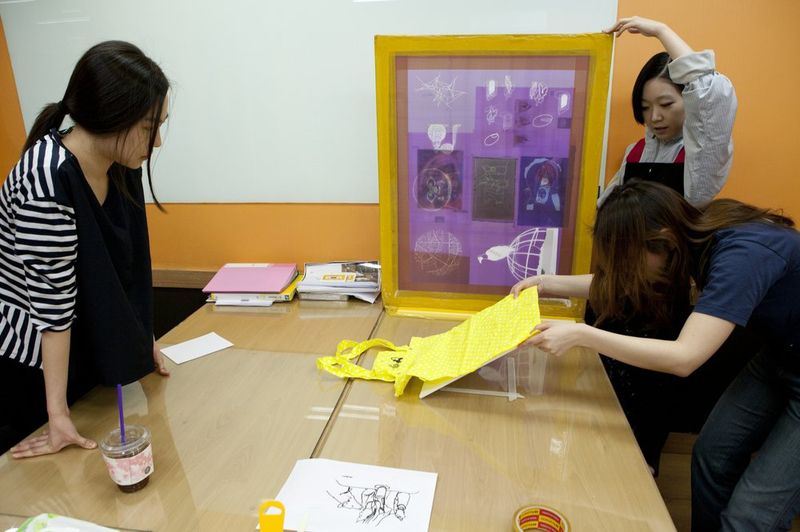
At Royal Blue Art & Design in Apgujeong, Seoul, we have guided Korean students through the US art school admissions process over 19+ years. For senior year grades, strategic preparation matters more than general awareness. We help students understand what specific target schools actually expect, how to prepare competitively, and how to avoid common Korean-application mistakes that can undermine otherwise strong candidacies.
We have sent students to RISD, Parsons, CalArts, Carnegie Mellon, Cornell, WUSTL, and 50+ other institutions. Every strategic approach is tailored to the specific student’s profile, target schools, and individual circumstances.
Book a free consultation today or review our recent admissions results.
Related Reading
공식 정보: College Art Association