Quick Answer: AI critique simulation uses tools like Gemini (for image analysis) and Claude or ChatGPT (for conceptual and process critique) to evaluate portfolio pieces before submission. Effective simulation identifies compositional issues, conceptual weaknesses, and clarity problems that you’ve become too close to see. Limitations include missing subtle qualities, cultural context gaps, and inability to replicate actual admissions reader experience. AI critique works best as supplementary perspective alongside human critique from teachers, mentors, and peer artists. Royal Blue Art integrates AI critique into comprehensive pre-submission review processes for Korean students.
Using AI critique simulation portfolio review effectively provides perspective different from your own before committing to submission. According to portfolio review practices at RISD and Parsons, multiple rounds of external feedback typically strengthen portfolios. At Royal Blue Art & Design in Apgujeong, Seoul, we use AI critique as one of several feedback channels for Korean students.
This guide covers effective AI critique approaches.
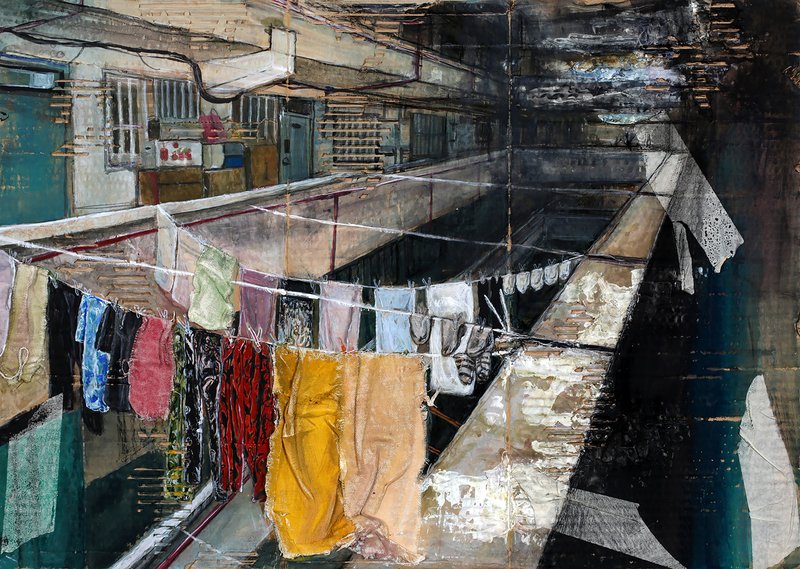
What AI Critique Does Well
Strengths of AI-based critique: (1) Always-available — no scheduling required for feedback, (2) Patient unlimited revision discussion — can iterate many times without fatigue, (3) Consistent framework application — evaluates across multiple pieces using same criteria, (4) Broad art historical knowledge — references you might not know, (5) Multiple perspective simulation — can play different critic personalities, (6) Language translation capability for Korean-English bridging, (7) No social pressure — can ask questions you’d feel embarrassed asking human mentors, (8) Compositional analysis of uploaded images through multimodal tools. For Korean students with limited access to English-speaking art mentors, AI critique fills genuine gap. Combined with Korean academy human feedback, it produces more comprehensive review than either alone.
Effective Critique Prompts
Prompts that produce useful AI critique: (1) Role-based critique — “You are an admissions reviewer at SAIC. Critique this portfolio piece from that perspective,” (2) Specific concern focus — “Focus critique on compositional issues specifically,” (3) Comparison critique — “Compare this piece to typical successful RISD illustration portfolio entries,” (4) Multiple perspectives — “Give me three different critical perspectives on this piece,” (5) Probing questions — “What questions would a skeptical admissions reader ask about this work,” (6) Process-based — “Based on my process description, what weaknesses might emerge in the finished piece,” (7) Cultural translation — “How might American admissions readers interpret this Korean-specific imagery.” Specific prompts produce actionable feedback. Generic “critique my work” requests produce vague responses.
Multi-Tool Critique Workflow
Combining multiple AI tools for comprehensive review: (1) Upload image to Gemini for compositional analysis — elements, hierarchy, visual weight, (2) Share process description with Claude for conceptual critique — ideas, decisions, coherence, (3) Use ChatGPT for alternative perspectives — different critical frameworks, (4) Apply Perplexity for comparison with current trends and successful work, (5) Synthesize feedback across tools — identify points all tools raise (highest priority concerns) and unique observations, (6) Revise piece or portfolio based on synthesized feedback, (7) Re-critique revised version to confirm improvements. Multi-tool approach catches issues single-tool critique might miss. Different tools have different training data and analytical tendencies — diverse input reveals blind spots.
What AI Critique Misses
Limitations requiring awareness: (1) Subtle atmospheric qualities — mood, emotional register, nuanced tone often escape AI analysis, (2) Cultural context — Korean-specific references and cultural weight of imagery require human cultural understanding, (3) Material qualities visible only in person — surface texture, scale, physical presence, (4) Trends in specific programs — what Yale values versus CalArts preferences require human faculty knowledge, (5) Your artistic trajectory — where your work is heading requires perspective over time AI conversation cannot provide, (6) Soft feedback delivery — how to receive difficult critique in person, (7) Relationship and community — human mentors provide ongoing support AI cannot replicate. Each limitation affects critique value. Students relying entirely on AI critique often submit portfolios missing elements experienced human reviewers would flag.
Combining with Human Critique
Comprehensive review combining AI and human feedback: (1) Start with AI critique to identify obvious issues, (2) Revise pieces based on AI feedback before seeking human time, (3) Bring revised work to human mentors respecting their time, (4) Human critique focuses on subtle and cultural issues AI misses, (5) Final AI pass after human revisions catches any residual issues, (6) Peer critique from other artists adds community perspective, (7) Final self-evaluation synthesizes all feedback into personal decisions. This layered approach maximizes feedback quality while respecting different sources’ strengths. Korean students at Royal Blue Art typically receive academy instructor critique, AI supplementary critique, and peer critique across portfolio development — each layer catching different issues.
Handling AI Critique Emotionally
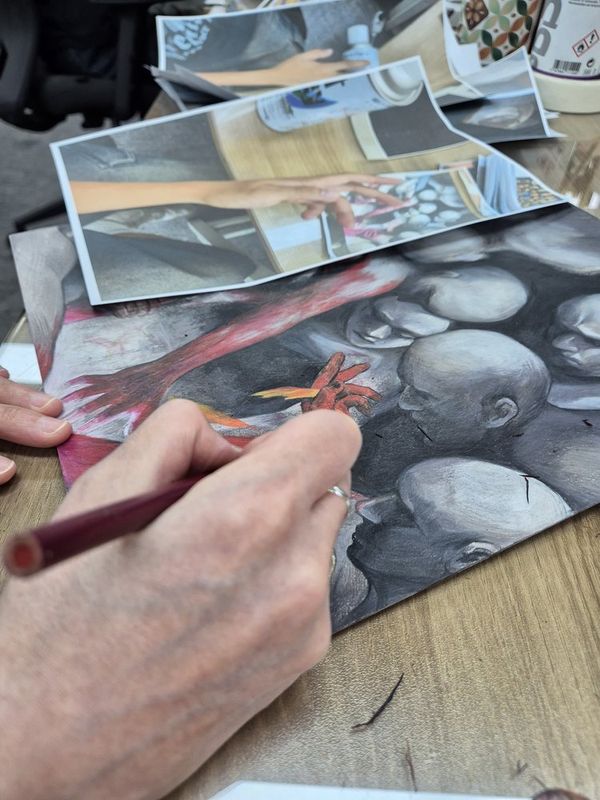
Psychological aspects of AI critique worth noting: (1) AI critique can feel impersonal, reducing emotional weight that motivates revision, (2) AI consistency can feel mechanical compared to invested human feedback, (3) Students sometimes dismiss AI feedback more easily than human feedback, (4) Repeated AI critique on same piece can produce diminishing specific feedback, (5) AI may not recognize when a piece actually works well — tending toward critique mode, (6) Positive AI feedback sometimes feels hollow compared to genuine human encouragement. Korean students sometimes need emotional context around critique — AI cannot provide the relationship that motivates sustained effort. The solution is not avoiding AI critique but pairing it with human mentorship that provides emotional support and relational commitment AI cannot replicate.
When to Stop Revising
Using AI critique knowing when to stop is critical: (1) AI can always find something to critique — perpetual revision produces diminishing returns, (2) At some point submission beats perfection — deadlines force completion, (3) Excessive revision can flatten work, removing idiosyncratic qualities that make pieces memorable, (4) AI feedback should prompt decisive revision, not endless tweaking, (5) Final 10 percent of polish often produces 3 percent of value, (6) Fresh work from saved time often outperforms additional revision on existing work. Set revision limits: typically 3-5 revision rounds per piece, with final round focused on technical finish rather than conceptual change. Move on to next piece after limit reached. Korean students often need explicit permission to stop revising — the AI’s continued availability for feedback can produce unhealthy perfectionism.
Frequently Asked Questions
Can AI critique accurately predict what admissions will think?
Partially. AI can identify obvious issues admissions readers might note. AI cannot fully replicate experienced human admissions review that involves subjective judgment and pattern recognition across thousands of portfolios.
Should I trust AI critique over my own feeling about the piece?
No. Your artistic judgment matters. Consider AI critique as input to your decision-making, not verdict. Artists who lose their own evaluation capacity to AI feedback produce weaker work than those who maintain independent judgment.
How many revision rounds are appropriate?
Typically 3-5 substantial revision rounds per portfolio piece. More often indicates unclear direction or perfectionism rather than productive improvement. Less may indicate insufficient development.
Can AI critique my written application materials too?
Yes. Claude particularly good at statement critique. Use similar approach — specific feedback prompts, multiple rounds, combine with human readers for final polish.
Next Steps

Integrating AI critique into portfolio development supports stronger submissions while protecting independent artistic judgment. Combine with human feedback, set revision limits, trust your final decisions.
Ready for comprehensive portfolio review? Contact Royal Blue Art & Design for structured critique cycles.
Related Reading
AI & Portfolio Topics
- How to Use AI to Plan a 12-Month Portfolio Calendar
- Best AI Tools for Vocabulary Building in English Critiques
- Best AI Tools for Practicing Interview Questions
- How to Use Gemini for Visual Research as an Art Student
- Claude vs ChatGPT for Art School Research
Essential Admission Topics
- How to Build a Portfolio for RISD
- Is Art School Worth It in 2026?
로얄블루 유학미술학원 무료 상담
무료 상담 신청하기 →