Quick Answer: Harvard’s visual arts program (now officially called AFVS — Art, Film, and Visual Studies, renamed from VES in 2019) offers a studio concentration within a liberal arts BA at one of the world’s most selective universities. RISD is a dedicated art and design school awarding a BFA with intensive studio training. Harvard is harder to get into but less studio-intensive; RISD is easier to get into but entirely studio-focused.
For Korean students comparing Harvard VES vs RISD, the first thing to know is that Harvard officially renamed its Department of Visual and Environmental Studies to the Department of Art, Film, and Visual Studies (AFVS) in 2019. Many applicants and guides still use “VES” — the program itself is the same, but the name has changed. At Royal Blue Art & Design in Apgujeong, Seoul, we have guided students considering both paths over 19+ years of practice.
Below is a direct comparison of curriculum, admissions reality, studio culture, and career outcomes for Korean students.
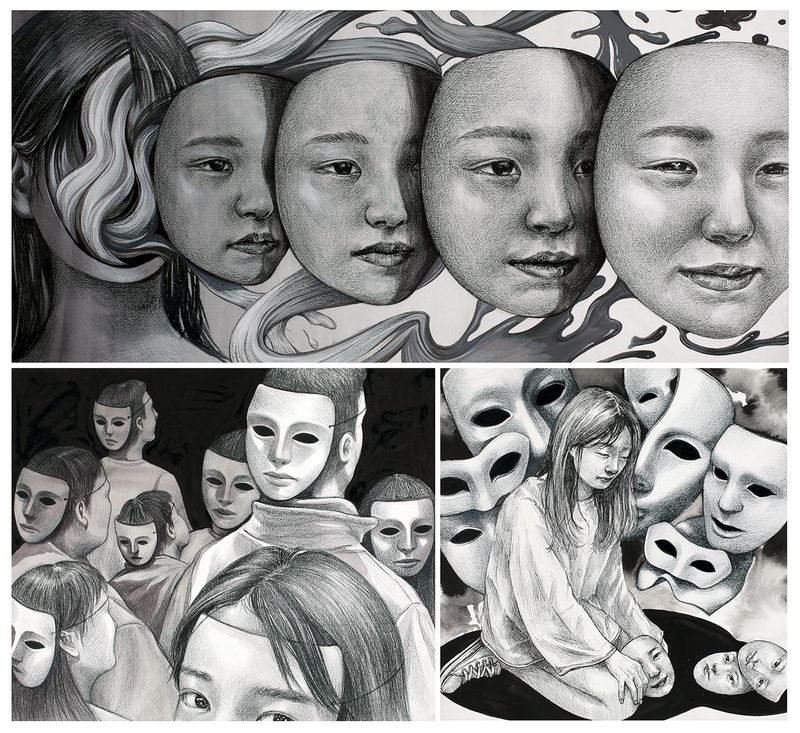
Harvard AFVS vs RISD at a Glance
- Harvard AFVS (formerly VES): Studio concentration within Harvard College BA. Overall Harvard acceptance rate ~3.5%. Concentration tracks in studio arts, film/video production, and environmental design. 2025 tuition approximately $59,320. Located in Cambridge, Massachusetts.
- RISD: Dedicated art and design school. BFA degree. Acceptance rate ~17–19%. 21 BFA majors available. 2025 tuition $62,688. Located in Providence, Rhode Island.
The critical distinction: Harvard AFVS is a concentration — Harvard’s equivalent of a major — within a liberal arts BA. RISD is a professional BFA. Harvard’s program expects students to take the majority of their coursework outside the arts; RISD’s program expects them to spend nearly every day in studio.
Curriculum: Concentration vs Professional Training
Harvard’s AFVS concentration includes studio courses in painting, drawing, sculpture, printmaking, photography, filmmaking, animation, and video art, as well as theoretical courses in film studies, critical theory, and visual culture. Undergraduates must apply to enter the concentration during sophomore year, meeting a GPA minimum of 3.0 and having taken at least one AFVS course. Once accepted, concentrators complete roughly 12 to 14 courses within the department, out of the 32 total needed to graduate.
This means a Harvard AFVS student spends roughly 40% of coursework in the department and 60% elsewhere — in history, languages, science, economics, or any other subject. The department explicitly frames itself as training students “to see more inclusively,” not as producing professional artists.
RISD’s BFA is the opposite. After a year-long Foundation Studies program, students declare a major and concentrate 80%+ of coursework in studio practice. Liberal arts requirements exist but are proportionally small. RISD produces graduates with portfolios ready for professional careers in art or design.
Acceptance Rates and Application Reality
Harvard College’s overall acceptance rate is approximately 3.5%, and applicants to AFVS apply through Harvard’s standard admission — there is no separate art-school track. The admission reader evaluates academic excellence, extracurricular distinction, essays, and recommendations. An art portfolio can be submitted as a supplement through Harvard’s ArtsSupp system, but it is optional and supplementary.
Most students accepted to Harvard who later pursue AFVS have exceptional academics first — strong GPAs, near-perfect test scores, significant extracurricular achievements — with creative work as an additional signal of depth, not as the primary evaluation criterion.
RISD’s admission is portfolio-first. Applicants submit the Common App plus a portfolio of 12 to 20 works and a required assignment. Academic records matter but cannot substitute for strong creative work. Acceptance rate of ~17–19% reflects a focused applicant pool of serious art students, not the general college-bound population.
Studio Culture
Harvard AFVS concentrators work in the Carpenter Center for the Visual Arts, a historically significant building designed by Le Corbusier. Studios are shared, not individual, and studio time is integrated with academic coursework. The community is small — typically 30 to 50 concentrators across all tracks in a given year — and tight-knit.
Harvard students in AFVS often describe feeling slightly on the margins of the broader university culture, which skews toward pre-professional fields like consulting, finance, and medicine. This can be liberating or isolating depending on temperament.
RISD is entirely studio culture. Every student is studying art or design. Studios run 24 hours, the library holds over 150,000 art books, and conversations everywhere are about making. The environment is immersive; there is no “outside” the art world within the campus experience.
Which Fits Korean Students Better?
In our 19+ years at Royal Blue, we see a recurring pattern. Korean students who thrive at Harvard AFVS are those with very strong academics who see art as one of several serious interests — who might graduate to law school, a master’s in design, or careers that combine creative practice with other fields (architecture, curating, cultural policy).
Korean students who thrive at RISD already know art or design is central to their identity. They want a professional credential and the studio hours to develop a working practice. Language fluency matters less at RISD because studio instruction relies heavily on visual demonstration.
For Korean families who value the Ivy League brand alongside creative training, Harvard’s AFVS offers a unique combination. For families focused on the most direct path to a professional art or design career, RISD is the proven route.
Career Outcomes
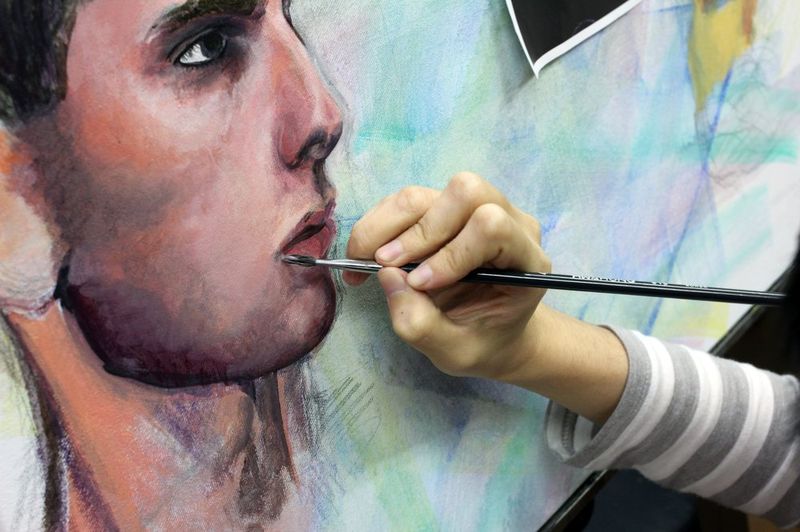
Harvard AFVS alumni include filmmakers Darren Aronofsky and Mira Nair, artist Matthew Ritchie, and many faculty at art schools, curators at major museums, and writers for leading cultural publications. Many alumni pursue MFAs after Harvard, either at RISD, Yale, Columbia, or UCLA — using the Harvard BA as a foundation for graduate study in art.
RISD alumni include Seth MacFarlane, Shepard Fairey, Nicole Eisenman, and generations of working designers at firms like Pixar, Apple, Google, and major fashion houses. The BFA functions as direct professional credential in creative industries.
For Korean alumni, both routes have produced significant careers. The Harvard pathway tends toward academic, curatorial, and interdisciplinary careers. The RISD pathway tends toward studio practice, design industry positions, and entrepreneurial creative ventures.
How to Decide
Ask three honest questions.
First: Is your academic record strong enough for Harvard to be realistic? Harvard’s standard is extremely high — near-perfect grades and test scores, plus significant distinction. If yes, Harvard AFVS is worth applying to. If your portfolio is your strongest asset, RISD is the more strategic choice.
Second: Do you want to spend four years primarily making art, or four years getting a broad education with art as one element? Answer this honestly before you apply.
Third: What do you imagine yourself doing five years after graduation? If a professional creative career, RISD prepares you directly. If graduate study, academia, or a hybrid interdisciplinary path, Harvard’s foundation translates more broadly.
Frequently Asked Questions
Is Harvard’s art program a BFA?
No. Harvard offers a BA with a concentration in AFVS (Art, Film, and Visual Studies). There is no BFA option at Harvard. Students wanting a BFA should consider RISD, Parsons, SVA, or similar dedicated art schools.
What is Harvard VES now called?
Harvard officially renamed the Department of Visual and Environmental Studies (VES) to the Department of Art, Film, and Visual Studies (AFVS) in 2019. The program structure is largely unchanged; only the name was updated to better reflect what the department actually teaches.
How hard is it to get into Harvard AFVS?
Applicants apply to Harvard College with overall acceptance rate around 3.5%. There is no separate application to AFVS — concentration is declared in sophomore year with a 3.0 GPA minimum. The hardest part is getting into Harvard at all; declaring AFVS is relatively straightforward for admitted students who perform well in the department’s introductory courses.
Which is better for Korean students: Harvard or RISD?
Neither is universally better. Harvard AFVS suits students with exceptional academics who want art as one of several interests. RISD suits students whose portfolio is their strongest asset and who want professional studio training. The right choice depends on the specific student’s profile and goals.
Can I apply to both Harvard and RISD?
Yes, and many of our Royal Blue students do. The application requirements overlap substantially — Common App, essays, test scores — but RISD adds the portfolio and required assignment. Applying to both diversifies your application year across very different admission criteria.
The Royal Blue Perspective
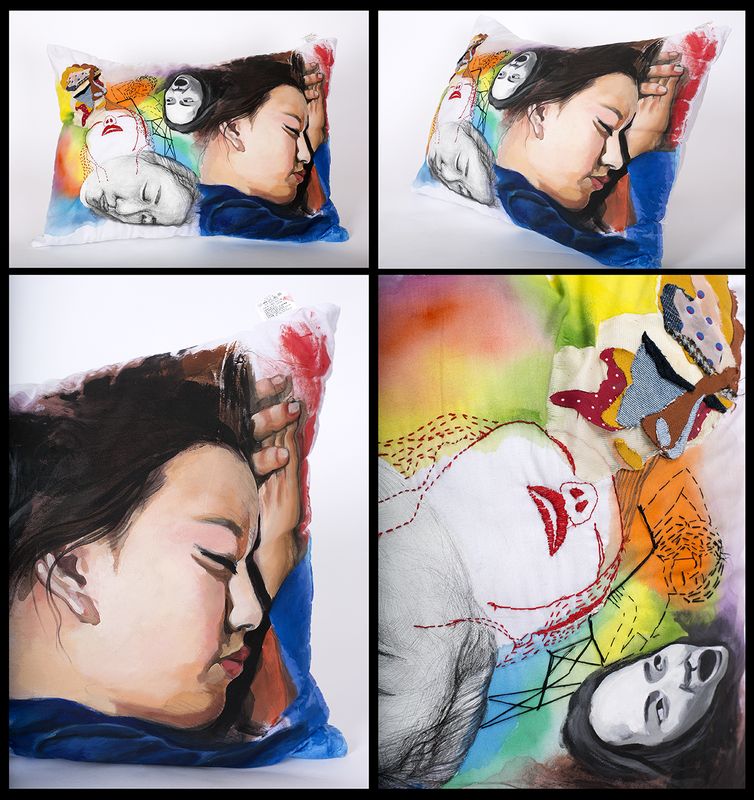
At Royal Blue Art & Design in Apgujeong, Seoul, we have prepared Korean students for both Harvard AFVS and RISD over our 19+ years of practice. These programs attract different kinds of students, and honest self-assessment beats reputation-chasing every time. A student forced into Harvard because of family expectations often leaves the AFVS experience feeling it was secondary to “real” Harvard. A student forced into RISD who actually wanted academic breadth often regrets missing the liberal arts exposure.
We help students understand their own learning style, artistic ambition, and five-year vision before recommending application strategies. We have sent students to RISD, Parsons, CalArts, Carnegie Mellon, Cornell, WUSTL, and 50+ other institutions.
Book a free consultation today or review our recent admissions results.
Related Reading
Other School Comparisons
- Parsons vs SVA: Which Is Better for Graphic Design?
- Parsons vs Pratt: Which New York Art School Is Right for You?
- CalArts vs USC: Fine Art vs University Experience
- RISD vs OCAD: US vs Canada for Art School
- Boston University vs RISD: Which Is Better for Art?