The art school admissions lessons Royal Blue Art & Design has gathered over 19 years are not what most Korean families expect — and sharing them honestly is the most useful thing we can do for families beginning this process.
Royal Blue Art & Design has been preparing Korean students for US art school admissions since 2007. In that time, we have worked with students who arrived with no art background and gained admission to RISD. We have worked with students who arrived with years of technical training and were rejected by every school on their list. We have watched admissions trends shift, portfolio standards evolve, and the landscape of what top schools are looking for change in ways that reward some preparation approaches and punish others. This is what 19 years has taught us.
Lesson 1: The Portfolio Is a Mirror, Not a Product
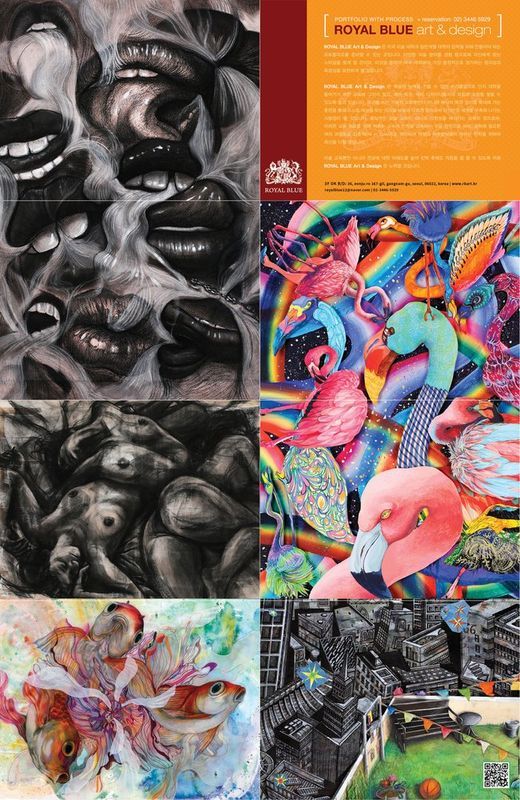
Early in Royal Blue’s history, we thought about portfolio preparation primarily in terms of output — how many pieces, how polished, how technically accomplished. We learned, over time, that the most important quality in a competitive portfolio is not what it contains but what it reflects: the genuineness and depth of the student’s creative engagement. A portfolio that is a mirror of a student’s actual creative development succeeds far more consistently than one that is a strategically assembled product. This realization reshaped our entire curriculum.
Lesson 2: The Students Who Surprise Us Are Often the Best Applicants
Every year, Royal Blue works with students who do not seem, on the surface, like obvious art school material. Students who are quiet and uncertain. Students whose early work is technically weak. Students whose creative interests seem too personal or too unconventional to translate into a compelling portfolio. More often than we initially expected, these students go on to produce the most distinctive portfolios in a given cycle. The students who are most certain of their abilities and most focused on producing what they think admissions committees want are frequently the ones who struggle most.
This taught us that potential is not the same as current performance, and that our job is to create conditions for creative development rather than to select for already-formed talent.
Lesson 3: Families Who Trust the Process Get Better Results
The most difficult part of working with Korean families is not the students — it is the understandable parental anxiety about outcomes. Families who intervene heavily in the creative process, who compare their child’s portfolio to others constantly, who push for faster timelines and more polished output at the expense of genuine development, consistently produce weaker applications than families who trust the preparation process and step back from managing the creative decisions. This is not a criticism of those families — it is a natural response to high stakes and significant financial investment. But it is a pattern we have observed clearly enough to state without qualification.
Lesson 4: The Best Preparation Teaches Students to Learn, Not Just to Apply
Students who go through the Royal Blue program and arrive at RISD or Parsons in September consistently report that the most valuable thing they gained was not the portfolio — it was the way of working that produced the portfolio. The habit of documenting process, the capacity to receive and use critical feedback, the self-directed creative practice, the ability to articulate their creative decisions in English: these are the tools that make the first year of art school manageable rather than overwhelming. We have come to see application success as a byproduct of genuine development, not as the goal itself.
Lesson 5: Trends Change, Principles Don’t
What top US art schools are looking for in terms of specific visual trends, media preferences, and aesthetic sensibilities has shifted significantly over 19 years. The schools that emphasized painting in 2007 now place greater value on interdisciplinary and conceptual practice. The portfolios that succeeded in 2015 would not look the same as those that succeed in 2025. But the underlying principles — genuine creative investment, coherent perspective, authentic voice, process-driven development — have remained constant. Royal Blue has learned to teach principles rather than trends, which protects our students from the obsolescence that trend-following preparation produces.
Lesson 6: Honesty Is the Most Valuable Service
The hardest conversations Royal Blue has are the ones where we tell a family that their child’s current trajectory is not leading toward the outcome they want — that the portfolio is not distinctive enough, that the timeline is too short, that the target schools need to be reconsidered. These conversations are uncomfortable, and some families respond by looking for an advisor who will tell them what they want to hear. The families who stay, hear the honest assessment, and use it to make better decisions are the ones who tend to produce successful applications. Honesty, delivered with care and specificity, is the most valuable thing we offer.
Lesson 7: Every Student’s Journey Is Different
After 19 years, we have learned to resist the impulse to apply the lessons of one student’s success to the next student’s preparation. The student who succeeded at RISD by building a portfolio around industrial objects and memory did not produce a template that the next student should follow. The creative direction that worked for one person is, by definition, not available to another. The only portfolio that succeeds is one that reflects what is genuinely original about a specific individual. This is the most important thing 19 years has taught us — and it is the principle that every element of the Royal Blue curriculum is designed to serve.
Frequently Asked Questions
Has the admissions process become more or less competitive over 19 years?
More competitive, in terms of application volume and the global awareness of US art schools as destinations. The quality of what is required to succeed has also increased — schools have become more sophisticated in their evaluation of portfolios and more explicit about what they are looking for. This makes preparation quality more important, not less.
What has changed most significantly in what schools are looking for?
The shift toward valuing conceptual development and process documentation alongside finished work has been the most significant change. Schools are now more explicit that they want to see how students think, not just what they produce. This shift validates the approach Royal Blue has been developing for years.
What has stayed the same?
The value of genuine creative investment. The importance of authentic voice. The difference between a student who makes things because they need to and a student who makes things to gain admission. These have not changed, and we do not expect them to.
Have the target schools changed over 19 years?
The core target schools have remained relatively consistent — RISD, Parsons, CalArts, Carnegie Mellon, Cornell, Brown, and Washington University in St. Louis. The relative difficulty of each has shifted somewhat, and some programs within those schools have become more or less competitive over time.
What do you wish you had known in 2007 that you know now?
That the students who seem most uncertain at the beginning are often the ones who develop most significantly. We are much better now at seeing potential in early uncertainty than we were when we started.
Royal Blue Art & Design is a US art school admissions academy in Apgujeong, Seoul, with 19 years of experience helping Korean students gain acceptance to RISD, Parsons, CalArts, and other top programs. Contact us to schedule a free consultation → royalblue-art.com