The first month of portfolio preparation is the most misunderstood part of the entire process. Most students expect to start making portfolio pieces immediately. Most directors will tell you that’s exactly the wrong place to begin.
Here’s what the first month actually looks like — and why it matters more than any single piece you’ll make.
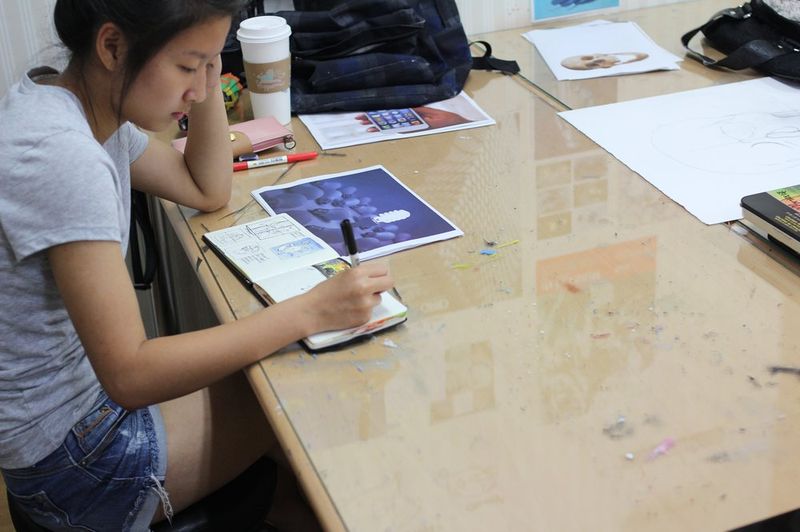
Week 1: The Honest Audit
Before you make anything new, you look at everything you’ve already made. Every sketchbook, every finished piece, every photograph, every experiment you abandoned. The goal isn’t to find portfolio-ready work — it’s to find evidence of what you’re actually drawn to.
Most students are surprised by what they find. Recurring subjects they didn’t realize they kept returning to. A medium they explored once and forgot. A way of composing images that shows up again and again without conscious intention. This audit is the foundation of everything that follows.
Week 2: Defining Your Direction
With the audit complete, the real conversation begins. What are you trying to say? What subjects genuinely interest you — not what you think will impress an admissions committee, but what you actually can’t stop thinking about?
This is harder than it sounds. Students who’ve spent years making work to please teachers often don’t know the answer immediately. That’s normal. Week two is about sitting with the question long enough to find an honest answer.
At Royal Blue, we call this the Individual component of our PID System — identifying the specific creative identity that will anchor the entire portfolio.
This direction work is what makes the first month of portfolio preparation different from simply making more pieces.
Week 3: School Research and Portfolio Mapping
Once there’s a clear sense of direction, we look at the target schools. What does RISD want to see? How does Parsons evaluate conceptual work? What does a competitive SVA portfolio look like in your specific discipline?
This research shapes the portfolio plan — which pieces to develop, which mediums to work in, how many projects to complete before the deadline. A portfolio without a plan is just a collection of work. A portfolio with a plan is an argument.
By the end of your first month portfolio preparation, you should have a clear sense of your creative identity and target schools.
Week 4: The First New Work
Only in week four does new work begin. And it begins small — studies, experiments, material explorations. Not finished pieces. The goal is to start moving in the right direction with low stakes, so that when the real portfolio pieces begin, you’re already warmed up and working with intention.
Students who skip the first three weeks and jump straight to making portfolio pieces almost always have to redo significant portions of their work later. The foundation matters.
What This Means If You’re Preparing on Your Own
You can follow this same structure independently. Give yourself a genuine week for each phase — resist the urge to rush to the making. Talk to people who know your work honestly. Research your target schools in real depth, not just their Wikipedia pages. And when you start making new work, start small.
The students who struggle most in portfolio prep are the ones who treat it as a production problem — how many pieces can I make before the deadline? The students who succeed treat it as a thinking problem — what am I actually trying to say, and how do I say it as clearly as possible?
If you’re beginning portfolio prep and want structure, guidance, and honest feedback at every stage, Royal Blue works with students from the very first conversation through final submission. Book a free consultation to talk about where you are and where you want to go.