When researching US programs, many students encounter both “art schools” and “design schools” — and aren’t entirely sure what the distinction means in practice. The art school vs design school question is one of the most important ones to understand before applying, because the two types of programs can lead to very different educational experiences, career paths, and portfolio requirements. This post explains the real differences, helps you identify which type of program fits your goals, and looks at how schools like RISD, Parsons, and CalArts fit into this landscape.
The Core Distinction: Expression vs. Problem-Solving
At the most fundamental level, the difference between an art school and a design school comes down to orientation:
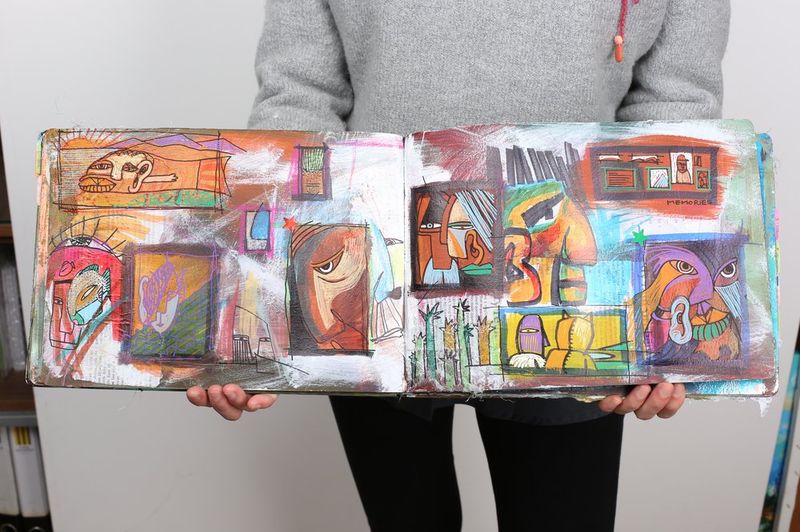
Art schools primarily train students in the visual arts as a form of personal expression, critical inquiry, and cultural production. The emphasis is on developing an individual artistic voice, engaging with ideas through making, and participating in the fine arts world — galleries, museums, exhibitions, public art, and independent studio practice.
Design schools primarily train students to solve visual and experiential problems for clients, users, and audiences. The emphasis is on applying creative skills toward defined purposes — communication design, user experience, product design, fashion systems, environmental design, and branding. Design education is inherently audience-focused and outcome-oriented.
In reality, the distinction is not always clean. Many schools contain both art and design programs, and the boundaries between the two fields have blurred considerably in contemporary practice.
What Art School Looks Like in Practice
At a dedicated art school — or in the fine arts division of a school like RISD or CalArts — the majority of your time is spent in the studio, developing a personal body of work. Critique culture is central: your work is regularly discussed by your peers and instructors, not to evaluate whether it meets a brief but to engage with it intellectually and push its development.
You choose your subjects, materials, and conceptual direction. You are expected to develop a consistent artistic voice over four years. Your culminating work is typically a senior thesis exhibition — a body of work that represents your artistic practice at the end of your undergraduate study.
The most common art school programs include: painting, sculpture, printmaking, photography, ceramics, textile arts, illustration, and new media/video.
What Design School Looks Like in Practice
At a dedicated design school — or in the design divisions of a school like Parsons or RISD — assignments typically begin with a brief: a defined problem, a target audience, and a set of constraints. Your job is to produce creative work that successfully addresses that problem. The emphasis is on process documentation (showing your thinking and decision-making), technical proficiency with design tools, and the ability to communicate your work clearly.
Design programs are more structured than fine arts programs. There is a clearer sequence of skills to develop, and professional standards are applied throughout — industry-standard software, presentation formats, client communication, and project management.
The most common design school programs include: graphic design, communication design, UX/UI design, industrial design, interior design, fashion design, and product design.
How Major Schools Are Categorized
Most well-known US art schools contain both art and design programs. Here’s how to think about the major schools:
| School | Primary Reputation | Strongest Programs |
|---|---|---|
| RISD | Art + Design (balanced) | Illustration, Industrial Design, Graphic Design, Fine Arts |
| Parsons | Design-forward | Fashion Design, Communication Design, Product Design |
| CalArts | Art + Film/Animation | Character Animation, Film/Video, Fine Arts, Music |
| SVA | Art + Design (both strong) | Illustration, Graphic Design, Photography, Fine Arts |
| Pratt | Design-forward | Architecture, Industrial Design, Graphic Design |
| SAIC | Art-forward | Fine Arts, New Media, Film/Video |
Parsons, for example, is strongly design-oriented — its programs emphasize applied creative work, industry connections, and professional outcomes. SAIC (School of the Art Institute of Chicago) is more art-oriented — its culture emphasizes critical inquiry, conceptual development, and individual artistic voice. RISD sits in the middle, with exceptional programs on both sides.
Which Is Right for You?
Ask yourself honestly:
Do you want to develop a personal artistic voice and engage with the fine arts world? → Art school program
Do you want to solve visual problems for clients and work in a professional design context? → Design school program
Do you want to illustrate, animate, or work in commercial visual storytelling? → Programs that blend both (RISD Illustration, CalArts Animation, SVA Illustration)
Are you not yet sure which direction you want to go? → A school with both strong art and design programs gives you the most flexibility
A Note for Korean Students
For Korean students, this distinction often reflects a tension between two types of career goals: working in the Korean or international design industry (advertising, branding, UX, fashion) versus building an independent fine arts practice (gallery work, teaching, independent commissions).
Both are valid — but they lead to different educational paths, different portfolio requirements, and different post-graduation timelines. Design graduates typically enter the workforce more directly after graduation. Fine arts graduates more often go through a period of residencies, exhibitions, and graduate study before establishing a professional practice.
Korean students considering both should look carefully at the specific programs within schools, not just the school name. RISD has both a nationally ranked Graphic Design program and a nationally ranked Painting program — but the experience, culture, and career outcomes of those two programs are quite different.
Frequently Asked Questions
Can you study both art and design at the same school? Yes, at most major US art schools. Schools like RISD, SVA, Pratt, and Parsons all contain both art and design programs. Some schools also offer interdisciplinary programs that blend fine arts and design, or allow students to take courses across both divisions.
Is a design degree more employable than a fine arts degree? In most cases, design graduates enter the professional workforce more directly and quickly than fine arts graduates. Applied design skills — graphic design, UX, fashion — align more directly with industry job descriptions. Fine arts graduates often build careers through a longer process of exhibitions, residencies, and teaching. Neither path is better; they lead to different careers.
Are portfolio requirements different for art vs. design programs? Yes, significantly. Art program portfolios typically emphasize personal voice, conceptual depth, and a cohesive body of work. Design program portfolios emphasize process documentation, technical proficiency, problem-solving, and the ability to communicate design decisions. Students applying to both art and design programs should prepare different portfolio versions tailored to each type of program.
What is the difference between RISD and Parsons in terms of art vs. design? RISD has a strong balance of both fine arts and design programs, with a particularly rigorous studio-based culture across all programs. Parsons is more design-forward, with especially strong programs in fashion, product design, and communication design. Both are top schools, but their cultures and orientations are meaningfully different.
Does the art vs. design distinction affect how competitive a program is? Both highly competitive art programs (like RISD Fine Arts) and highly competitive design programs (like Parsons Fashion Design) are extremely selective. The art vs. design distinction does not simplify the admissions process — both require strong portfolios, strong academic records, and well-prepared applications.
Royal Blue Art & Design는 압구정에 위치한 유학미술학원으로, 19년간 한국 학생들의 RISD, Parsons, CalArts 등 미국 최상위 미술대학 입시를 도와왔습니다. [상담 문의하기 →]