Introduction
Getting accepted to the Rhode Island School of Design (RISD) is one of the most competitive achievements in art school admissions. RISD consistently ranks as the number one art and design school in the United States, and its portfolio requirements are among the most rigorous in the world. At Royal Blue Art & Design in Apgujeong, Seoul, we have helped dozens of students gain acceptance to RISD over the past 19 years — and in this guide, we share exactly what it takes to build a portfolio that stands out.
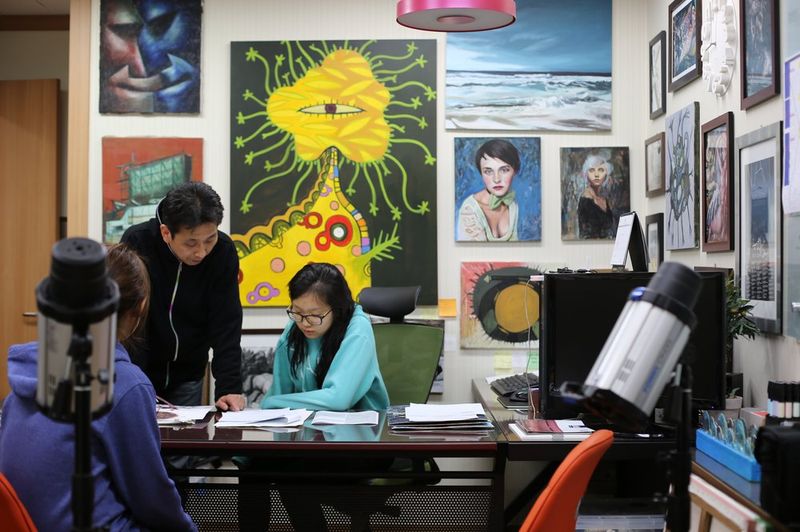
What Does RISD Look for in a Portfolio?
RISD evaluates applicants on three core qualities: technical skill, creative thinking, and authentic artistic voice. Admissions officers are not simply looking for polished finished work — they want to see evidence of a thinking, curious, and observationally aware artist. A portfolio that shows process, experimentation, and personal perspective will always outperform one that is technically impressive but visually generic.
RISD also places significant emphasis on drawing. Regardless of your intended major — whether Graphic Design, Illustration, Industrial Design, or Fine Arts — strong observational drawing is considered the foundation of all creative work at RISD. Students who cannot demonstrate confident drawing skills are at a significant disadvantage in the admissions process.
RISD Portfolio Requirements
For undergraduate BFA applicants, RISD typically requires the following:
Applicants must submit between 12 and 20 images of their work through the SlideRoom digital portfolio platform. All work should be original and created within the past two to three years. RISD also requires a separate Hometest — a set of two drawings completed at home without assistance. The Hometest typically asks applicants to draw a specific object from observation and to create an imaginative composition based on a given prompt. The Hometest is evaluated separately from the main portfolio and is considered equally important in the admissions decision.
For graduate MFA applicants, requirements vary by department, but most programs require 20 work samples and a written statement of purpose.
What Types of Work Should Be in a RISD Portfolio?
A strong RISD portfolio should include a variety of work that demonstrates range, depth, and intention. We recommend the following structure for most applicants:
Drawing and observational work should form the core of the portfolio. This includes still life drawings, figure studies, architectural studies, and any work that demonstrates your ability to observe and record the world around you with accuracy and sensitivity.
Two-dimensional design work — including typography, layout, pattern, and color studies — is particularly important for students applying to Graphic Design, Illustration, or Textile Design programs.
Three-dimensional or spatial work — including sculpture, product models, architectural models, or installation documentation — is essential for applicants to Industrial Design, Interior Architecture, or Furniture Design programs.
Experimental and process-based work shows admissions officers that you are willing to take risks, explore unfamiliar territory, and develop ideas through iteration rather than jumping straight to a final product. Sketchbook pages, research documentation, and developmental studies can be powerful additions to the portfolio.
Personal or conceptual projects — work that responds to a specific theme, question, or lived experience — demonstrate that you have something genuine and specific to say as an artist.
How Long Does It Take to Build a RISD Portfolio?
Most students who are accepted to RISD begin their portfolio preparation 12 to 18 months before their application deadline. This timeline allows enough time to develop foundational skills, explore multiple directions, produce a full body of work, refine and edit the portfolio, and prepare the Hometest and written materials.
Students who begin preparation only three to six months before the deadline are at a significant disadvantage, particularly if they have limited prior art training. While it is possible to gain acceptance with a shorter preparation period for students who already have a strong foundation, we generally recommend starting as early as possible.
At Royal Blue Art & Design in Seoul, our Core program runs 8 to 12 months and is specifically designed to take students from concept development through final portfolio submission for programs like RISD.
Common Mistakes Students Make When Applying to RISD
After 19 years of preparing students for RISD, we have seen the same mistakes appear again and again. Here are the most common errors to avoid:
Submitting too much digital or digital-looking work. RISD values hand-made, observational, and materially engaged work. Portfolios that rely heavily on digital illustration or graphic design without a strong foundation in drawing and material exploration tend to score lower in the admissions process.
Ignoring the Hometest. Many students focus all of their energy on the main portfolio and treat the Hometest as an afterthought. This is a serious mistake. The Hometest is evaluated by RISD admissions officers as a direct measure of your observational drawing skills and imaginative thinking — both of which are central to the RISD educational philosophy.
Presenting work from too many different directions without a coherent thread. A strong portfolio tells a story. Admissions officers should be able to look at your work and sense a consistent artistic sensibility, even if the projects are diverse in medium or subject matter.
Choosing work based on what looks impressive rather than what is most authentic. Students sometimes include technically polished work that does not reflect their genuine interests or voice. RISD admissions officers are experienced at identifying work that feels produced for the portfolio rather than driven by genuine curiosity.
How Royal Blue Art & Design Prepares Students for RISD
At Royal Blue Art & Design, located in Apgujeong, Seoul, our RISD preparation program is built around our proprietary PID System — Process, Individual, and Data. Every student receives a personalized curriculum designed around their target schools, timeline, and artistic background.
Our instructors guide students through every stage of the RISD application — from developing a unique artistic voice and building a body of work through our 7-step portfolio methodology, to Hometest preparation, personal statement writing, and interview coaching. We have helped students gain acceptance to RISD with scholarships, and our acceptance data spans over 19 years of continuous results.
If you are considering applying to RISD and would like to discuss your portfolio and timeline, we invite you to book a free consultation with our director.
Frequently Asked Questions About RISD Portfolios
Q. Does RISD require drawing in the portfolio? A. Yes. RISD places a very high value on observational drawing skills. While there is no specific rule requiring drawing in the main portfolio, strong drawing work is highly recommended for all applicants regardless of intended major. The Hometest, which is a required component of the RISD application, directly tests your observational drawing and imaginative composition abilities.
Q. Can international students apply to RISD? A. Yes. RISD actively welcomes international applicants. The application process is the same as for domestic students, and all portfolio materials are submitted digitally through SlideRoom. International students must also demonstrate English language proficiency through TOEFL or IELTS scores.
Q. What GPA do you need to get into RISD? A. RISD does not publish a minimum GPA requirement, and the portfolio is the most important factor in the admissions decision. However, a strong academic record is still considered as part of the overall application. Students with lower GPAs can still gain acceptance if their portfolio is exceptional.
Q. How competitive is RISD admissions? A. RISD is one of the most competitive art schools in the world. Acceptance rates for undergraduate BFA programs vary by department but are generally in the range of 20 to 25 percent. For graduate MFA programs, acceptance rates are significantly lower.
Q. Can I get a scholarship from RISD as an international student? A. Yes. RISD offers merit-based scholarships to both domestic and international students. Royal Blue Art & Design students have received RISD Scholarships recognizing exceptional portfolio work. Scholarship decisions are made as part of the admissions process and are based on portfolio quality and overall application strength.
Conclusion
Building a portfolio for RISD requires time, intention, and a clear understanding of what the school values in its applicants. Start early, develop strong drawing skills, build a body of work that reflects your genuine artistic voice, and approach the Hometest with the same seriousness as the main portfolio.
If you are preparing to apply to RISD from Korea, Royal Blue Art & Design in Apgujeong, Seoul is here to help. With over 19 years of experience and a proven track record of RISD acceptances, we offer the expertise, structure, and personalized guidance you need to build a portfolio that stands out.
Book a free consultation today to get started.